

Está en inglés porque lo saqué de una página de Estados Unidos.
No se asusten que más abajo les dejo un resumen traducido (Por mí, obviamente).
The Man:
In 1940, WWII was going badly for the British. They stood alone against Hitler, and Winston Churchill used every bit of his oratory talent to keep his people going. Famously, in his "This Was Their Finest Hour" speech, he swore the nation would fight to the last breath, if necessary, against the impending Nazi invasion.
Royal Air Force fighter pilot Eric J. B. Nicolson listened to every word, and boy did he take the advice to heart.
The Perseverance:
On August 16, 1940, Nicolson was part of an attack against German bombers that were trying their level best to relocate British soil into British atmosphere.
While swooping in on a formation of Nazi planes, he was suddenly strafed by a Messerschmitt fighter. The hail of cannon fire ripped up his Hurricane and wounded his legs.
Also, his cockpit was now on fire.
In pain, blinded by the blood from a gash in his forehead, and guided only by survival instinct (and probably also by the fact that the glass on his control panel instruments was starting to pop from the intense heat) Nicolson scrambled out of the cockpit to a section in the back of the plane where it was safe to bail out.
Then, just as he was about to jump to safety with his parachute, he saw the German plane that had hit him and remembered Churchill. Wounded and bleeding profusely, he climbed right back into the burning cockpit, brought the plane under control and went on the attack.
He gave fiery chase to the German plane, and shot it down. While wounded. And while his own body was engulfed in flame (we really feel can't mention that part enough).
Only when he saw the German fighter crashing to the ground did Nicolson (who was now also on fire) have the presence of mind to bail out of his plane (on fire) and jump (on fire).
As he floated to the ground, the British ground forces took a look at him and reasoned that this flaming sky-creature could only be some kind of Nazi hellbeast. So they opened fire on him.
But he made it to the ground alive, somehow, where he was extinguished by the suitably embarrassed ground troops. Nicolson realized that the day's collection of wounds had been increased by some pretty serious burns and a couple of friendly fire bullet holes, and also holy shit the glass of his wrist watch had actually melted in the intense heat. Did any of this matter? Hell no, he had just shot down a German!
Nicolson shrugged away his various life-threatening injuries in less than a year and was right back in the action in the fall of 1941, one Victoria Cross and a hell of a lot of bragging rights richer.
Bueno, mientras los Ingleses estaban peleando con los nazis en la Segunda Guerra Mundial (<--No sé por qué pone eso, tal vez me aparezca a mí solo, tal vez a todos, algún día lo voy a descubrir, pero ahora no tengo idea), Winston Churchill dió un discurso en el que dijo que Inglaterra iba a pelear hasta el último aliento para impedir la invasión Nazi.
Eric J. B. Nicholson, un piloto, escuchó el discurso y lo siguió al pié de la letra.
El 16 de Agosto de 1940 fué parte de un ataque a un grupo de bombarderos Alemanes y, mientras luchaba contra los aviones Nazis, uno lo alcanzó y destrozó su avion (Siguió volando, pero con la cabina de vuelo en llamas y casi sin controles ya que muchos se habían fundido por el intenso calor), además de herirle ambas piernas.
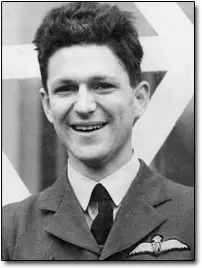
Logró salir de la cabina y encontró un lugar "seguro" para saltar con su paracaídas, pero en ese momento vió al avión Alemán que le disparó y no se pudo resistir. Volvió a la cabina y tomó el control del avión nuevamente. Persiguió al avión y logró bajarlo.
En ese momento estaba en territorio de los Ingleses, los que pensaron que su avión en llamas era alguna especie de ataque Nazi y le dispararon.
Consiguió llegar al suelo vivo, donde sus compañeros extinguieron el fuego. Tuvo algunas quemaduras no muy graves y algunas heridas de fuego amigo. Pero se recuperó y volvió a la guerra en menos de un año con la "Victoria Cross" (La más alta condecoración Inglesa).
The Man:
Ernest Edwin Evans was the commander of the Fletcher class destroyer USS Johnston, which he used to play a Bronze Star's worth of merry hell on the Japanese. He was also, as will soon become apparent, completely oblivious to the concept of "odds."
The Perseverance:
The Battle of Leyte Gulf in 1944 was the largest naval battle in WWII, and was on the verge of being an utter disaster for the American ships. There were a bunch of unarmed troop transports carrying General Douglas MacArthur's invasion fleet toward the Philippines being guarded by other American ships. But the Japanese navy managed to trick the vast majority of the ships into following a decoy fleet. This left a shitload of defenseless American troops as sitting ducks in their transport ships, ready to be blown to bits by the approaching real Japanese fleet.
All that was standing between the enemy and the ships full of troops was Taffy 3, a task force of a few shoddy destroyers, near-defenseless escort carriers and planes that were good at bombing submarines and absolutely useless at everything else.
Luckily, one of the destroyers happened to be Ernest Evans' very own USS Johnston. And Evans was insane.
Evans reacted to the impossible situation with the glee of the biggest kid in class who has just heard there's a fight behind the corner. He immediately took his ship -- affectionately nicknamed "Tin Can," as it was practically unarmored -- into a direct attack on the Japanese. That is, he attacked the whole goddamn fleet.
What followed would go down in history as one of the greatest mismatches in naval warfare. USS Johnston zigzagged up and down, performing needle attacks on the enemy like a crazed mosquito. Evans scored numerous sneaky hits on enemy ships, engaged in several happy duels with much larger Japanese vessels and generally behaved like a gremlin in a toy store.
Eventually, though, his ammo was all gone and the Japanese were able to return the favor by landing a direct hit on the bridge of the ship, where Evans was positioned. The impact wounded him, singed his hair and blew away his clothes.
While most men would at least take five after that, Evans actually told the ship doctor rushing to his aid to piss off and stop bothering him. Then he started shouting steering orders through an open hatch to men below decks, telling them how to steer the ship's freaking rudder by hand.
Sailors on the other ships stared with their mouths open as the Johnston continued getting shelled and Evans, butt naked, bloodied and smoke rising from his singed hair, continued to bark orders to his crew as if nothing was happening. He was still steering the Johnston at the enemy as it disappeared below the waves. Even the Japanese saluted the man and his crew as the ship went down.
Evans' relentless attack, supported by other ships of Taffy 3, actually managed to convince the Japanese that the American force was way stronger than the laughably few ships that they actually had at hand -- the logic behind this being that there's no way anyone would pull a stunt like that if they didn't have some serious backup.
So the Japanese commander got cold feet and called off his fleet. And that, friends, is how General MacArthur's troop transport ships were kept afloat because of one naked captain and his ragtag group of unarmored tin cans.
Ernest Edwin Evans era el comandante de la USS Johnston, sus actos lo hicieron merecedor de la Medalla de Honor (No, no una copia del juego, no existía en ese entonces)
En plena batalla del Golfo de Leyte, 1944, los Japoneses llevaron hacia una trampa a la mayoría de los barcos que transportaban a las tropas del General Douglas MacArthur. Los Estadounidenses pensaron que estaban siguiendo a la flota Japonesa, cuando en realidad era sólo una distracción. La verdadera flota Japonesa apareció después, junto con algún que otro kamikaze.
Lo que los Japoneses no sabían era que uno de los barcos era el de Evans. Y Evans estaba loco.
Sin pensarlo dos veces, tomó el mando de su barco (Al cual apodaba "Tin Can" ) y atacó a toda la flota Japonesa por su cuenta. Así es, a toda la flota Japonesa.
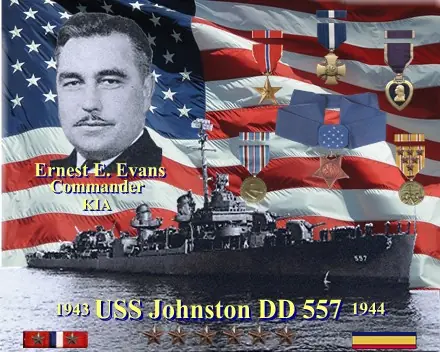
El barco zigzagueaba para todos lados, como un mosquito loco. Evans logró acertar varios disparos en los barcos enemigos mucho más grandes que su nave y se comportaba como un gremlin al que le tiraron agua.
Se le terminaron las balas y en ese momento el enemigo pudo acertar un impacto directo en su posición. No murió, pero se voló toda su ropa. Sí señoras, quedó desnudo en medio de la batalla.
Los demás miraban asombrados a Evans gritando órdenes, desnudo, sangrando y con humo saliendo de su cabello; como si nada hubiera ocurrido.
Los enemigos se retiraron e incluso saludaron a Evans mientras la USS Johnston se hundía.
Y así, mis amigos, es como un solo Capitán desnudo combatió una flota entera de Japoneses locos y defendió a las tropas del General MacArthur con su barco indefenso (Sí, se me olvidó decir que la flota Estadounidense no iba armada, eran barcos de transporte).
The Man:
Paul Emil von Lettow-Vorbeck was a German general in World War I. He was in command of the German forces in what is now Tanzania, in an era when military officers had style.
As his forces were dwarfed by the surrounding Allied armies, the German high command didn't think he had a chance and told him stay out of the war. Lettow-Vorbeck, however, chose to mishear his orders and immediately went to battle, handing the British their asses at the Battle of Tanga even though he was outnumbered eight to one.
The Perseverance:
Well, that was a good time to call it a war; his army was now getting comically small, the enemy still greatly outnumbered him and he could easily get to safety. Oh, and his superiors had specifically told him not to fight. Most men would have kicked back and taken it easy. But Lettow-Vorbeck was not most men. His solution was to cut his army off the grid completely and go guerrilla ... for years.
His men found a sunken ship and stole the guns off of it, then found some wheels and MacGyvered them into cannons. Lettow-Vorbeck and his army became a nomadic tribe, with no supply lines or place to evacuate the wounded, tromping around the woods with their improvised artillery and whatever they could carry. They then went on to perform successful, frequent and annoying precision strikes against the Allied troops.
And boy, did it work. The British in particular were livid with Lettow-Vorbeck's actions. Multiple times they got so close to him they even announced that they had finally defeated the man -- only to have him embarrassingly pop up somewhere else, entirely unharmed, and blow some more shit up.
Lettow-Vorbeck didn't really need to do any of this, remember. He was specifically forbidden to fight by his superiors, severely outnumbered and also already hidden and safely tucked away. What's more, his troops could only perform small, but still incredibly dangerous strike and flee missions that were technically unable to hurt the enemy much. But he still fought on, nagging at the Allied morale with his "anytime, anywhere" tactics, just because he could.
Oh, and he did this for the remainder of the war. That's four freaking years lugging artillery in the jungle, while also living in said jungle.
When the German Kaiser in the distant fatherland finally ended the war, Lettow-Vorbeck was still out in the bush. The second he heard the war was over, he happily surrendered to the British, presumably by stepping out of the bush right next to them and making them crap their pants. At that point, he was the only German commander to successfully invade British territory during WWI, and also one of the very few commanders in World War history who managed to go through the whole thing undefeated -- a notable achievement for someone fighting on the side that, you know, lost.
Paul Emil von Lettow-Vorbeck, un General Alemán de la Primer Guerra Mundial. Estaba al mando de una unidad en Tanzania
Sus fuerzas fueron rodeadas por el enemigo y sus oficiales pensaron que tal vez no sería la mejor idea dejar que sigua luchando, entonces se lo prohibieron. Paul decidió "malinterpretar" las órdenes y se lanzó contra los Británicos en la Batalla de Tanga (También conocida como La Batalla de las Abejas), cuando sus fuerzas eran superadas en número 8 a 1.
Luego de esto sus fuerzas se hicieron aún más pequeñas y el enemigo se hacía cada vez más fuerte. Él podría haberse quedado escondido fácilmente, incluso sus superiores le ordenaron que NO LUCHE
Sus hombres encontraron un barco hundido y sacaron armas de allí, además encontraron algunas ruedas que usaron para construir cañones, estilo MacGyver.
Su batallón se convirtió en una tribu nómade, sin ayuda médica, sin suministros, llendo de aquí para allá con su artillería improvisada y cualqueir cosa que puedan llevar.
Entonces empezaron a enviar frecuentes y precisos ataques de artillería a las fuerzas aliadas.
Muchas veces los enemigos llegaron a acercarse tanto que lo dieron por muerto, sólo para encontrarlo en otro lugar, volando cosas con su artillería, sin daño alguno.
No era necesario hacer esto, recuerden que sus órdenes eran esconderse y evitar la guerra. Pero aún así siguió haciéndolo, solo porque podía.
Duró cuatro años viviendo en la jungla y atacando a los Aliados por sorpresa. Cuando recibió la noticia de que la guerra había terminado, salió de su escondite y se rindió (Probablemente salió del arbusto que estaba al lado del enemigo e hizo que se caguen encima).
Hasta ese punto era el único Oficial Alemán que logró infiltrarse en territorio Británico durante la Primer Guerra Mundial. Además de ser uno de los únicos Comandantes en la historia que lograron quedar invictos durante toda la guerra... Un logro notable para alguien del bando que, ya saben, perdió
The Man:
During the War of the Spanish Succession back in 1701, the navies of Britain and France were in the Caribbean duking it out with cannons and broadsides. If you're curious what Britain and France were doing in a war for SPANISH succession, feel free to read up on it. It's complicated. We only bring it up so we can talk about Admiral John Benbow, who was there fighting for the British.
Specifically, the fact that he kept fighting after being hit by a freaking shot from a cannon.
The Perseverance:
It started when Benbow's fleet found four French warships with several supporting vessels. He ordered his ships to attack, and the two sides exchanged fire until nightfall. The next day, the French took to the seas and Benbow gave chase. Although the four French ships were more powerful, he was confident that his seven ships were up to the challenge. They probably were, too -- but we'll never know, seeing as the other captains were cowards. Benbow took potshots at the enemy several times, egging his cohorts along, but the other ships' captains refused to get near the French ships.
So Benbow decided to lead by example and engaged all four ships by himself.
Five days of constant battle followed, with only one of the other English ships chipping in. Benbow took heavy damage, but managed to score some hits and even capture one of the French support vessels. The other British ships remained safely out of range, occasionally firing their guns in the general direction of the French for show and generally pussyfooting about.
Meanwhile, Benbow got hit with a blast of cannon chain shot, which shattered his leg. The painful injury meant he was confined to bed. So it's up to the next guy in line to take over, right?
Oh, hell no. Benbow just had his bed brought up on deck so he could remain in direct charge of the battle.
When it finally dawned on him that his support ships weren't just incompetent but were flat out refusing to obey his attack orders, he called off the attack and returned to port for a veritable orgy of cowardice-related court martial sessions, leaving the four vastly superior French ships to scrub the terror-pee off their decks.
John Benbow fué un Almirante Británico que luchó contra Francia en la Guerra de Sucesión Española.
Siguió luchando aún después de ser herido por una bala de cañón
Todo comenzó cuando Benbow encontró una flota Francesa compuesta por 4 buques de guerra Franceses, seguidos de algunas naves de apoyo.
Él ordenó a sus naves atacar a los Franceses, y ambos bandos intercambiaron fuergo hasta la noche. Al día siguiente Francia comenzó a retirarse y Benbow ordenó seguirlos, y aunque él pensaba que su flota era más poderosa (Y probablemente lo era), nunca se sabrá, ya que los demás Capitanes eran demasiado cobardes como para seguir al enemigo. Entonces Benbow quizo dar un ejemplo, y atacó a los 4 buques Franceses por su cuenta.
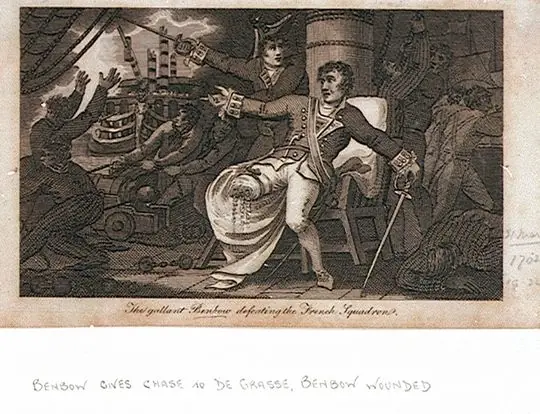
Duró cuatro días, con sólo una de las otras naves Británicas ayudándolo, Benbow recibió muchos daños, pero se las arregló para acertar más de un cañonazo y capturar un barco de apoyo enemigo.
Mientras tanto, los demás barcos Ingleses, desde un lugar seguro, disparaban hacia la posición de los Franceses, esperando darle a algo.
En ese momento Benbow fué alcanzado por un cañonazo enemigo (de esas que están unidas por cadenas, "Chain Shot" se llama en Inglés) que le arrancó una pierna.
La herida significaba que él debía ir a la cama y reposar mientras otro tomaba el mando. Pero no, él hizo que lleven su cama a la cubierta para poder seguir dándo órdenes durante la batalla.
Luego de eso volvió a tierra para protestar sobre la cobardía de sus naves de apoyo.
Y el último pero no menos importante:
The Man:
When the Korean War began, WWII veteran Lieutenant Benjamin F. Wilson ran down to the enlistment office to volunteer his services. However, the Army in the 1950s was a mere shadow of its World War II size and thus had no room for an extra officer. Wilson, however, was more interested in action than in rank, so this veteran shrugged and enlisted again, as a private. He was sent to Korea, rose quickly through the ranks and made first sergeant by the summer of 1951. So already you know this guy doesn't take no for an answer.
He was put in charge of men tasked with protecting a little place that would within days be known with the loving nickname of "Hell Hill."
The Perseverance:
As the first sergeant of his company, Wilson was both aware that a powerful Chinese attack was imminent and in position to remain in the background when shit would hit the fan. Instead, he wanted to be with his men. For his troubles, he received a nasty bullet wound in his leg when Hell Hill started earning its nickname. This, of course, did nothing to prevent him from launching into a determined lone-man charge where he single-handedly killed seven and wounded two enemy soldiers, sending the rest into panicked disarray.
At this point, most men opined that Wilson had done enough, what with the life-threatening wound in his leg and everything, and tried to get him to a nice, comfy M.A.S.H. station. They actually managed to place him down on the stretcher, but when stretcher bearers set him down to rest he immediately escaped and limped right back up the hill to defend the peak. The only problem: At this point everyone else was retreating, so he was now pretty much the only U.S. soldier on the offense.
As everyone knows, a real-life situation where a lone wounded soldier stands against overwhelming odds never ends well for the soldier.
Unless, of course, said soldier features in a Cracked article, in which case he promptly charges the enemy ranks with his rifle, kills three enemy soldiers and scares the shit out of the others. When the enemy physically wrestled the rifle from his hands, he took his goddamn entrenching shovel and annihilated four more enemies.
At this point, the Chinese soldiers decided that Wilson could just keep the damn hill and retreated.
Wilson, in turn, finally allowed the medics to patch him up. Although he did rip his wounds open again the very next day, when he killed 33 enemy soldiers in another one-man assault. At that point, the Army actually had to remind Wilson's wildly medal-recommending superiors that no one is awarded more than one Medal of Honor.
Benjamin F. Wilson era un teniente veterano Estadounidense. Cuando comenzó la Segunda Guerra Mundial, corrió a enlistarse como Oficial, pero le dijeron que ya no necesitaban más Oficiales. Pero él estaba más interesado en la acción que en el rango, entonces decidió enlistarse como Recluta
Fué enviado a Korea, subió rápido de rango y llegó a Sargento Primero en el verano de 1951.
Fué puesto a cargo de un batallón que debía defender un lindo lugar que ahora se apoda "Hell Hill" (Colina del Infierno/Colina Infernal, como más les guste).
Como Sargento Primero de su compañía, Wilson sabía de que un ataque de China era inminente. Pero él quería estar con sus soldados. Esto le costó una bala en la pierna cuando "Hell Hill" tomó su apodo.
Esto, por supuesto, no acobardó a Wilson, quién se lanzó a la batalla por su cuenta, matando a 7 soldados e hiriendo a otros 2, mientras que el resto huyó.
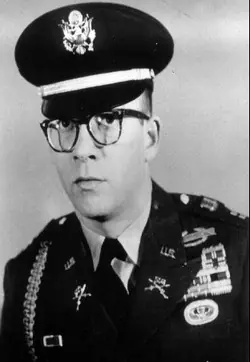
En este punto, sus hombres pensaron que Wilson ya había tenido suficiente, y lograron acomodarlo en una cama para tratar sus heridas. Pero él se las arregló para escaparse y volver a defender la colina. El único problema era que todos los demás se estaban retirando, y él era prácticamente el único soldado Estadounidense allí.
Como todos saben, en la vida real un soldado herido de gravedad, solo, rodeado de enemigos, nunca tiene un final feliz.
Pero este no es el caso, él simplemente tomó su rifle y mató a 3 soldados enemigos y espantó al resto.
Los demás soldados Chinos que quedaban a su alrededor le quitaron el rifle de las manos, y ahí Wilson sacó su pala y aniquiló a otros 4 soldados.
Desde ese momento los soldados Chinos decidieron que Wilson podía quedarse con su colina y se retiraron.
Al final Wilson dejó que los médicos lo curaran, aunque al día siguiente volvió a abrirse las heridas cuando mató a otros 33 soldados por su cuenta. En ese punto sus superiores tuvieron que recordarle que solo se puede ganar la Medalla de Honor una vez.
Hasta aquí llega el post. Gracias por pasar, no espero que me dejen puntos, no espero muchas visitas, pero al menos dejen algún comentario y recomienden si les gustó.
Aclaro que toda la traducción la hice YO, no la saqué de ningún otro lugar además de mi cabeza.