Guitarmaniaco dijo:Es triste pero quiero dejar imagenes de momentos que arruinar la Tierra y su equilibrio.
Luego no queda duda que el Humano es el peor Parasito del universo (conocido).
CUANDO PROBAMOS LAS BOMBAS NUCLEARES
Desde el tiempo de Trinity - la primer explosión nuclear en 1945 - cerca de 2000 pruebas nucleares tuvieron lugar, siendo más abundantes durante las decadas de los 60 y 70. Cuando la tecnólogia era nueva, las pruebas fueron más frecuentes y extraordinarias, y condujeron al desarrollo de nuevas armas mortales. Pero a partir de la decada del 90 se han hecho esfuerzos por limitar futuras pruebas nucleares, incluyendo un amplio tratado de prohibición moratoria entre EEUU y la ONU, sobre las pruebas. Como resultado, las pruebas fueron disminuyendo - no aún del todo - pero quedán dudas sobre el futuro.
¿Quién se hará cargo de los ingenieros con experiencia en la materia que están cerca de la jubilación, y como debemos actuar con nuestrosenormes arsenales de armas nucleares?
A CONTINUACION...
GALERIA DE 36 FOTOS DURANTE TESTEOS DE BOMBAS NUCLEARES
(LA EXPLICACIÓN ESTA INGLÉS SOBRE TODO POR CUESTIONES TECNICAS, YA QUE SON FOTOS YANKEES)
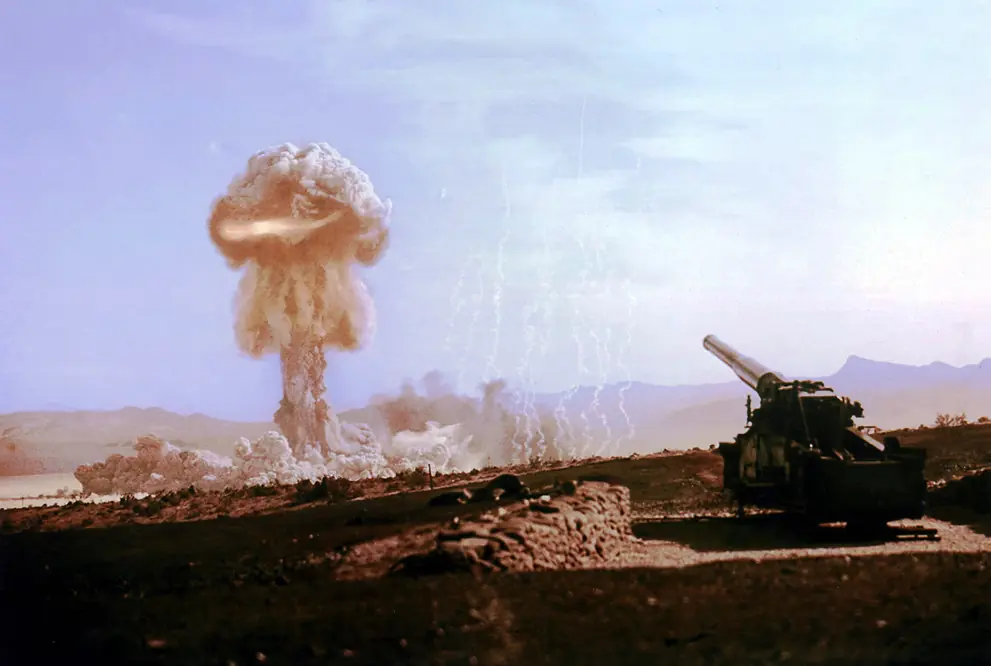
1- Upshot-Knothole Grable, a test carried out by the U.S. military in Nevada on May 25, 1953. A 280mm nuclear shell was fired 10km into the desert by the M65 Atomic Cannon, detonating in the air, about 500 feet above the ground, with a resulting 15 kiloton explosion.(U.S. Department of Defense)
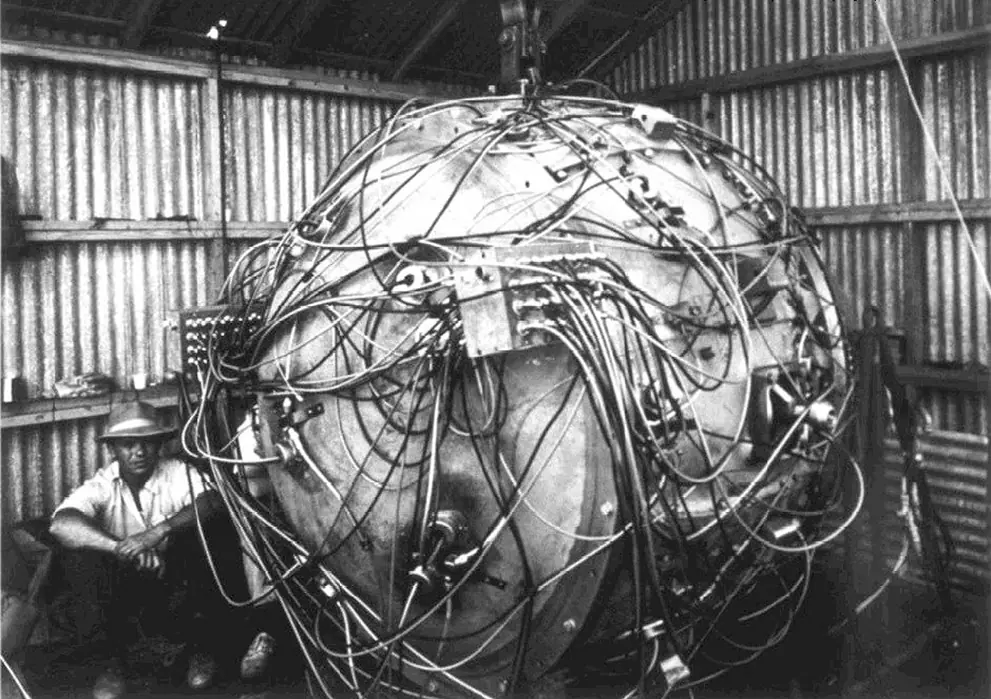
2- Exposed wiring of The Gadget, the nuclear device which exploded as part of Trinity, the first nuclear weapons test of an atomic bomb. At the time of this photo, the device was being prepared for its detonation, which took place on July 16, 1945. (U.S. Department of Defense)
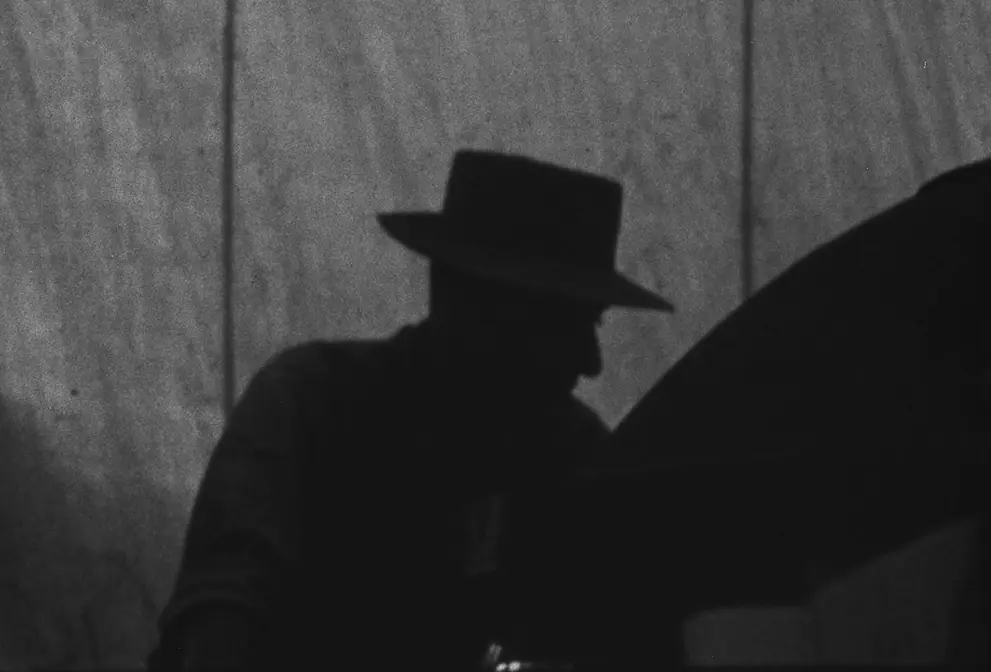
3- Los Alamos director J. Robert Oppenheimer is seen in silhouette as he oversees final assembly of The Gadget at the Trinity test site in July of 1945. (U.S. Department of Defense)
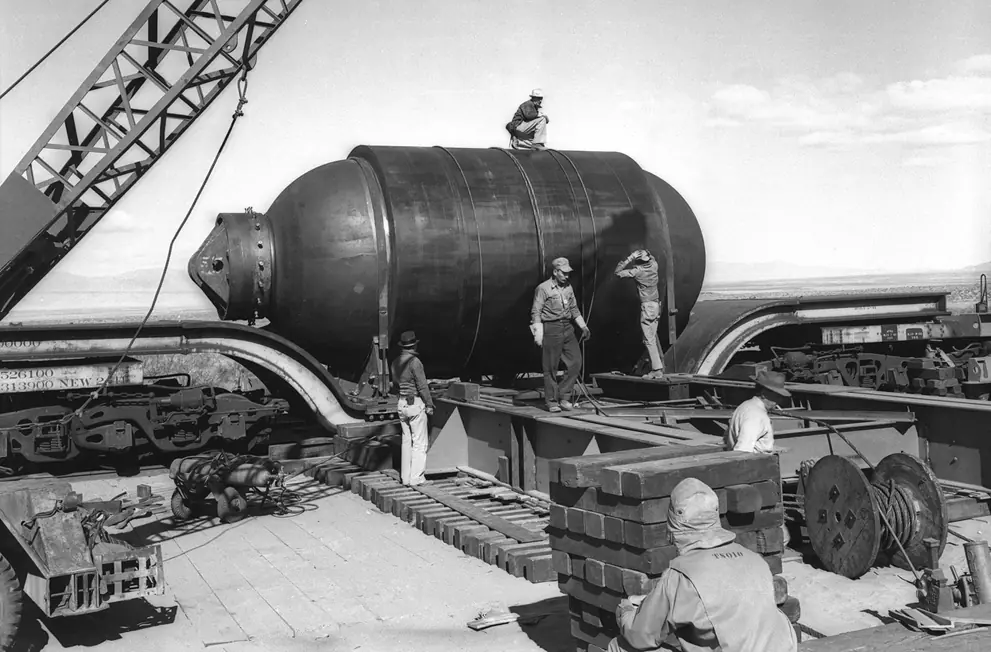
4- Jumbo, a 200-ton steel canister designed to recover the plutonium used in the Trinity test in the event that the explosives used were unable to trigger a chain reaction. In the end, Jumbo wasn't used for recovery, but was placed near ground zero to help gauge the effects of the blast. It survived intact, but its support tower did not. (U.S. Department of Defense)
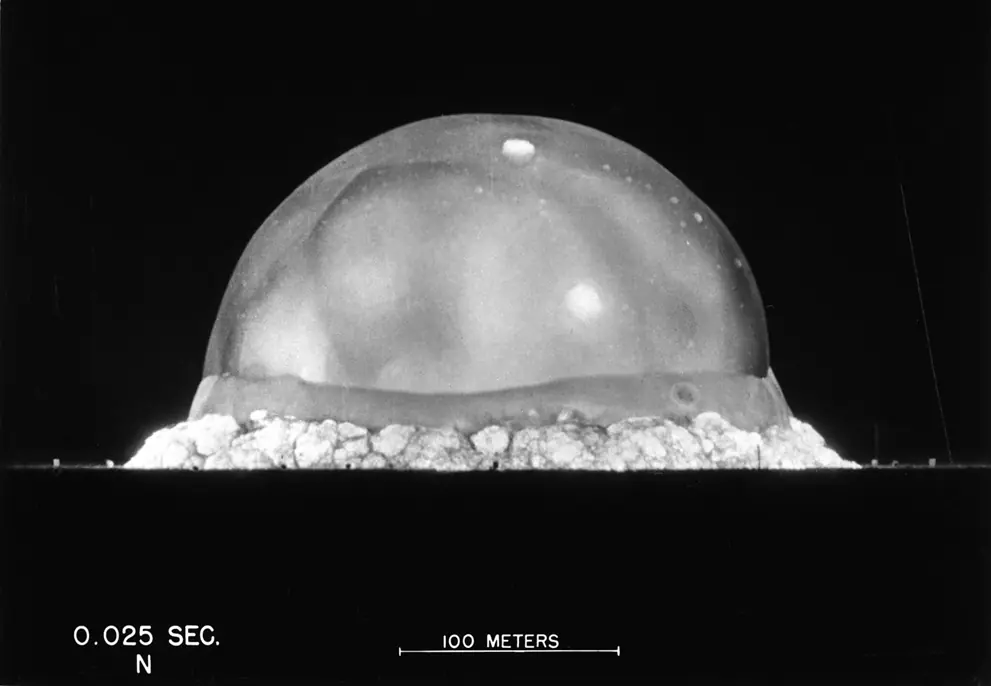
5- The expanding fireball and shockwave of the Trinity explosion, seen .025 seconds after detonation on July 16, 1945.(U.S. Department of Defense)
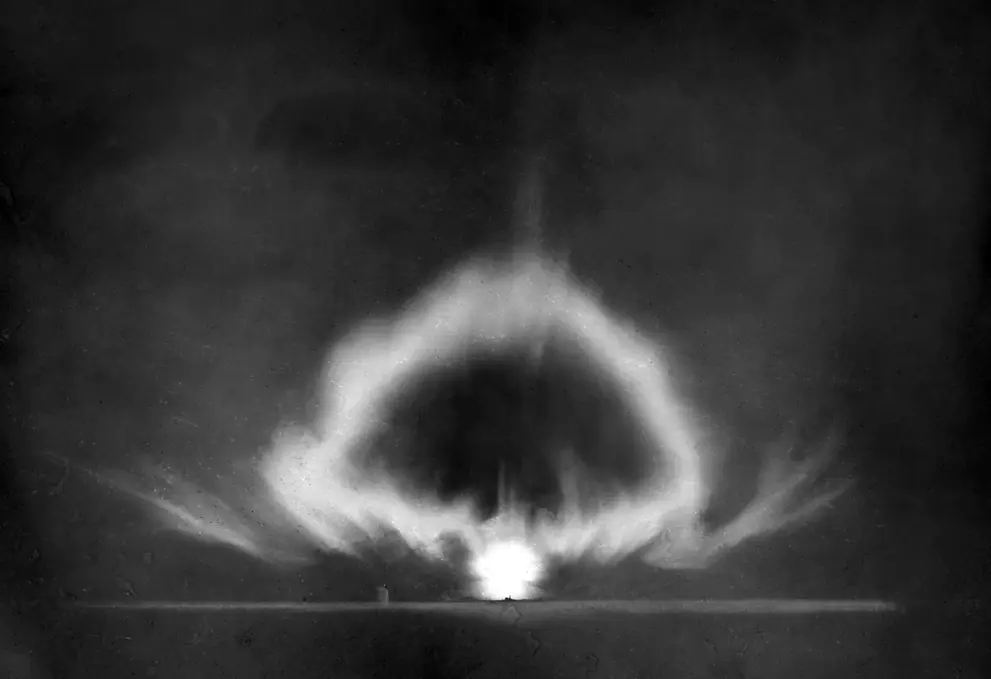
6- A longer-exposure photograph of the Trinity explosion seconds after detonation on July 16, 1945.(U.S. Department of Defense)
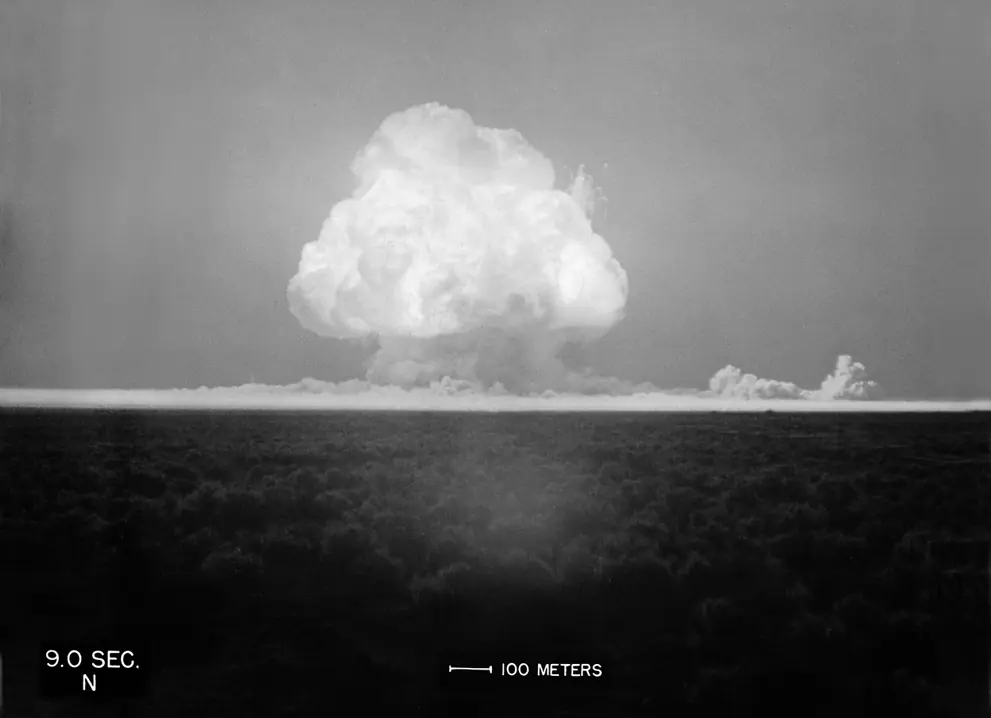
7- A fireball begins to rise, and the world's first atomic mushroom cloud begins to form, nine seconds after Trinity detonated on July 16, 1945.(U.S. Department of Defense)
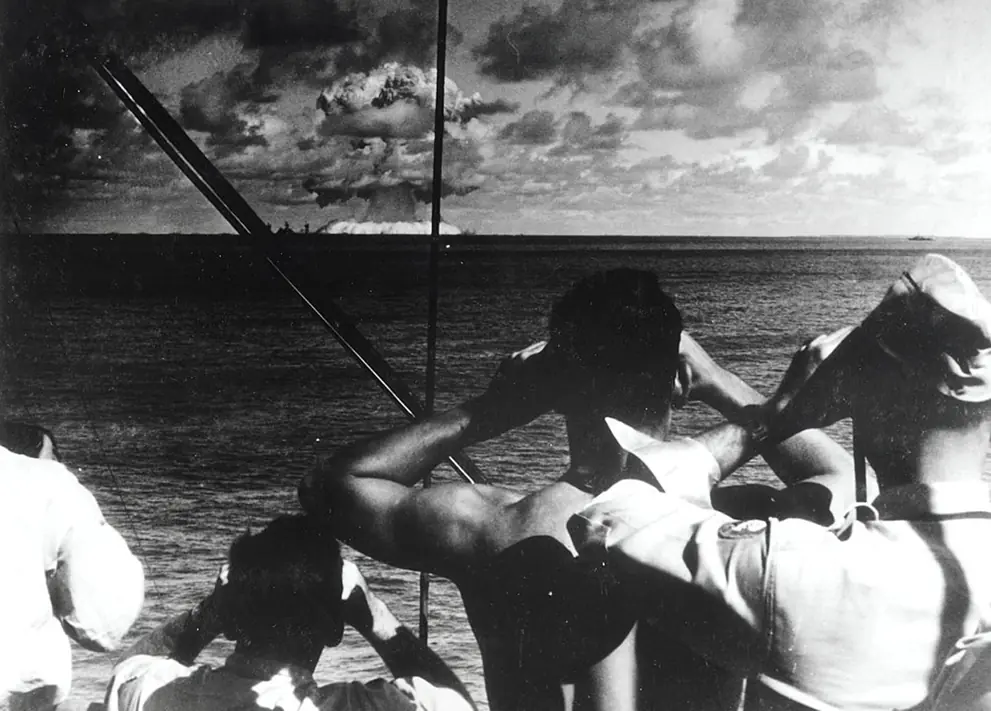
8- U.S. military observers watch the explosion during Operation Crossroads Baker, a nuclear test conducted on Bikini Atoll on July 25, 1946. This was the fifth nuclear explosion ever, after two other tests and the two bombs dropped on Hiroshima and Nagasaki.(U.S. Department of Defense)
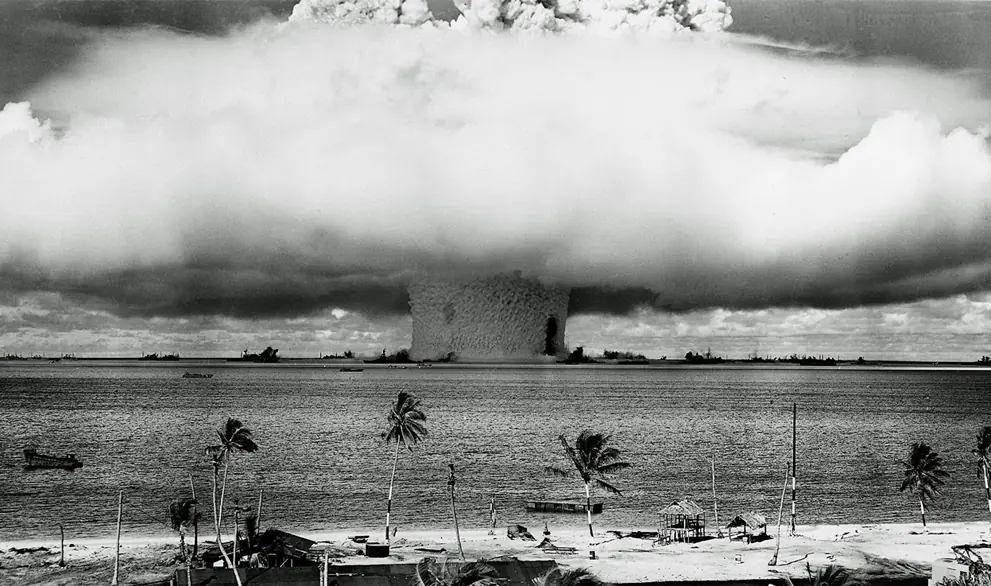
9- A massive column of water rises from the sea as the U.S. detonate an atom bomb at Bikini Atoll in the Pacific in the first underwater test of the device, July 25, 1946. (AP Photo)
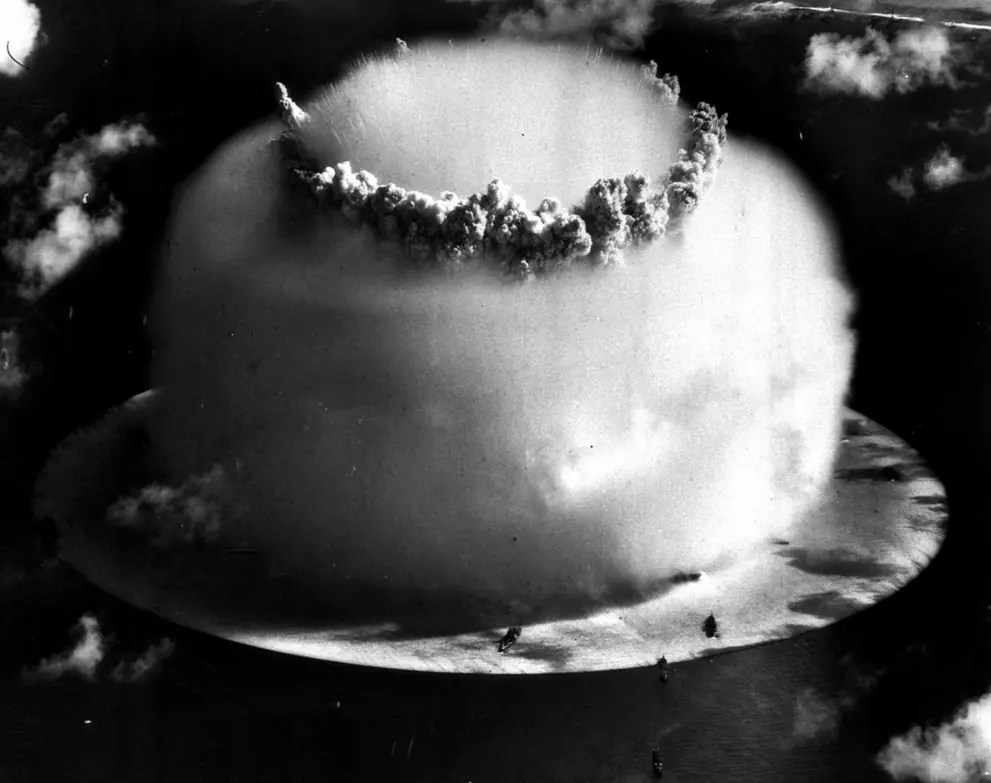
10- A huge mushroom cloud rises above Bikini atoll in the Marshall Islands on July 25, 1946 following an atomic test blast, part of the U.S. military's Operation Crossroads. The dark spots in foreground are ships that were placed near the blast site to test what an atom bomb would do to a fleet of warships. (AP Photo)
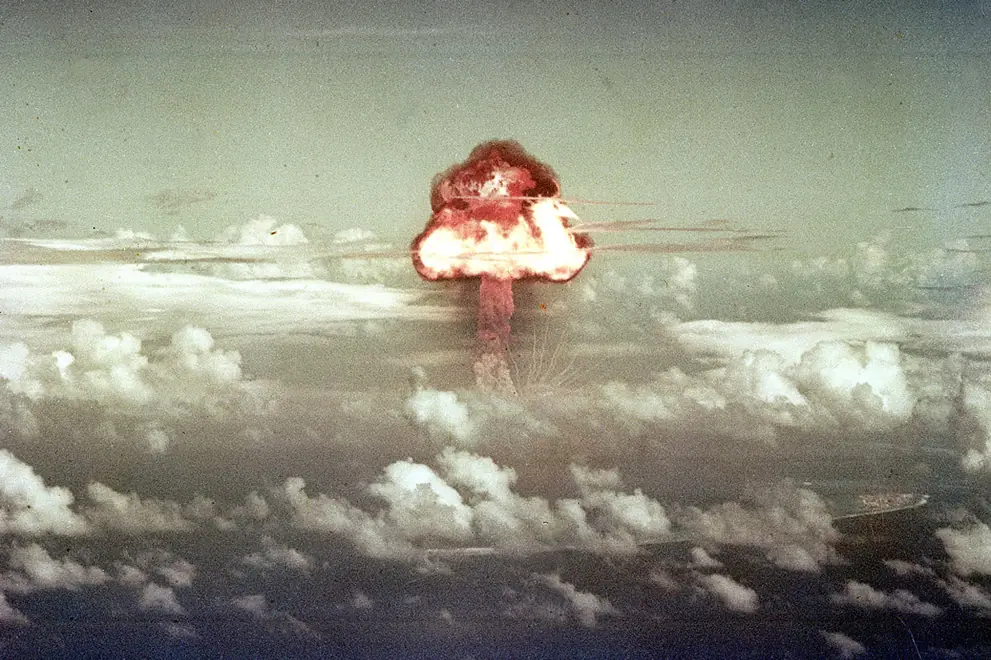
11- On November 16, 1952, a B-36H bomber dropped a nuclear bomb over a point north of Runit Island in the Enewetak atoll, resulting in a 500 kiloton explosion -- part of a test code-named Ivy. (U.S. Department of Defense)
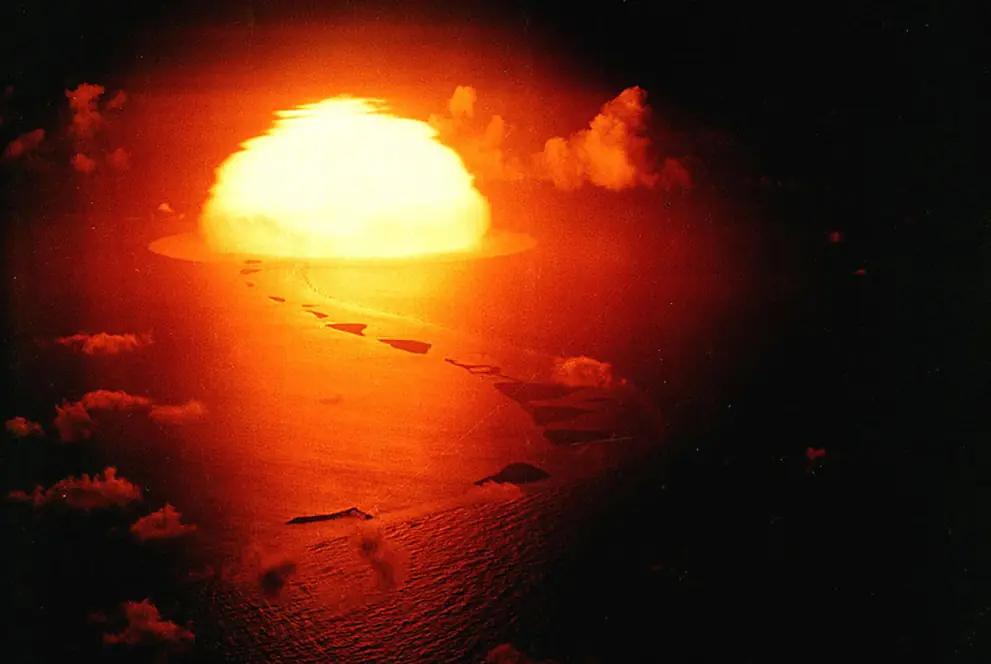
12- Operation Greenhouse took place in the spring of 1951, consisting of four explosions at the Pacific Proving Grounds in the Pacific Ocean. This photo is from the third test, George, on May 9, 1951, the first thermonuclear bomb test, yielding 225 kilotons. (U.S. Department of Defense)
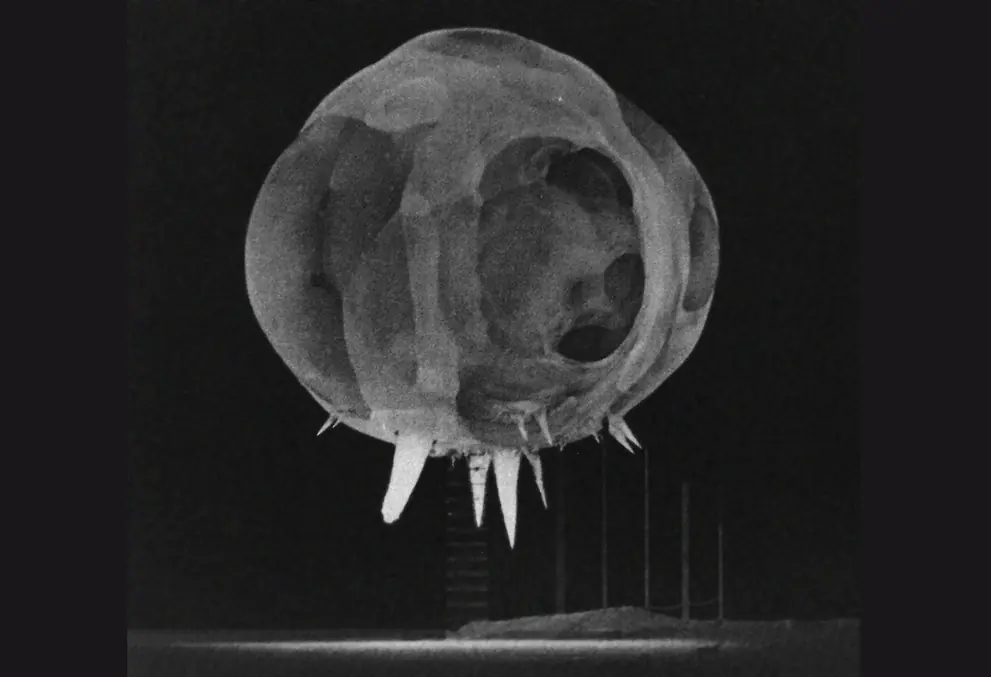
13- "Rope tricks" are seen in this image of a nuclear explosion taken less than one millisecond after detonation. During operation Tumbler-Snapper in 1952, this nuclear test device was suspended 300 feet above the Nevada desert floor, and anchored by mooring cables. As the ball of plasma expanded, the radiating energy superheated and vaporized the cables just ahead of the fireball, resulting in the "spike" effects. (U.S. Department of Defense)

14- Complete destruction of House No. 1, located 3,500 feet from ground zero, by an atomic blast on March 17, 1953, at Yucca Flat at the Nevada Proving Ground. The time from the first to last picture was 2.3 seconds. The camera was completely enclosed in a 2-inch lead sheath as a protection against radiation. The only source of light was that from the bomb. In frame 1, the house is lit by the blast. By frame 2 the radiating energy has set it on fire, and the remaining frames show the rapid disintegration of the house by the blast wave. (U.S. Department of Defense)
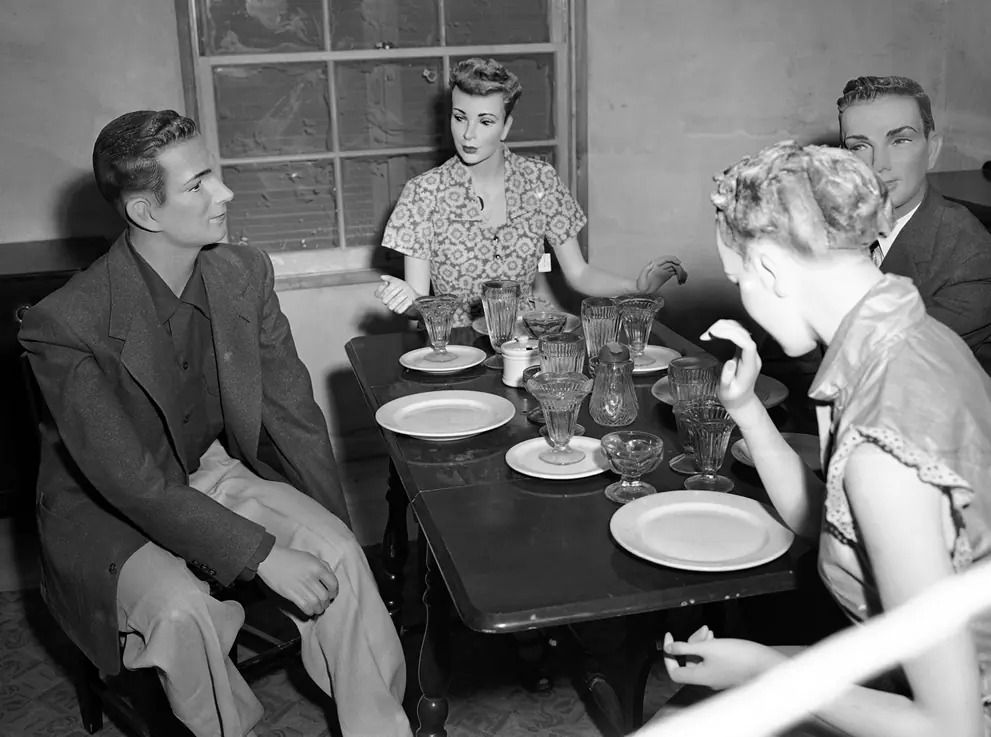
15- (1 of 2) In Operation Doorstep, conducted during the larger Operation Upshot-Knothole nuclear bomb test, mannequins are seated at a table in the dining room of house number two, attending a "dinner party" thrown by Civil Defense officials who are testing the effects of an atomic explosion on houses and occupants on March 15, 1953. (AP Photo/Dick Strobel)
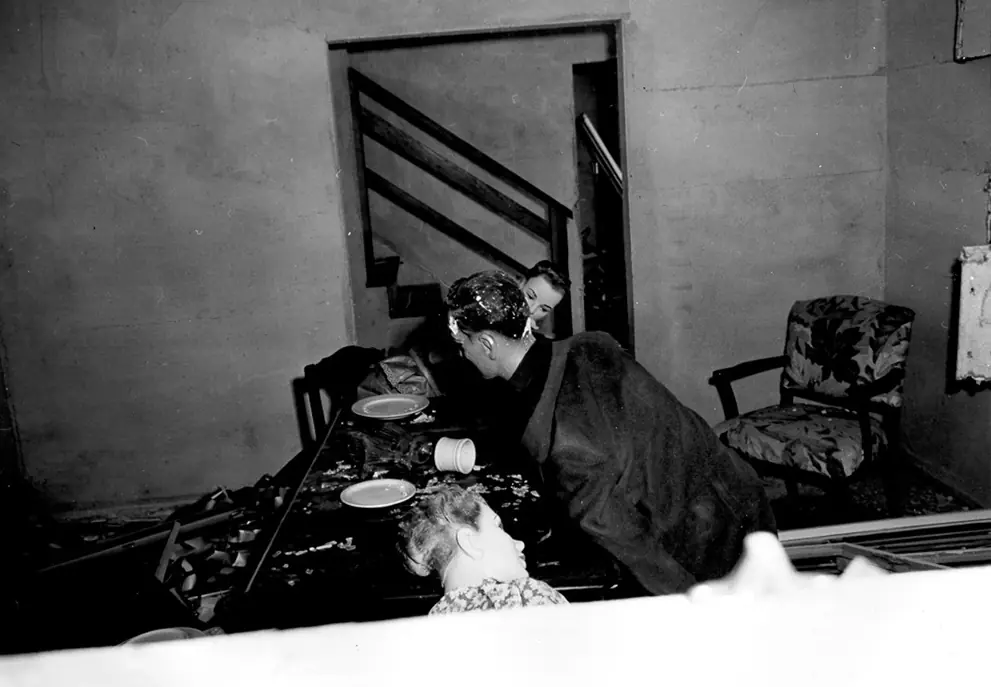
16- (2 of 2) After the blast, mannequins lie strewn about the room, their "dinner party" interrupted violently by an atomic blast on March 17, 1953. (U.S. Department of Defense)
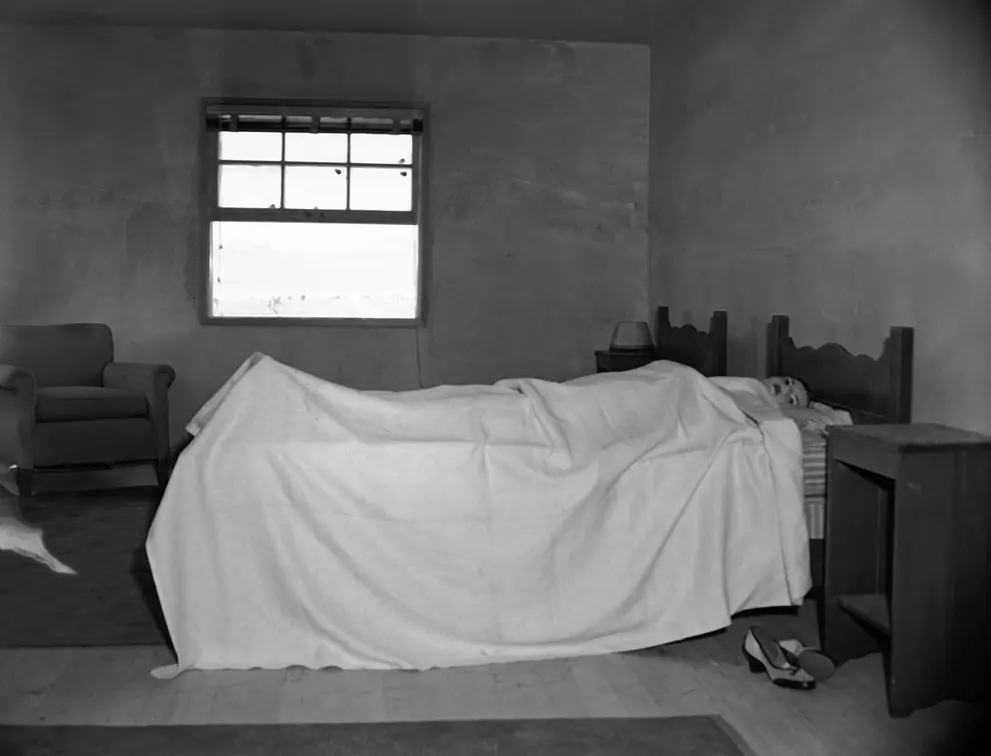
17- (1 of 2) Stretched on a bed, in an upstairs bedroom of house number two, is a mannequin ready to test the effects of an atomic explosion at the atomic proving grounds near Las Vegas, Nevada, March 15, 1953. Through the window a mile and a half away stands a 300 foot steel tower atop which the bomb will be detonated. The purpose of the test blast is to show Civil Defense officials what would happen in an American city if it were subjected to a atomic attack. (AP Photo/Dick Strobel)
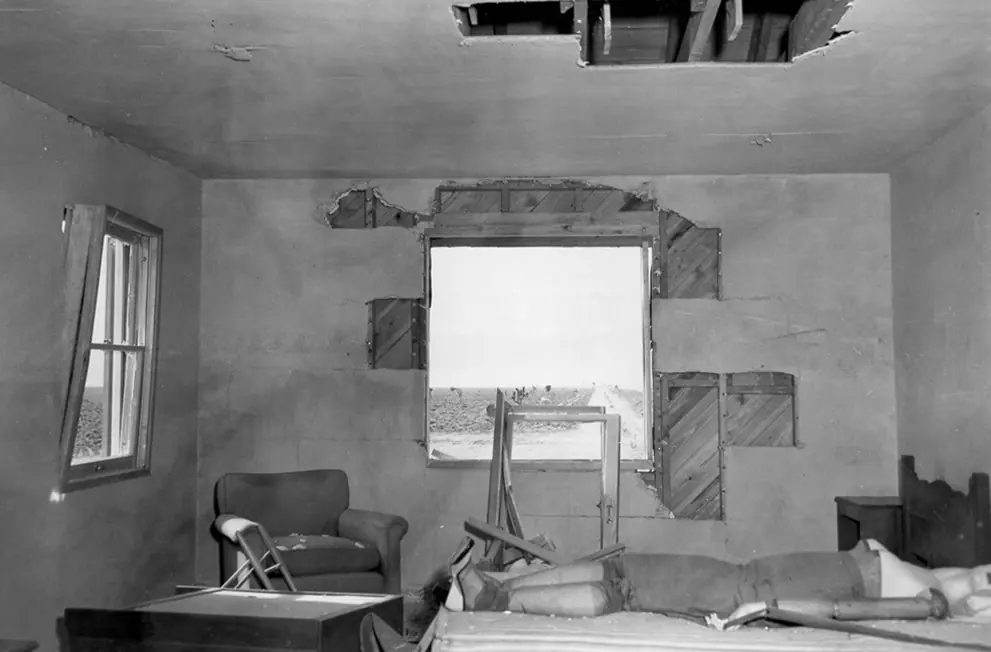
18- (2 of 2) After the blast, a damaged bedroom, window and blankets missing, resulting from a test during an atomic blast on March 17th, 1953. (U.S. Department of Defense)
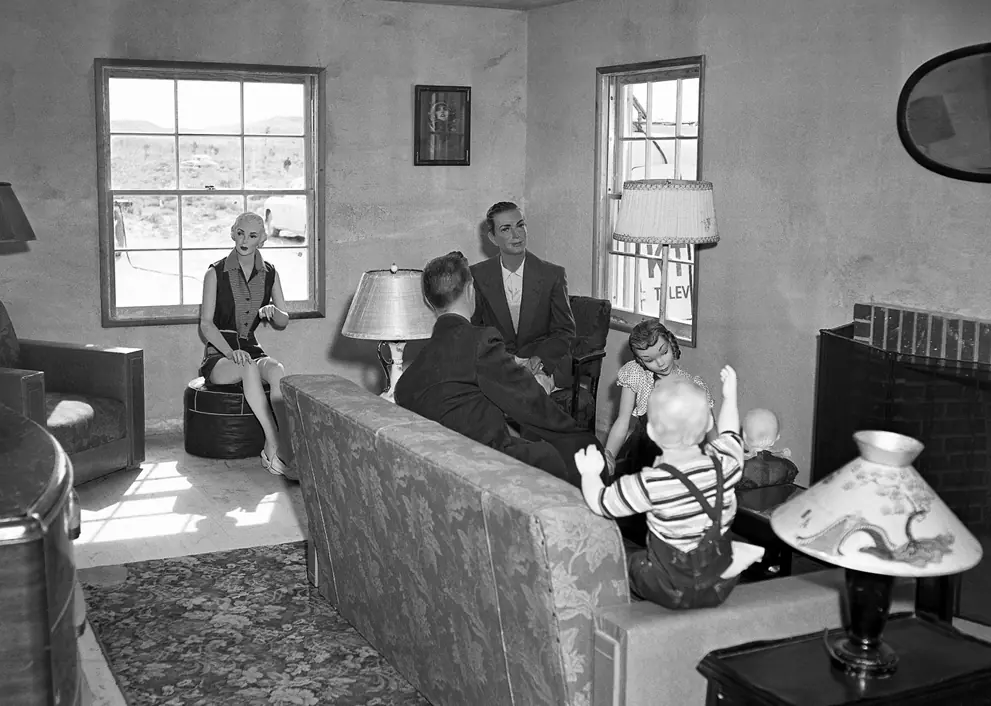
19-(1 of 2) Mannequins representing a typical American family gathered in a living room are pictured on March 15, 1953 in House No. 2, awaiting an atomic test explosion on Nevada proving grounds. (AP Photo)
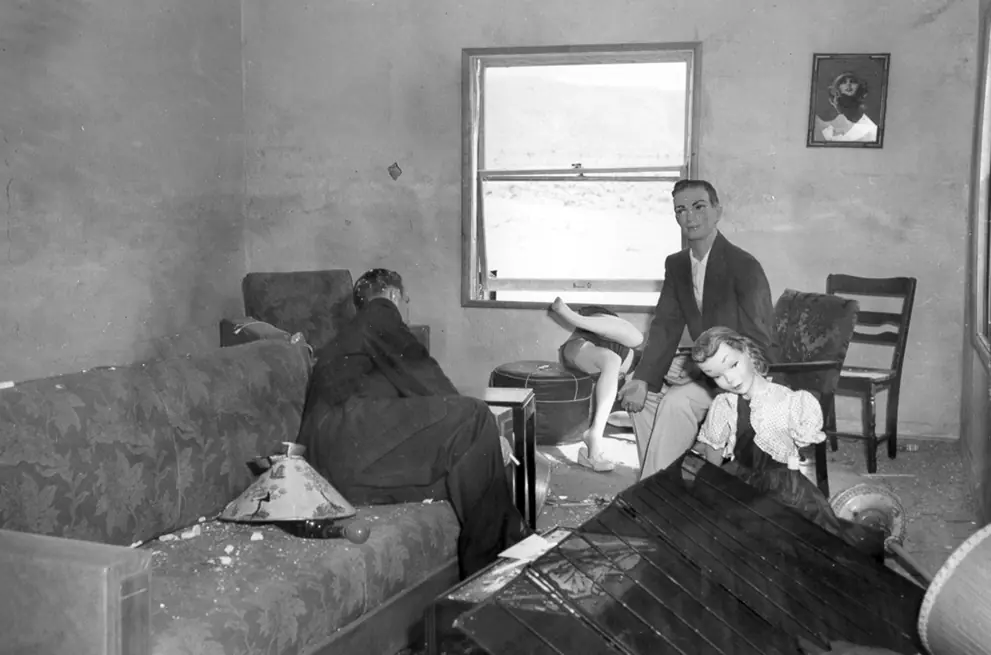
20- (2 of 2) After the blast, a damaged living room, members of the mannequin family tossed about or missing after an atomic blast on March 17th, 1953. (U.S. Department of Defense)
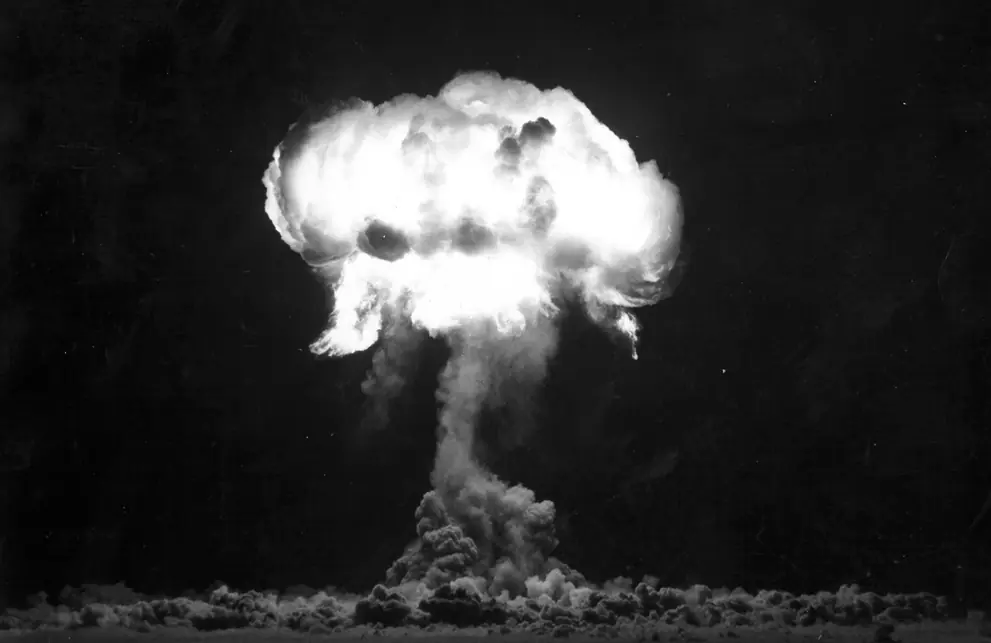
21- During Plumbbob test at the Nevada Test Site on August 30, 1957, the Franklin Prime shot is detonated from a balloon in Yucca Flat at an altitude of 750 feet. (National Nuclear Security Administration / Nevada Site Office)
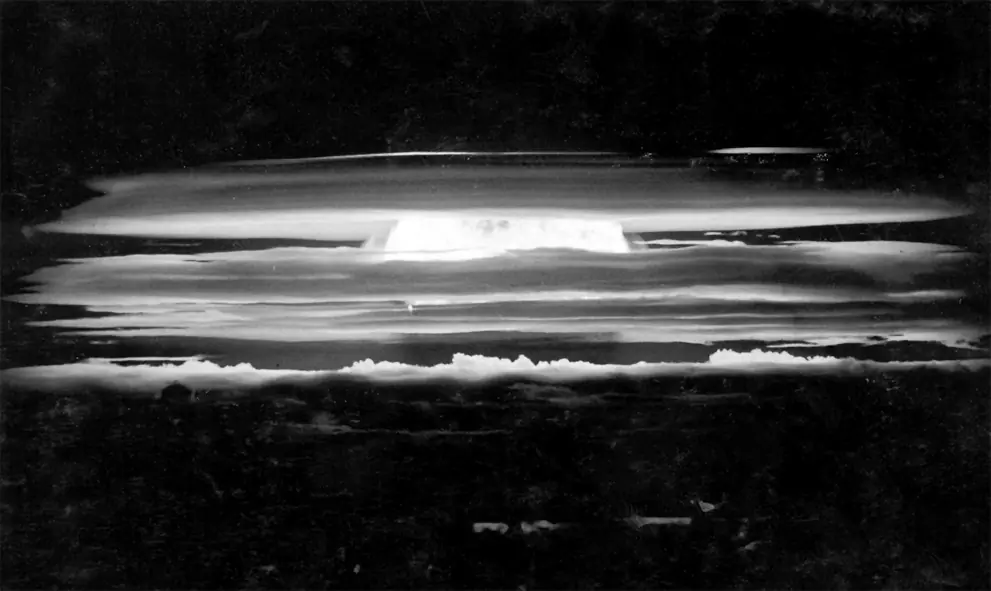
22- The test explosion of a hydrogen bomb during Operation Redwing over the Bikini Atoll on May 20, 1956. (AP Photo)
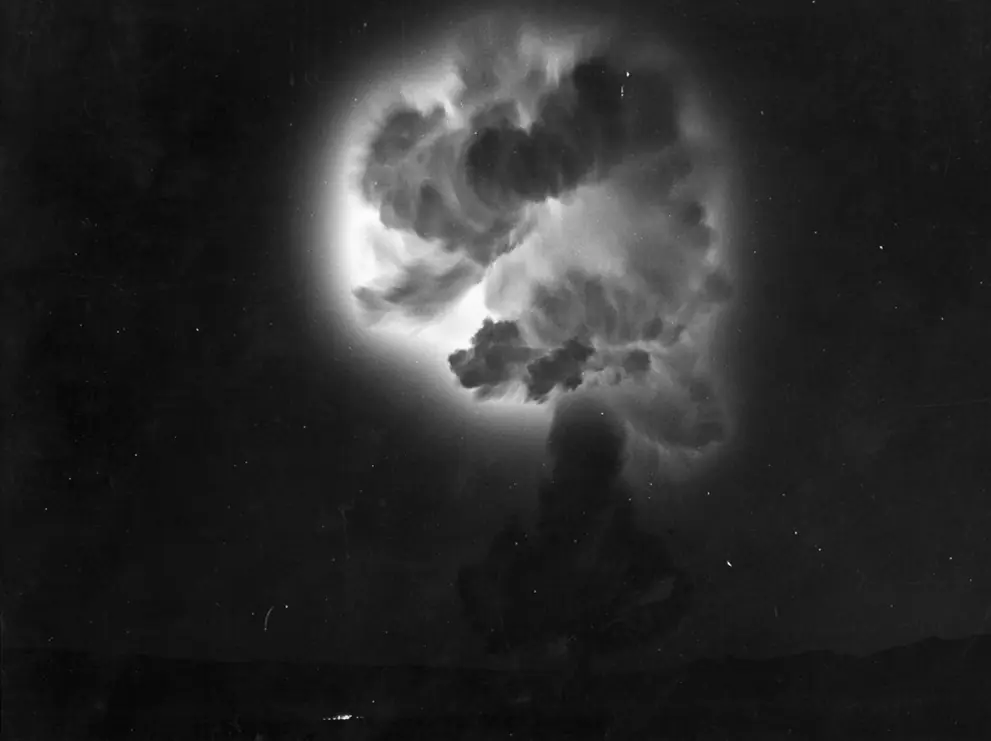
23- Ionization glow surrounds the cooling fireball of the Diablo shot, fired in Yucca Flat at 4:30 a.m. Monday, July 15, 1957. (National Nuclear Security Administration / Nevada Site Office)
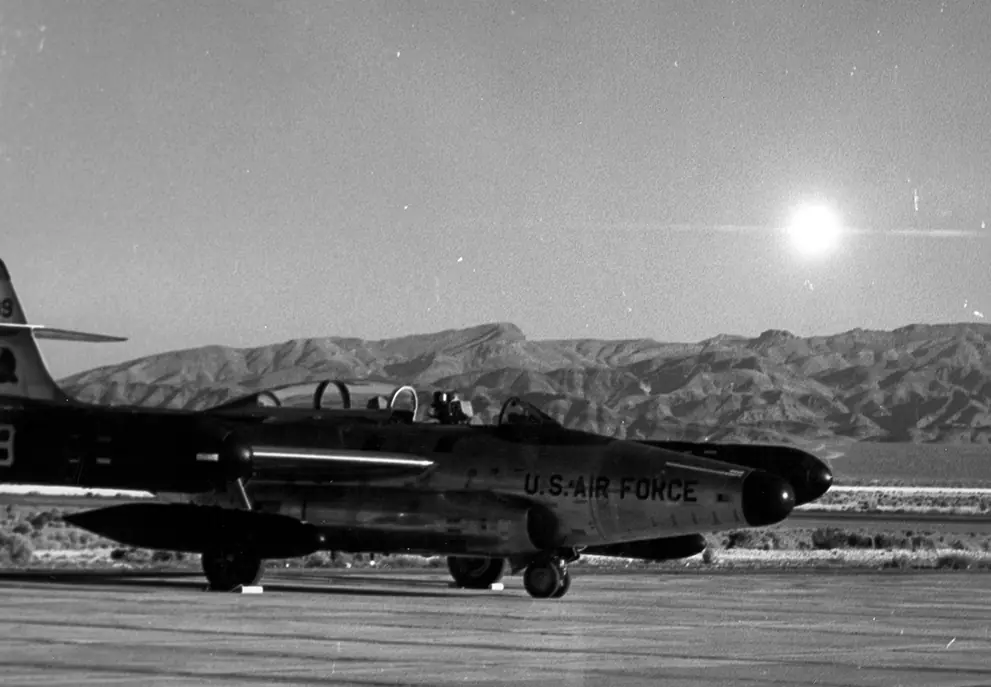
24- The flash of the exploding nuclear warhead of an air-to-air rocket is shown as a bright sun in the eastern sky at 7:30 a.m. July 19, 1957 at Indian Springs Air Force Base, some 30 miles away from the point of detonation. A Scorpion, sister ship of the launching aircraft, is in the foreground. (National Nuclear Security Administration / Nevada Site Office)
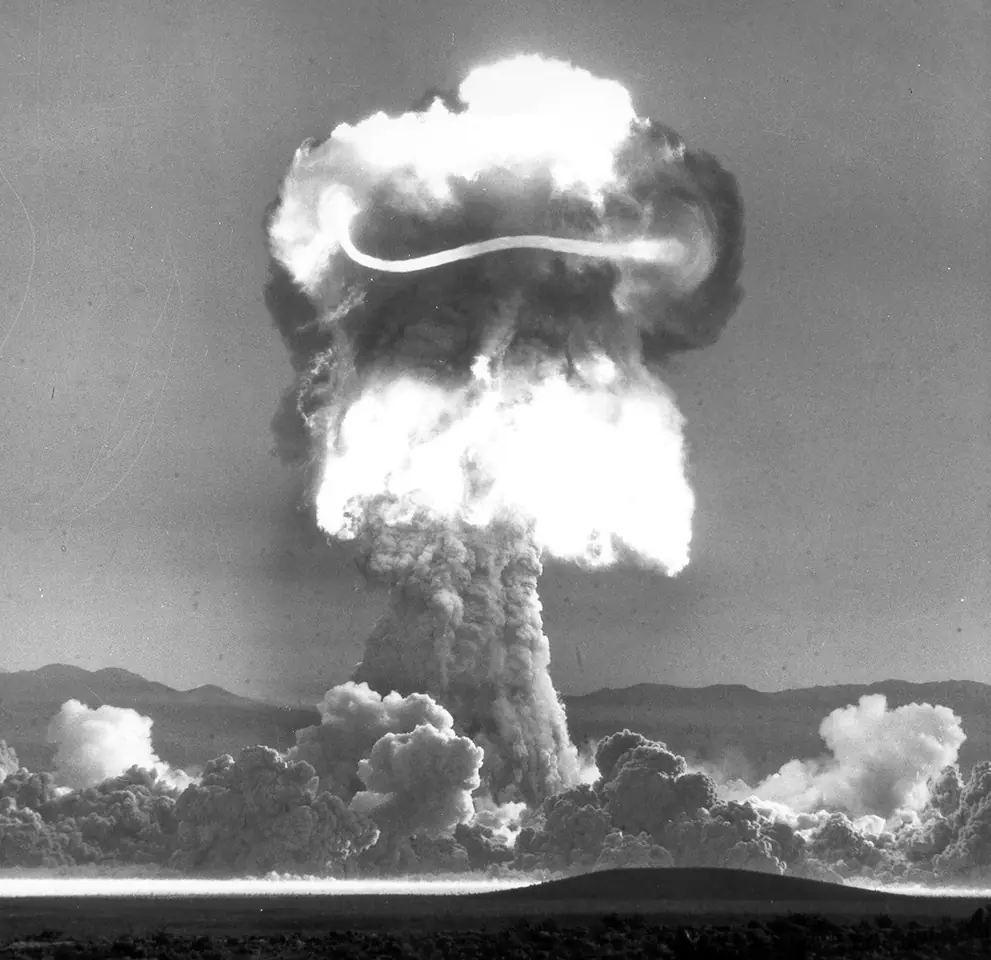
25- The fireball of the Priscilla shot, fired on June 24, 1957, as a part of the Operation Plumbbob series. (National Nuclear Security Administration / Nevada Site Office)
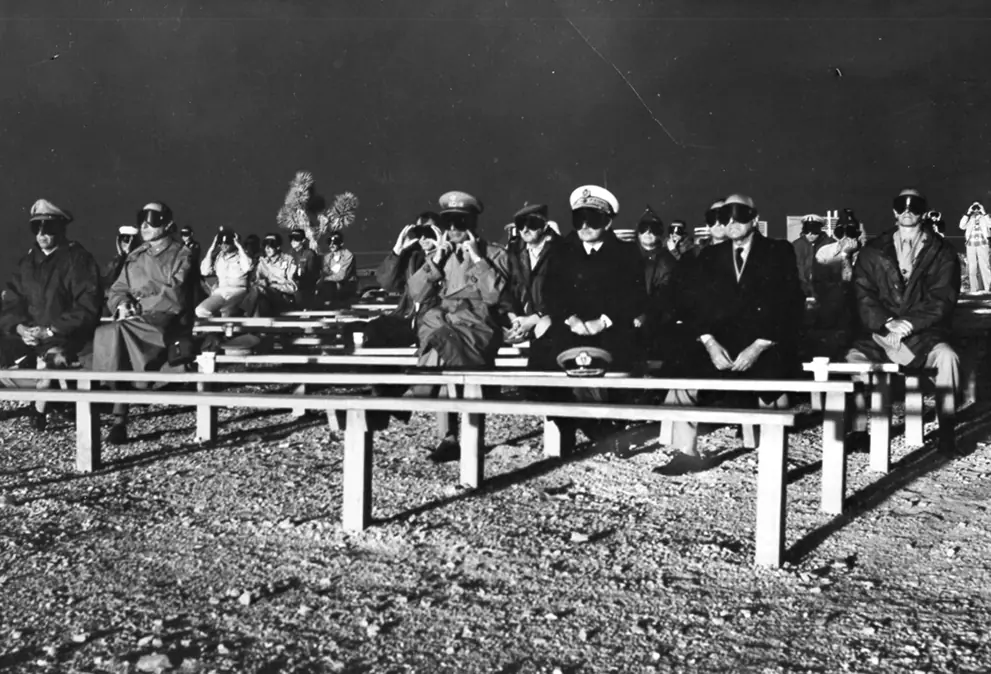
26- NATO observers watch the detonation of Operation Plumbbob Boltzmann on May 28, 1957. (National Nuclear Security Administration / Nevada Site Office)
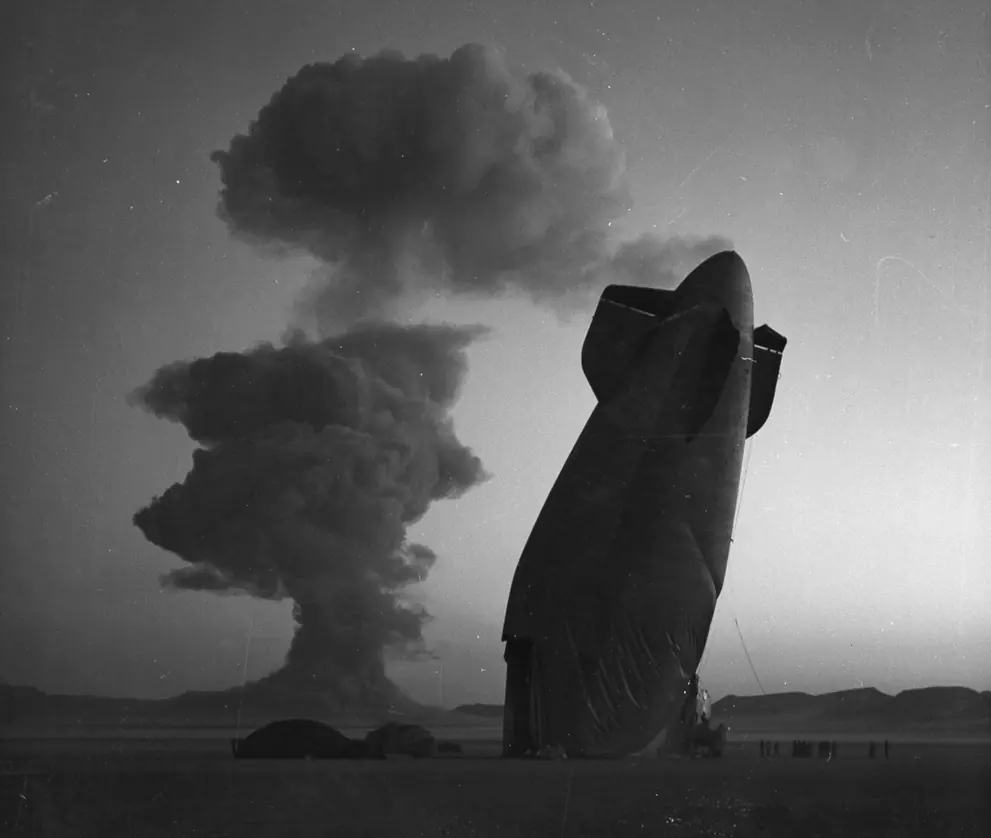
27- The tail section of a U.S. Navy Blimp is shown with the Stokes cloud in background at the Nevada test Site on August 7, 1957. The blimp was in temporary free flight in excess of five miles from ground zero when it was collapsed by the shock wave from the blast. The airship was unmanned and was used in a military effects experiment. (National Nuclear Security Administration / Nevada Site Office)
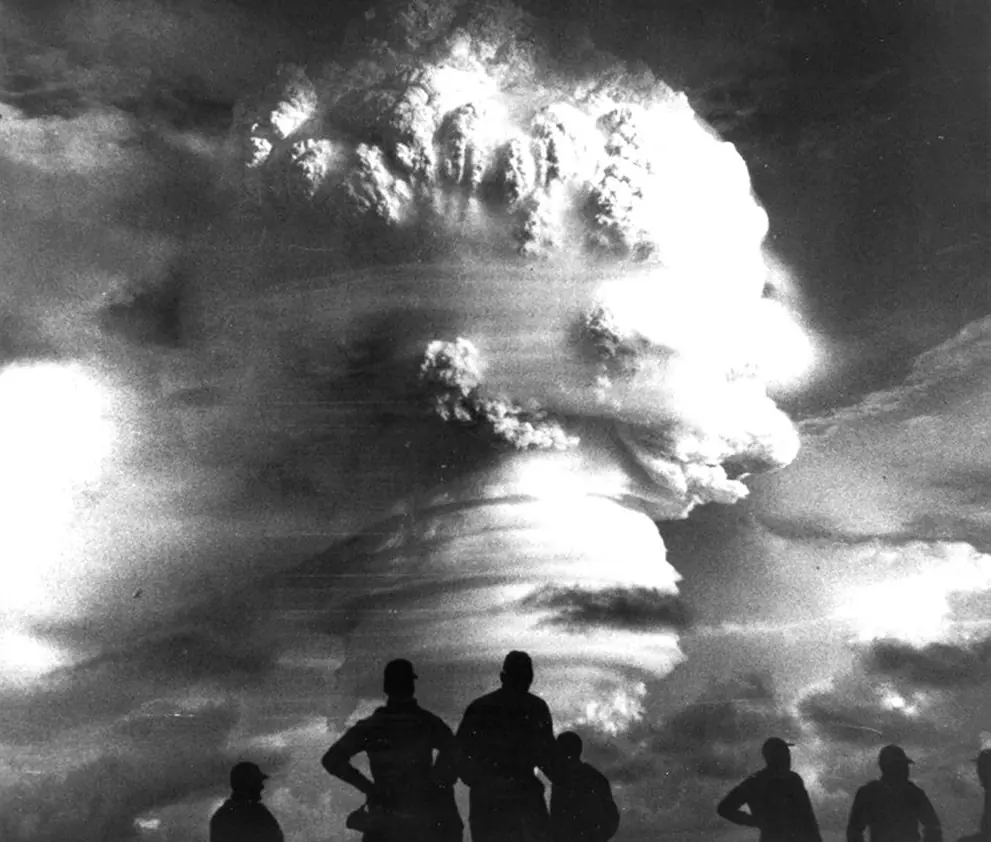
28- Observers view atmospheric testing during operation Hardtack I -- a thermonuclear detonation during the Pacific tests in 1958. (National Nuclear Security Administration / Nevada Site Office)
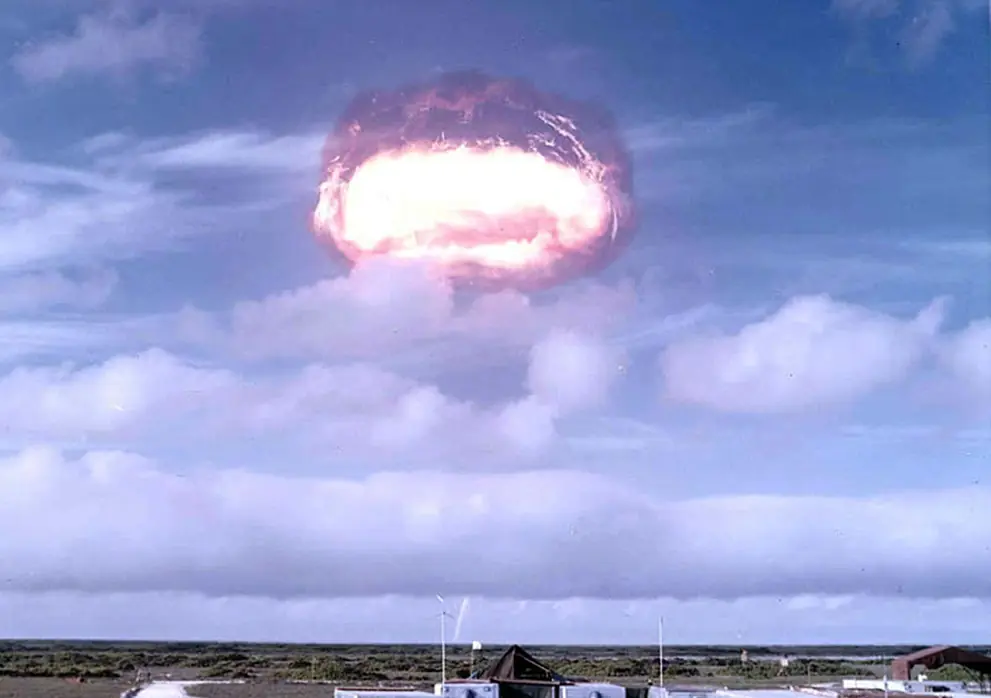
29- A view of the Arkansas test, part of Operation Dominic, a series of over 100 nuclear test explosions in Nevada and the Pacific in 1962. (U.S. Department of Defense)
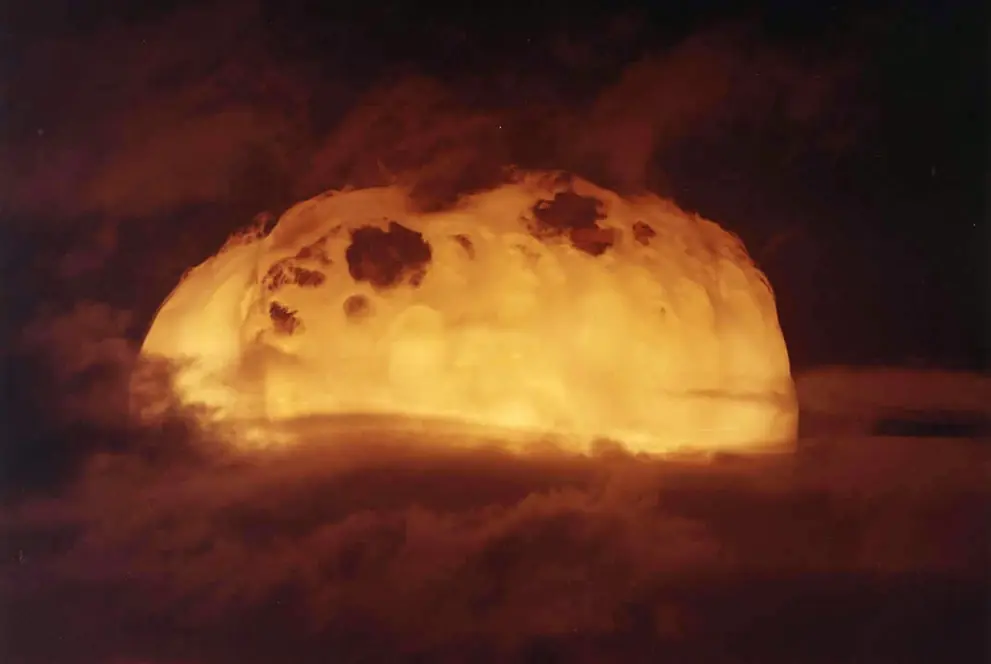
30- The rising fireball of the Aztec test, part of Operation Dominic, a series of over 100 nuclear test explosions in Nevada and the Pacific in 1962. (U.S. Department of Defense)
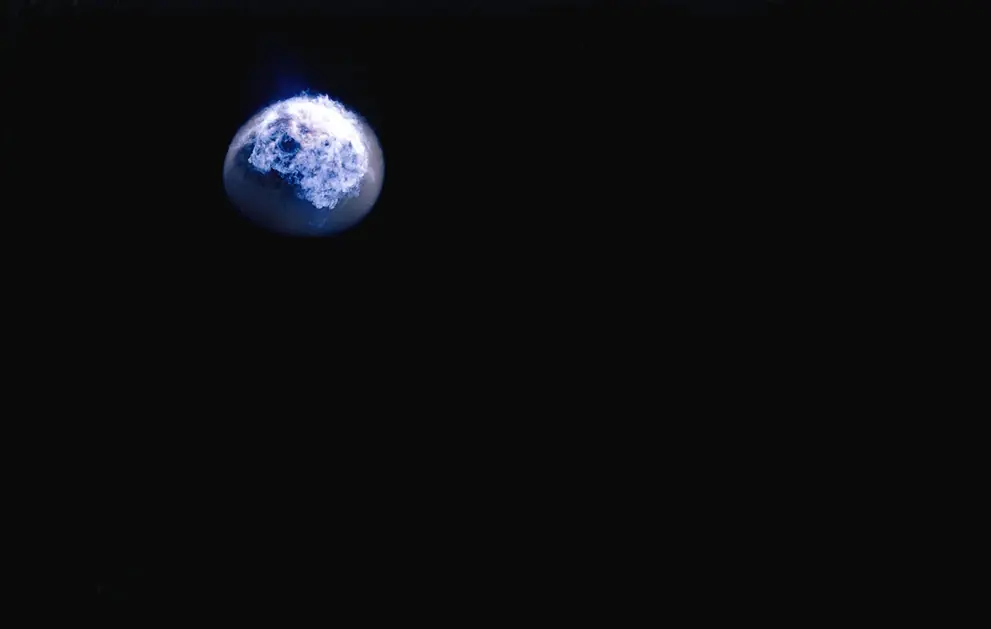
31- Shot during Fishbowl Bluegill, this is an image of an explosion of a 400 kiloton nuclear bomb taking place in the atmosphere, 30 miles above the Pacific, as viewed from above, in October 1962. (U.S. Department of Defense)
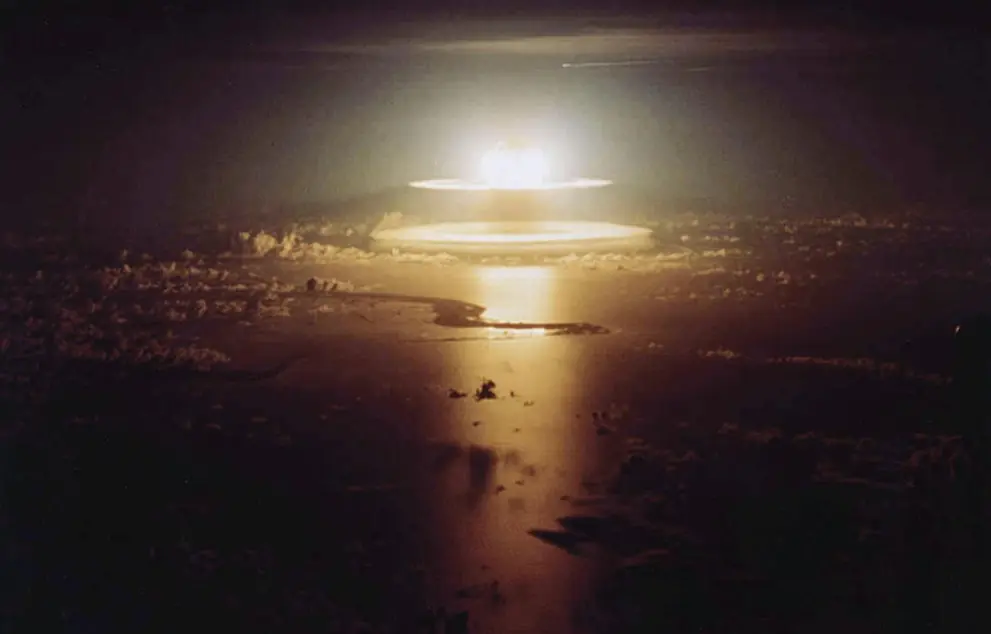
32- Expanding rings surround a mushroom cloud, during the Yeso test explosion, part of Operation Dominic, a series of over 100 nuclear test explosions in Nevada and the Pacific in 1962. (U.S. Department of Defense)
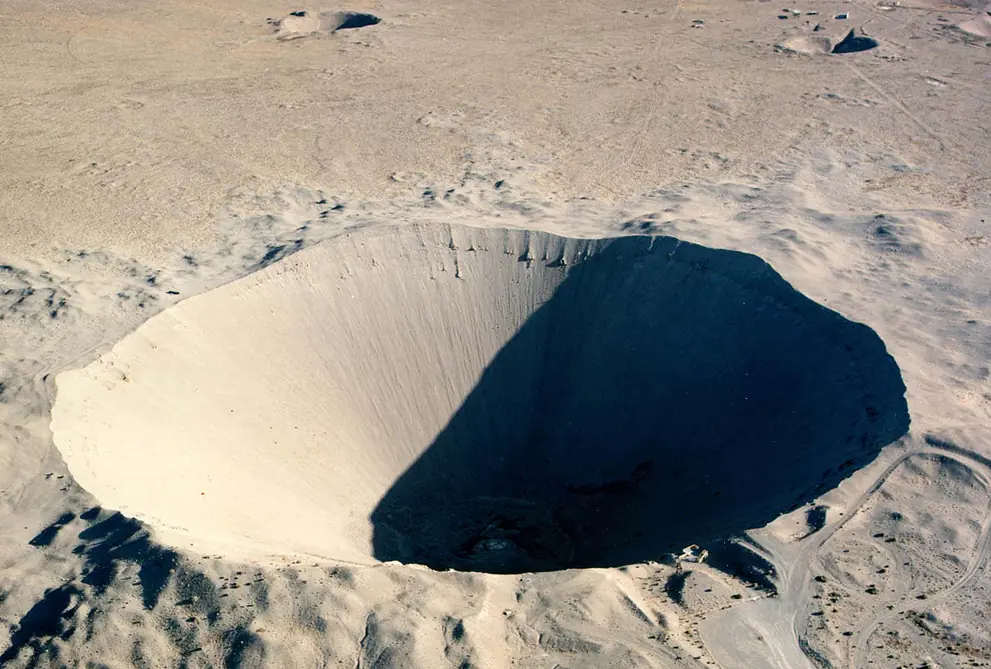
33- Sedan Crater was formed when a 100 kiloton explosive buried under 635 feet of desert alluvium was fired at the NTS on July 6, 1962, displacing 12 million tons of earth. The crater is 320 feet deep and 1,280 feet in diameter. (National Nuclear Security Administration / Nevada Site Office)
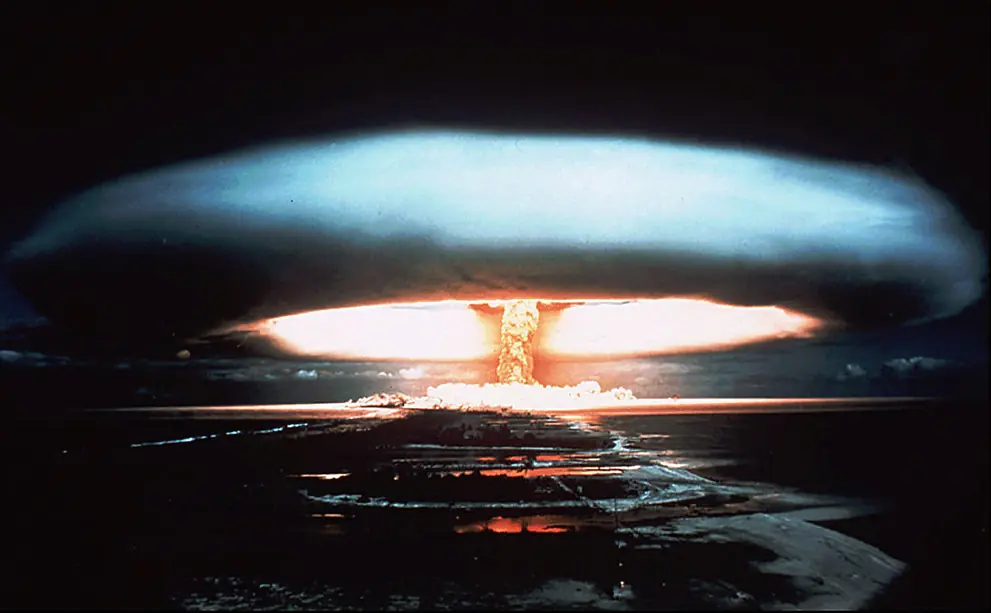
34- A 1971 photo of a nuclear bomb detonated by the French government at the Mururoa atoll, French Polynesia. (AP Photo)
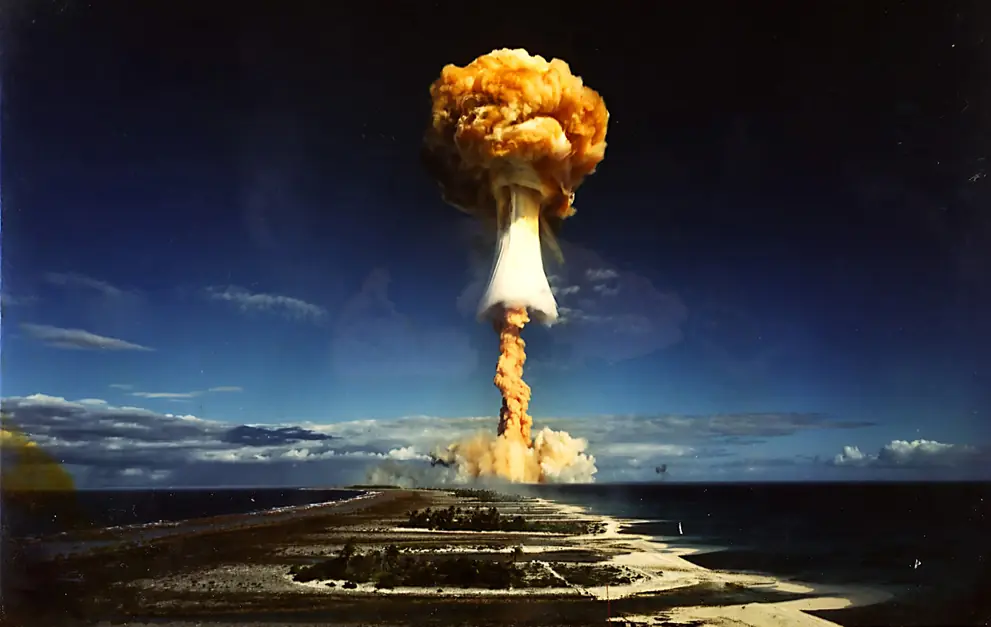
35- A photo of a nuclear bomb detonated by the French government at the Mururoa atoll, French Polynesia.
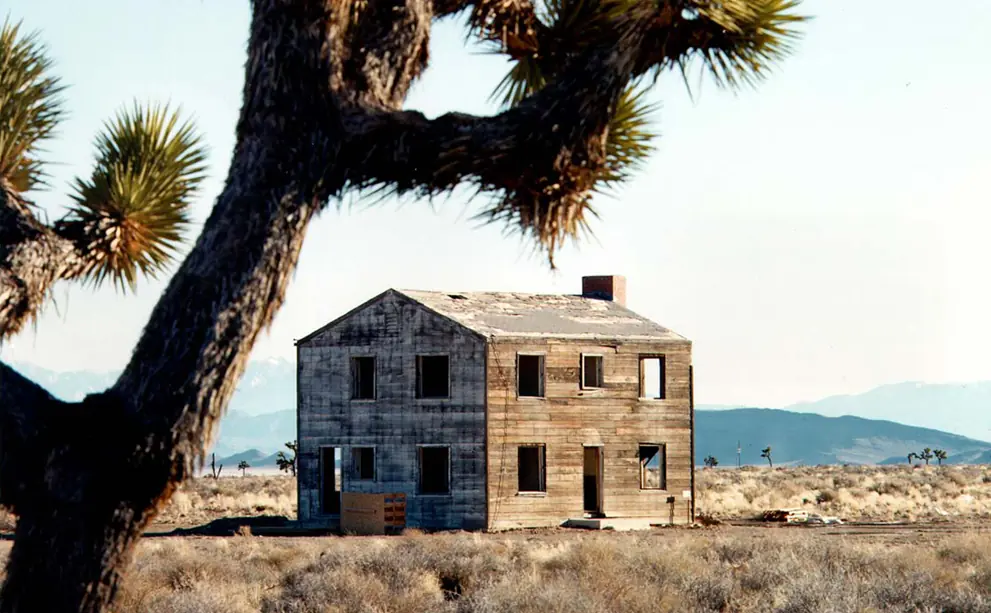
36- This "Survival Town" house, photographed recently, was built some 7,500 feet from a 29-kiloton nuclear detonation -- it remained essentially intact. Survival Town consisted of houses, office buildings, fallout shelters, power systems, communications equipment, radio broadcasting station, and trailer homes. The test, called Apple II, was fired on May 5, 1955. (U.S. Department of Defense)
Fuente: http://www.theatlantic.com/infocus/2011/05/when-we-tested-nuclear-bombs/100061/