![Trabajos - Ingeniería de Sonido [Untref]](https://storage.posteamelo.com/assets-adonis/assets/2015/03/12/progressive_directivity_arrays--g_VfOsSH3t.webp "Trabajos - Ingeniería de Sonido [Untref]")
Buenas! Para aquellos que querían saber de qué se trata la carrera Ingeniería de Sonido de la Universidad Nacional de Tres de Febrero, les comparto estos trabajos realizados para la materia Instrumentos y Mediciones Acústicas. Están en inglés ya que la catedra la dicta un profesor que habla en ese idioma.

Acoustical Parameters - Teatro Argentino de La Plata and Teatro Margarita Xirgu
(Parámetros acústicos del Teatro Argentino de La Plata y del Teatro Margarita Xirgu)
This report describes the methods and results from several measurements performed in the halls “Teatro Argentino de La Plata” and “Teatro Margarita Xirgu” to know the behavior of their main acoustical parameters. These parameters are evaluated in detail to classify each hall according to the degree of their acoustic comfort.
Trabajo:
Binaural Impulse Response Measurements of an Auditorium Using Different Sound Sources
(Mediciones de respuestas impulsivas binaurales de un auditorio utilizando diferentes fuentes sonoras)

The behavior of a LTI (linear time invariant) system can be completely characterized from its so-called impulse response. The impulse response allows us to analyze how the system takes the input signals, transforms them, and produces outputs. Introducing at the entrance of any LTI system a short signal (ideally zero duration) and large amplitude (ideally infinite) and measuring the resulting signal at the output a complete characterization is obtained in time and frequency domain for that system. In acoustics, this methodology is universally used to obtain the impulse response of rooms that allow us to know, after the corresponding signal post-processes, the most important acoustic parameters. In order to obtain such impulse response, the room is considered as the system under test. In this report the results obtained, using different types of input sound signals, of the acoustical parameters defined in ISO 3382 are analyzed. The goal is to perform several comparisons among these results, not to make an acoustical evaluation of the room. The measurements were performed in the Auditorium of the National University of Tres de Febrero, Caseros, Buenos Aires, Argentina.
Trabajo:
Speech Intelligibility
(Inteligibilidad de la palabra)
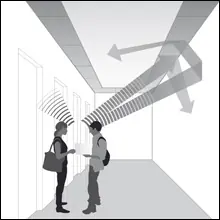
The STI was developed in the early 70s by Houtgast and Steeneken as an objective measure of speech transmission quality. One of the advantages of the STI is its wide range of application areas. The STI is extensively used in room acoustics, for instance to assess intelligibility in auditoria, churches and conference rooms. But the STI is also applied to telecommunication channels, such as (mobile) telephone lines and radio transmissions. The STI is based on that the information in speech is represented acoustically in the form of amplitude modulations. The human speech is essentially a sequence of modulated tonal and noise-like sounds. If portion of these modulations is lost then the intelligibility will decrease. The Modulation Transfer Function, which can be computed or measured, expresses loss and preservation of modulations. The STI is calculated directly from the Modulation Transfer Function. In this report the procedures employed to obtain the STI values from measuring two different speech “situations” are presented. In addition, the “Definition (D50)” parameter is calculated so as to obtain and evaluate the speech intelligibility with a different method.
Trabajo:
Measurements of Sound Absorption Coefficients
(Mediciones de los coeficientes de absorción)
The absorption coefficients of a material allow to know to what extent the incident sound energy is absorbed. All materials absorb a greater or lesser extent some of the sound energy incident on them. This property is of vital importance in the design of rooms where it is necessary to emphasize the behavior of the sound field within. Acoustic parameters such as the reverberation time (RT) are directly dependent on the absorption properties of the materials used as termination of the various surfaces that compose an enclosure. Therefore, the designer must know the absorption properties that each material has to know which to choose when looking for the highest degree of acoustic comfort. This paper describes the procedures undertaken to assess and obtain the absorption coefficients of a set of pieces of glass wool, universally used for its acoustic and thermal performance, based on the specifications of the ISO-354 standard: "Measurement of sound absorption in a reverberation room".
Trabajo:
Seat Absorption Coefficients Measurement
(Mediciones de los coeficientes de absorción de sillas)
![Trabajos - Ingeniería de Sonido [Untref]](https://storage.posteamelo.com/assets-adonis/assets/2015/03/12/01-Fr9r2z8UMhH.webp "Trabajos - Ingeniería de Sonido [Untref]")
The absorption coefficients of a seat arrangement allow estimating the absorption area of such seats when installed in the room for which they were chosen. There are several methods to measure the absorption coefficients of a seating array, but one of the most recognized and used is the Kath and Kuhl method. The aim of this report is to explain the methodology used to measure the absorption coefficients of a seat arrangement and extrapolate the results obtained to estimate the absorption that would produce these seats if they are installed on the ground floor of the “Teatro Argentino de La Plata” and “Teatro Margarita Xirgu”, both located in the province of Buenos Aires, Argentina.
Trabajo:
Reverberation Chamber Design
(Diseño de una cámara reverberante)
A reverberation chamber is, basically, a room that has a long reverberation time and is designed as diffuse as possible. The construction of the room should realize a high performance of sound insulation from any noise that comes from outside, since the interior of the room is used primarily for acoustics characteristics of material testing, which requires complete independence of any unwanted outside sound. Furthermore, the materials on the surface of the inner walls must be carefully chosen, for minimum absorption of sound energy. Reducing the sound energy absorption means to increase the energy of the reflections, which leads to achieve a totally diffuse field and a long reverberation time. Thus the factors that dominate the sound attenuation are: air absorption, which is considerable regarding the size of the chamber, especially at high frequencies, and the low absorption coefficient of the room surfaces. In this report the design of a reverberation chamber is presented according to the requirements of ISO-354 “Acoustics - Measurement of sound absorption in a reverberation room”. The construction details are specified and finally the simulation results are shown for evaluating reverberation time within the chamber.
Trabajo: http://es.scribd.com/doc/155624434/Reverberation-Chamber-Design
Polar Pattern Measurements
(Medición de Patrones Polares)
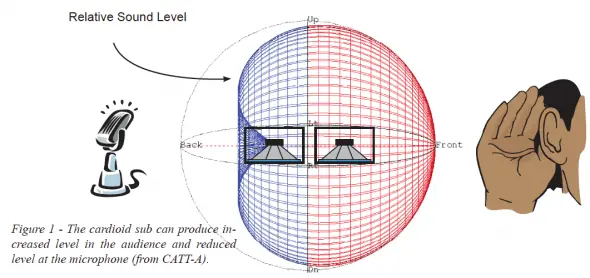
The polar pattern is one of the most important characteristics of a sound source, allowing to known the spatial behavior that the sounds will have in terms of relative sound pressure levels and frequency. Such behavior does not consider any acoustic phenomenon linked to the room where the source is used, it refers to the dynamics of irradiation in a so-called "free field" where no sound reflections exists. In practice, in order to obtain these patterns the measurements of the sound source are performed in an anechoic chamber, which are specially equipped to eliminate any kind of reflection and to achieve complete isolation from external noise. This condition of "room without reflections and without noise" could not be fulfilled in this report because the measurements were made in a room with no acoustic treatment used as classroom. Therefore we studied various methodologies to minimize systematic errors that would occur in the measurements, which will be detailed later. It is important to remark that there is no a standard which specifies the correct way to perform polar patterns measurements. For these reasons the results obtained do not have a high degree of accuracy, although can be used as very good approximations to the actual behavior of the sound sources. For this work a recording studio loudspeaker and human voice were used.
Trabajo:
Saludos!

Acoustical Parameters - Teatro Argentino de La Plata and Teatro Margarita Xirgu
(Parámetros acústicos del Teatro Argentino de La Plata y del Teatro Margarita Xirgu)
This report describes the methods and results from several measurements performed in the halls “Teatro Argentino de La Plata” and “Teatro Margarita Xirgu” to know the behavior of their main acoustical parameters. These parameters are evaluated in detail to classify each hall according to the degree of their acoustic comfort.
Trabajo:
Binaural Impulse Response Measurements of an Auditorium Using Different Sound Sources
(Mediciones de respuestas impulsivas binaurales de un auditorio utilizando diferentes fuentes sonoras)
The behavior of a LTI (linear time invariant) system can be completely characterized from its so-called impulse response. The impulse response allows us to analyze how the system takes the input signals, transforms them, and produces outputs. Introducing at the entrance of any LTI system a short signal (ideally zero duration) and large amplitude (ideally infinite) and measuring the resulting signal at the output a complete characterization is obtained in time and frequency domain for that system. In acoustics, this methodology is universally used to obtain the impulse response of rooms that allow us to know, after the corresponding signal post-processes, the most important acoustic parameters. In order to obtain such impulse response, the room is considered as the system under test. In this report the results obtained, using different types of input sound signals, of the acoustical parameters defined in ISO 3382 are analyzed. The goal is to perform several comparisons among these results, not to make an acoustical evaluation of the room. The measurements were performed in the Auditorium of the National University of Tres de Febrero, Caseros, Buenos Aires, Argentina.
Trabajo:
Speech Intelligibility
(Inteligibilidad de la palabra)
The STI was developed in the early 70s by Houtgast and Steeneken as an objective measure of speech transmission quality. One of the advantages of the STI is its wide range of application areas. The STI is extensively used in room acoustics, for instance to assess intelligibility in auditoria, churches and conference rooms. But the STI is also applied to telecommunication channels, such as (mobile) telephone lines and radio transmissions. The STI is based on that the information in speech is represented acoustically in the form of amplitude modulations. The human speech is essentially a sequence of modulated tonal and noise-like sounds. If portion of these modulations is lost then the intelligibility will decrease. The Modulation Transfer Function, which can be computed or measured, expresses loss and preservation of modulations. The STI is calculated directly from the Modulation Transfer Function. In this report the procedures employed to obtain the STI values from measuring two different speech “situations” are presented. In addition, the “Definition (D50)” parameter is calculated so as to obtain and evaluate the speech intelligibility with a different method.
Trabajo:
Measurements of Sound Absorption Coefficients
(Mediciones de los coeficientes de absorción)
The absorption coefficients of a material allow to know to what extent the incident sound energy is absorbed. All materials absorb a greater or lesser extent some of the sound energy incident on them. This property is of vital importance in the design of rooms where it is necessary to emphasize the behavior of the sound field within. Acoustic parameters such as the reverberation time (RT) are directly dependent on the absorption properties of the materials used as termination of the various surfaces that compose an enclosure. Therefore, the designer must know the absorption properties that each material has to know which to choose when looking for the highest degree of acoustic comfort. This paper describes the procedures undertaken to assess and obtain the absorption coefficients of a set of pieces of glass wool, universally used for its acoustic and thermal performance, based on the specifications of the ISO-354 standard: "Measurement of sound absorption in a reverberation room".
Trabajo:
Seat Absorption Coefficients Measurement
(Mediciones de los coeficientes de absorción de sillas)
The absorption coefficients of a seat arrangement allow estimating the absorption area of such seats when installed in the room for which they were chosen. There are several methods to measure the absorption coefficients of a seating array, but one of the most recognized and used is the Kath and Kuhl method. The aim of this report is to explain the methodology used to measure the absorption coefficients of a seat arrangement and extrapolate the results obtained to estimate the absorption that would produce these seats if they are installed on the ground floor of the “Teatro Argentino de La Plata” and “Teatro Margarita Xirgu”, both located in the province of Buenos Aires, Argentina.
Trabajo:
Reverberation Chamber Design
(Diseño de una cámara reverberante)
A reverberation chamber is, basically, a room that has a long reverberation time and is designed as diffuse as possible. The construction of the room should realize a high performance of sound insulation from any noise that comes from outside, since the interior of the room is used primarily for acoustics characteristics of material testing, which requires complete independence of any unwanted outside sound. Furthermore, the materials on the surface of the inner walls must be carefully chosen, for minimum absorption of sound energy. Reducing the sound energy absorption means to increase the energy of the reflections, which leads to achieve a totally diffuse field and a long reverberation time. Thus the factors that dominate the sound attenuation are: air absorption, which is considerable regarding the size of the chamber, especially at high frequencies, and the low absorption coefficient of the room surfaces. In this report the design of a reverberation chamber is presented according to the requirements of ISO-354 “Acoustics - Measurement of sound absorption in a reverberation room”. The construction details are specified and finally the simulation results are shown for evaluating reverberation time within the chamber.
Trabajo: http://es.scribd.com/doc/155624434/Reverberation-Chamber-Design
Polar Pattern Measurements
(Medición de Patrones Polares)
The polar pattern is one of the most important characteristics of a sound source, allowing to known the spatial behavior that the sounds will have in terms of relative sound pressure levels and frequency. Such behavior does not consider any acoustic phenomenon linked to the room where the source is used, it refers to the dynamics of irradiation in a so-called "free field" where no sound reflections exists. In practice, in order to obtain these patterns the measurements of the sound source are performed in an anechoic chamber, which are specially equipped to eliminate any kind of reflection and to achieve complete isolation from external noise. This condition of "room without reflections and without noise" could not be fulfilled in this report because the measurements were made in a room with no acoustic treatment used as classroom. Therefore we studied various methodologies to minimize systematic errors that would occur in the measurements, which will be detailed later. It is important to remark that there is no a standard which specifies the correct way to perform polar patterns measurements. For these reasons the results obtained do not have a high degree of accuracy, although can be used as very good approximations to the actual behavior of the sound sources. For this work a recording studio loudspeaker and human voice were used.
Trabajo:
Saludos!