Errores especificos de monedas Bimetálicas (english)
Planchet Manufacturing
Bi-metallic coins have a different type of planchet, thus in the making of the planchet new error types arise.
A normal planchet is composed just by one disc of metal, while bimetallic coins are made of two discs, the outer disc /planchet ( the ring ) and the inner disc (the center or kernel).
The metal coil arrives, to the planchet factory or mint, then the coil is punched by dies and holed, and blanks are produced.
This step is the same for the ring blank and the center blank.
The center blank is not rimmed by the rimming mill.
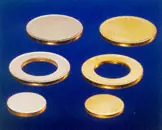
The ring blank is pierced into a press that can also produce the rim. The picture on the left shows two ring blanks pierced. After the ring blank passes trough the press the result will be the rimmed ring planchet and a center, just metal scrap, that will be remelted.
There is one more step that just happens in bimetallics making, and it's that the ring planchet and center blank have to be joined. The center blank hast to be inserted into the rings hole.
The Core is milled along the edge in order for the Ring to link to it.
When the dies strike, the Ring bonds to the core filling this milled space or groove. This creates the locking action of the core to the ring and is enough to prevent relative axial and rotational movement between the outer ring and the core.
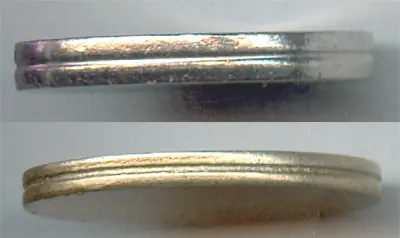
1 & 2 euro milled/grooved kernels
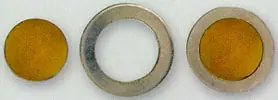 Center blank and ring planchet and the final bimetallic planchet with the center inserted into rings hole.
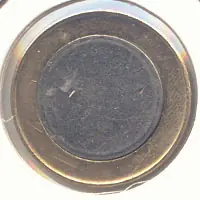
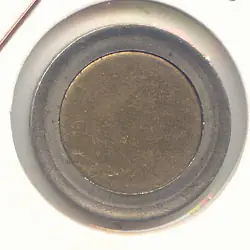
RIMMED PLANCHETS: 1 Euro (flat/smooth edge) & SPAIN 2 Euro (edge lettering)
1) Off-Center Ring Hole
Obtaining the ring planchet is a new process thus the hole can be off-centered. We will refer to this error as OFF-CENTER RING HOLE
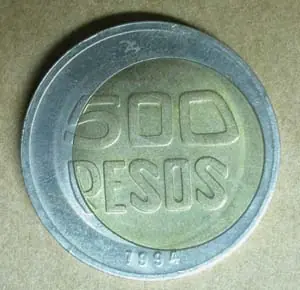
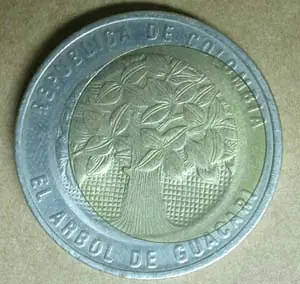
OFF-CENTER RING HOLE - Colombia 500 Pesos
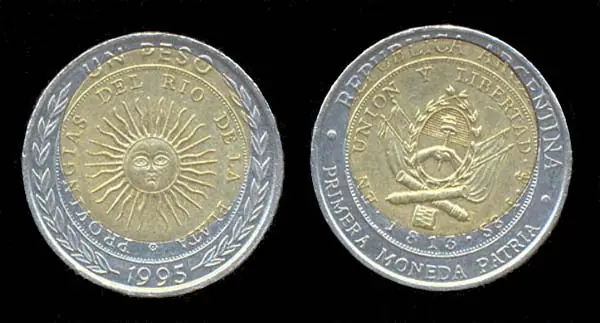
OFF-CENTER RING HOLE - Argentina 1 Peso
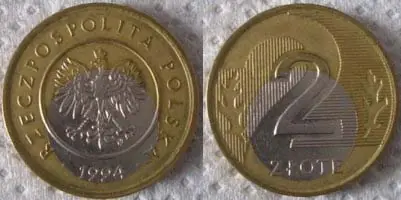
OFF-CENTER RING HOLE - Poland, 2 Zloty 1994
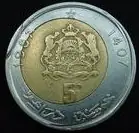
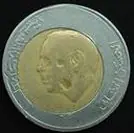
OFF-CENTER RING HOLE - Morrocco 5 Dirhams
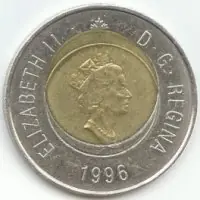

OFF-CENTER RING HOLE - Canada 2 Dollars
2) Off-Centered Kernel Insert
In this new step, that just occurs in bimetallics, we have a new error type called OFF-CENTERED KERNEL INSERT. This error features on one side metal of kernel over the ring and in the other side metal of the ring over the kernel. Also there is a gap between the kernel and the ring that indicates how much off-centered was the plug of the kernel inside the ring 's hole.
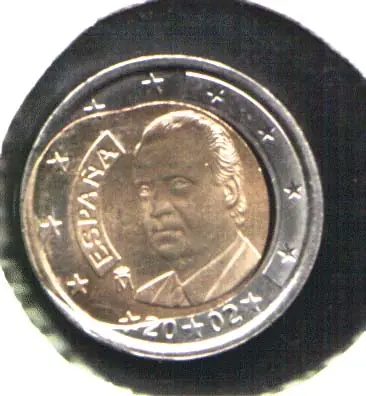
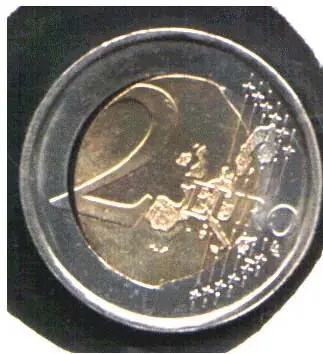
Spain 2 Euro - OFF-CENTER KERNEL INSERT
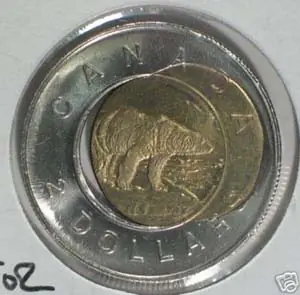
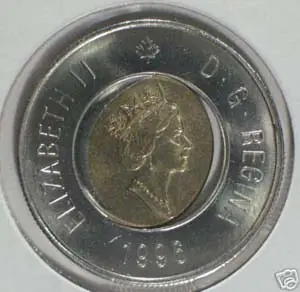
Canada 2 Dollars, Polar Bear - OFF-CENTER KERNEL INSERT
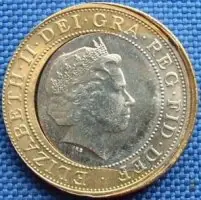
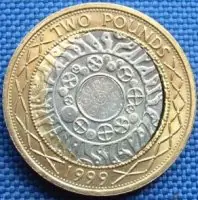
Greta Britain, 2 Pounds Rugby, OFF-CENTER KERNEL INSERT
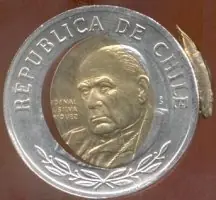
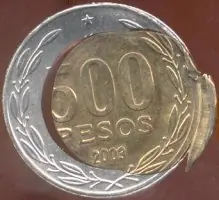
CHILE 500 Pesos - OFF-CENTER KERNEL INSERT
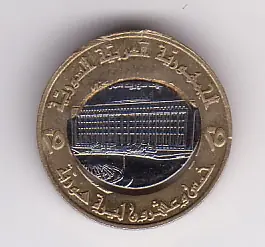
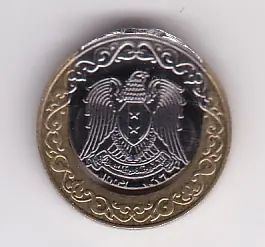
SYRIA 25 Pounds, OFF-CENTER KERNEL INSERT
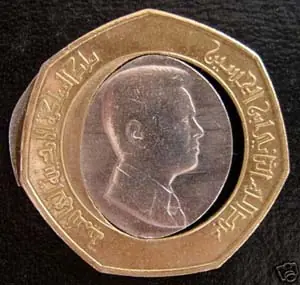
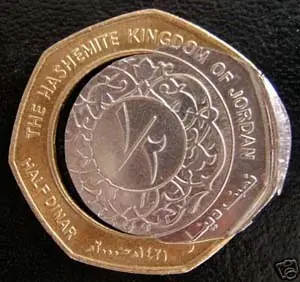
JORDAN, 1/2 Rial, OFF-CENTER KERNEL INSERT
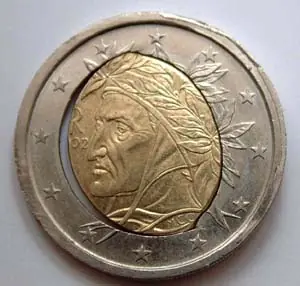
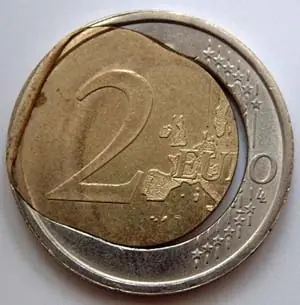
ITALY, DANTE 2 Euro, OFF-CENTER KERNEL INSERT
3) Incomplete Ring Hole
There is a third type of error when making the hole to produce the ring . Thus the punch that pierces the blank can be broken and produce and irregular ring's hole. Note that there is no gap between kernel/ring, so the following coin could be different from the O/C Kernel Insert and be typed as incomplete ring's hole.
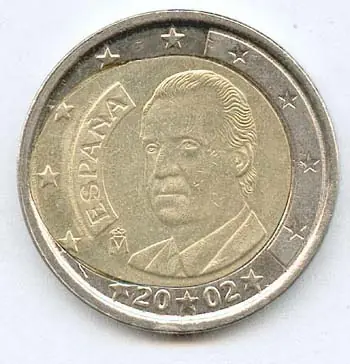
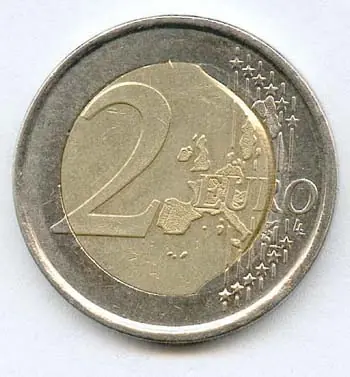
Spain 2 Euro - INCOMPLETE RING HOLE???? NO GAP
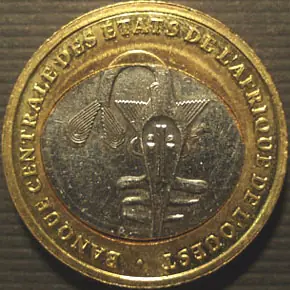
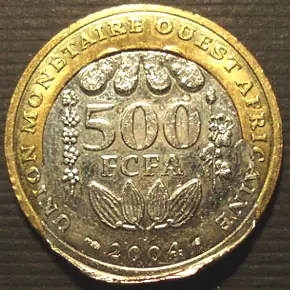
CFA, 500 Francs 2004 - IMCOMPLETE RING HOLE??? NO GAP
4) Ring struck alone
In the joining stage of ring and kernel maybe there is not joining at all.
So it's posible to have for example a ring loose struck by the press. Thus, when a ring is minted without kernel the metal of the ring will flow inward. The hole in the ring will thus be smaller. Therefor you can see more details on the ring (e.g. the head and wings of the German eagle).
The ring on the picture clearly shows more details/reliefs than a normal ring and metal flow inward, it is therefor an original error
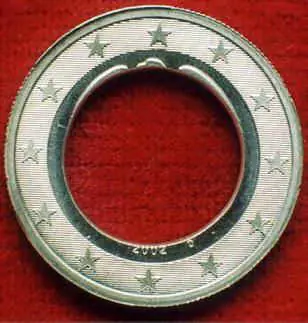
Germany 2 Euros Ring Struck alone without kernel (shows metal flow inward)
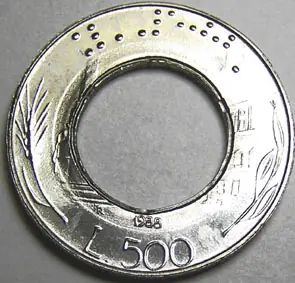
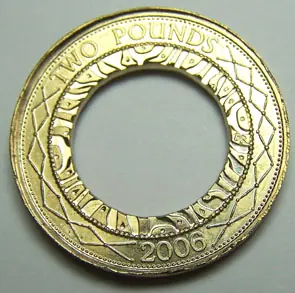
Isolated Rings: Italy 500 Lire & Great Britain 2 pounds
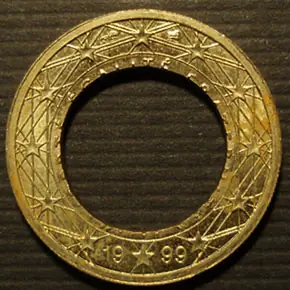
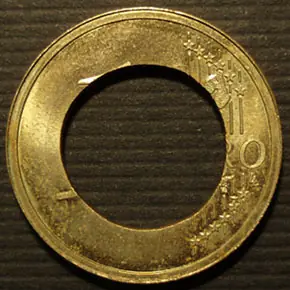
Isolated Ring: France 1 Euro
5) Kernel struck alone
The kernel expands like a wrong planchet error.
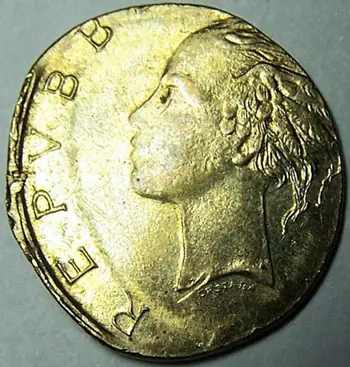
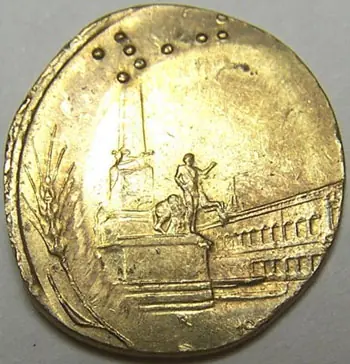
Italy 500Lire, Kernel struck alone
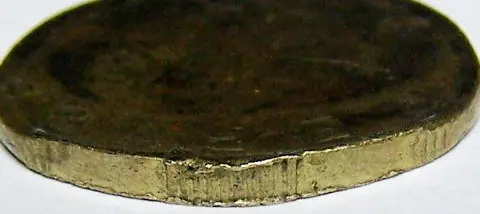 Edge met the collar and received the reeding.
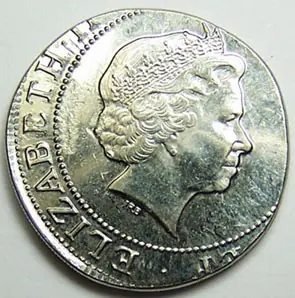
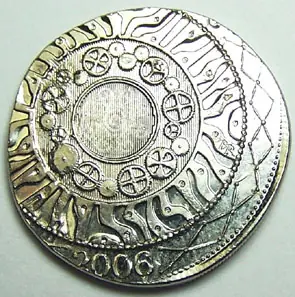
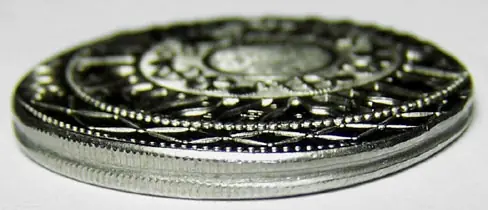 UK 2 Pounds, Kernel struck alone
Edge met the collar and received the reeding also this kernel has the central groove for liking to the ring .
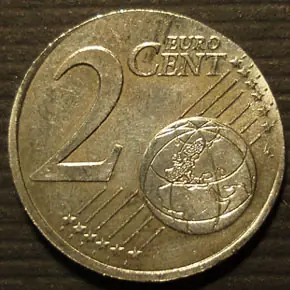
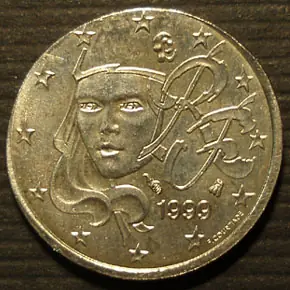
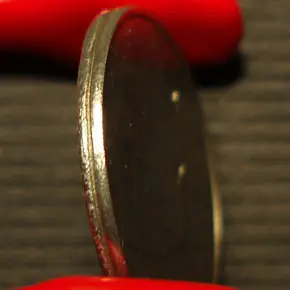
France 2 cents struck on isolated 2 Euro kernel
6) Smaller in diameter kernel
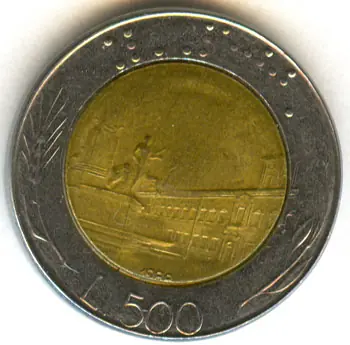 Date goes into the middle of kernel and ring, so no die variety, it's a smaller in diameter kernel
7) Errors not specific to bimetallics
Other error types not specific to bimetallics can also occur, like OFF-CENTERS, INDENTS, BROCKAGES, ROTATED REVERSE, PARTIAL COLLAR, DOUBLE STRIKES.........
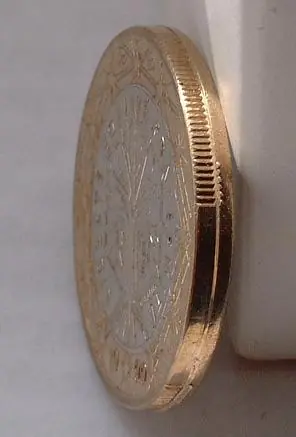 FRANCE, 1 Euro - PARTIAL COLLAR
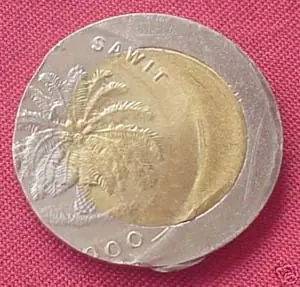
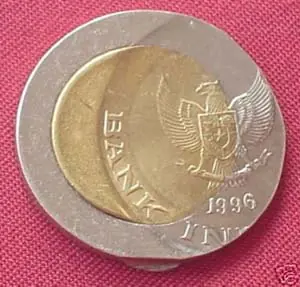
Indonesia 1000 Rupiah - Off Center
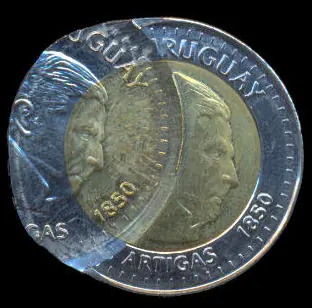
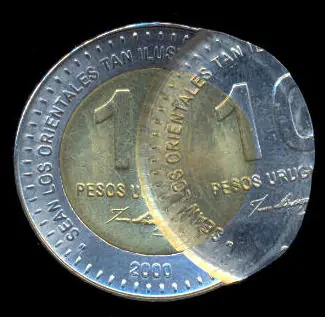 Amazing!!!!!!!, Uruguay 10 Pesos, Libertador Artigas - DOUBLE STRIKE
A curious error type is when the center blank is clipped:
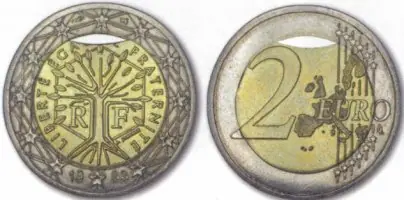 France 2 Euro - Clipped center blank
(this one needs authentification, to see the metal extress in the clipped area, specially the edge in the clip to see if it's thinner)
When making the planchets, bimetallics or not, there is a quality control to detect incorrect planchets. That control can be made with riddlers or computer vision systems. So incorrect planchets are usually detected and disabled.
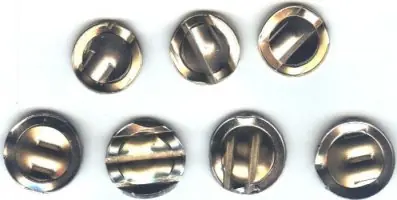
Waffle Euro Planchets (Disabled in the quality control)
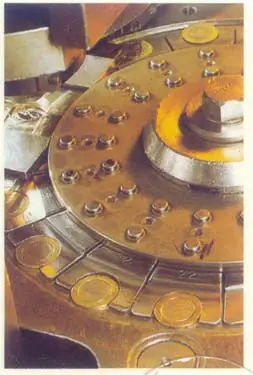
Inside the coining Press -Dial Feeder with bimetallic planchets
The dial feeder puts planchets between the dies that strike the coins.
Below: planchets. On the left: dies use for striking. On top: struck coins.
(Photo taken from UK Mint Set Cover)
Es todo por ahora