Nota: El post a sido adeacuado por medio de traducción automática, a fin de encuadrarse dentro del protocolo.
Artista Biografía de Steve Huey
Puede que no sea un nombre muy conocido, pero acérrimos fans de los azules saben Little Milton como un excelente todo alrededor eléctrica bluesman - un cantante soul, un guitarrista evocador, un compositor consumado y un líder de la banda en un crack. Él está a menudo comparado con el legendario BB King -, así como Bobby "Blue" Bland - por el modo en que su estilo de la firma combina soul, blues y R & B, una mezcla que ayudaron a hacer de él uno de los bluesmen más vendedoras de la 'años 60 (aunque no es tan bien recordado-king). Como pasaba el tiempo, su música se hizo más y más orquestada, con cuerdas y cuernos en abundancia. Mantuvo una carrera discográfica constantemente activo todo el camino desde su debut en 1953 en el legendario sello Sun de Sam Phillips, con su sorprendente longevidad incluyendo temporadas notables en el ajedrez (donde encontró su mayor éxito comercial), Stax y Malaco.
James Milton Campbell nació el 7 de septiembre de 1934 en la pequeña ciudad del delta de Inverness, MS, y creció en Greenville. (Más tarde abandonar legalmente el "James" después de enterarse de un medio hermano con el mismo nombre.) Su padre Grandes Milton, un agricultor, fue un músico de blues local y Milton también creció escuchando el programa de radio Grand Ole Opry . A los 12 años, comenzó a tocar la guitarra y ahorró dinero de trabajos ocasionales para comprar su propio instrumento de un catálogo de venta por correo. Por 15 años, se estaba llevando a cabo para la paga en los clubes y bares de la zona, influenciado principalmente por T-Bone Walker, sino también por el proto-rock & roll blues jump gritones. Él hizo una impresión sustancial sobre otros músicos de la zona, incluso tener la oportunidad de respaldar Sonny Boy Williamson II, y llamó la atención de R & B genial Ike Turner, quien fue doblando como un buscador de talentos para Sam Phillips en Sun. Turner presentó el todavía teenaged-Little Milton a Phillips, quien le firmó un contrato en 1953 con la banda de Turner que lo respalda, dom lados de Milton intentaron un poco de todo -. Él no había desarrollado un estilo de la firma hasta el momento, pero él tenía una energía juvenil sin límites que hizo estas primeras grabaciones de algunos de sus más emocionante y gratificante. Por desgracia, ninguno de ellos fueron éxitos, y la asociación de Milton con Sun había terminado antes de finales de 1954. Se dedicó a formar su propia banda, el cual creció un solo para el sello Meteor pequeña en 1957, antes de levantar y mover a St. Louis en el año 1958.
En St. Louis, Milton hizo amigo de DJ Bob Lyons, quien le ayudó a grabar un demo en un intento de conseguir un contrato en Mercurio. La etiqueta aprobada, y los dos crear su propio sello, bautizado bolillos. Solteros de bolillos de Little Milton, finalmente comenzaron a atraer algo de atención más extendido, sobre todo "Soy un hombre solitario", que vendió 60.000 copias a pesar de ser el primer lanzamiento en una etiqueta pequeña. Como jefe de A & R, Milton trajo artistas como Albert King y Fontella Bass en la bobina veces, y con un alto calibre tales lista, la etiqueta pronto llegó a un acuerdo de distribución con el legendario Chess Records. El propio Milton cambió a la filial de Ajedrez Checker en 1961, y fue allí que iba a establecerse en su marca registrada-alma descendida, estilo influenciado-King BB. Inicialmente un éxito moderado, Milton tenía su gran avance con 1965 de "Somos Gonna Make It", que alcanzó el número uno en el gracias a su resonancia con el movimiento por los derechos civiles cartas de R & B. "Nos lo vamos a lograr" inició una cadena exitosa de I + singles B, que en ocasiones alcanzó el Top Ten, destacado por "¿Quién está engañando ¿Quién?", "Grits ¿No es Abarrotes", "If Walls Could Talk", "Baby Te Amo "y" Feel So Bad ", entre otros.
La muerte de Leonard Chess en 1969 lanzó su sello en el caos, y Little Milton dejó eventual Checker en 1971 y firmó con el sello Stax alma con sede en Memphis (también el hogar de su antiguo protegido Albert King). En Stax, Milton comenzó a expandir su sonido de estudio, la adición más grande bocina y secciones de cuerdas y que pone de relieve sus voces soul más de blues tradicional. Otros éxitos siguieron en canciones como "Annie Mae Cafe", "Pequeño Bluebird", "Eso es lo que el amor te hará hacer" y "Walkin 'las calles secundarias y Cryin'", pero en general, no con la misma magnitud de edad. Stax fue a la bancarrota en 1975, en la que señala Little Milton se trasladó a el sello TK / Glades, que fue más conocida por sus actos funk y disco. Sus grabaciones no eran asuntos de crossover en toda regla, lo que hizo "Amigo Mío", un éxito de menor importancia, pero esa etiqueta pronto salieron del negocio también. Milton pasó algún tiempo en el limbo; grabó un álbum para MCA en 1983 llamado La edad no es nada sino un número, y al año siguiente encontró un hogar con Malaco, que sufrió la carrera de un buen soul sureño de la vieja escuela y algunos artistas de blues. Durante su permanencia en Malaco, Milton debutó la canción que se convertiría en su himno de los últimos días, el alimento básico banda de bar "The Blues Is Alright", que también era muy popular entre los aficionados al blues europeos. Milton grabó con frecuencia y de manera constante durante Malaco, la emisión de 13 álbumes bajo su égida a finales del milenio. En 1988, ganó el W.C. Práctico para el Blues Award al Artista del Año, y también fue incluido en el Salón de la Fama de los azules.
Artist Biography by Steve Huey
He may not be a household name, but die-hard blues fans know Little Milton as a superb all-around electric bluesman -- a soulful singer, an evocative guitarist, an accomplished songwriter, and a skillful bandleader. He's often compared to the legendary B.B. King -- as well as Bobby "Blue" Bland -- for the way his signature style combines soul, blues, and R&B, a mixture that helped make him one of the biggest-selling bluesmen of the '60s (even if he's not as well-remembered as King). As time progressed, his music grew more and more orchestrated, with strings and horns galore. He maintained a steadily active recording career all the way from his 1953 debut on Sam Phillips' legendary Sun label, with his stunning longevity including notable stints at Chess (where he found his greatest commercial success), Stax, and Malaco.
James Milton Campbell was born September 7, 1934, in the small Delta town of Inverness, MS, and grew up in Greenville. (He would later legally drop the "James" after learning of a half-brother with the same name.) His father Big Milton, a farmer, was a local blues musician, and Milton also grew up listening to the Grand Ole Opry radio program. At age 12, he began playing the guitar and saved up money from odd jobs to buy his own instrument from a mail-order catalog. By 15, he was performing for pay in local clubs and bars, influenced chiefly by T-Bone Walker but also by proto-rock & roll jump blues shouters. He made a substantial impression on other area musicians, even getting a chance to back Sonny Boy Williamson II, and caught the attention of R&B great Ike Turner, who was doubling as a talent scout for Sam Phillips at Sun. Turner introduced the still-teenaged Little Milton to Phillips, who signed him to a contract in 1953. With Turner's band backing him, Milton's Sun sides tried a little bit of everything -- he hadn't developed a signature style as of yet, but he did have a boundless youthful energy that made these early recordings some of his most exciting and rewarding. Unfortunately, none of them were hits, and Milton's association with Sun was over by the end of 1954. He set about forming his own band, which waxed one single for the small Meteor label in 1957, before picking up and moving to St. Louis in 1958.
![[Blues] Little Milton • Sings Big Blues](https://storage.posteamelo.com/assets-adonis/assets/2014/07/02/MI0001392577.jpg-Hw2_QnTGmaM.webp)
In St. Louis, Milton befriended DJ Bob Lyons, who helped him record a demo in a bid to land a deal on Mercury. The label passed, and the two set up their own label, christened Bobbin. Little Milton's Bobbin singles finally started to attract some more widespread attention, particularly "I'm a Lonely Man," which sold 60,000 copies despite being the very first release on a small label. As head of A&R, Milton brought artists like Albert King and Fontella Bass into the Bobbin fold, and with such a high roster caliber, the label soon struck a distribution arrangement with the legendary Chess Records. Milton himself switched over to the Chess subsidiary Checker in 1961, and it was there that he would settle on his trademark soul-inflected, B.B. King-influenced style. Initially a moderate success, Milton had his big breakthrough with 1965's "We're Gonna Make It," which hit number one on the R&B charts thanks to its resonance with the civil rights movement. "We're Gonna Make It" kicked off a successful string of R&B chart singles that occasionally reached the Top Ten, highlighted by "Who's Cheating Who?," "Grits Ain't Groceries," "If Walls Could Talk," "Baby I Love You," and "Feel So Bad," among others.
The death of Leonard Chess in 1969 threw his label into disarray, and Little Milton eventually left Checker in 1971 and signed with the Memphis-based soul label Stax (also the home of his former protégé Albert King). At Stax, Milton began expanding his studio sound, adding bigger horn and string sections and spotlighting his soulful vocals more than traditional blues. Further hits followed in songs like "Annie Mae's Cafe," "Little Bluebird," "That's What Love Will Make You Do," and "Walkin' the Back Streets and Cryin'," but generally not with the same magnitude of old. Stax went bankrupt in 1975, upon which point Little Milton moved to the TK/Glades label, which was better known for its funk and disco acts. His recordings there were full-blown crossover affairs, which made "Friend of Mine" a minor success, but that label soon went out of business as well. Milton spent some time in limbo; he recorded one album for MCA in 1983 called Age Ain't Nothin' But a Number, and the following year found a home with Malaco, which sustained the careers of quite a few old-school Southern soul and blues artists. During his tenure at Malaco, Milton debuted the song that would become his latter-day anthem, the bar band staple "The Blues Is Alright," which was also widely popular with European blues fans. Milton recorded frequently and steadily for Malaco, issuing 13 albums under their aegis by the end of the millennium. In 1988, he won the W.C. Handy Award for Blues Entertainer of the Year, and was also inducted into the Blues Hall of Fame.
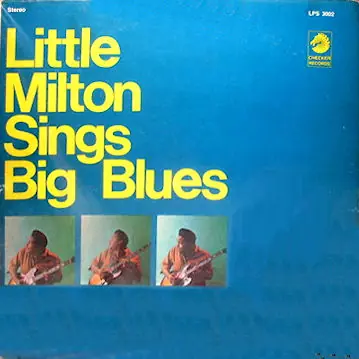
Tracklisting:
A1 Feel So Bad 4:04
A2 Reconsider, Baby 3:30
A3 Stormy Monday 4:23
A4 Woke Up This Morning 3:27
A5 Hard Luck Blues 3:00
A6 Please, Please, Please 3:45
B1 Sweet Sixteen 6:10
B2 Fever 2:49
B3 Sneakin' Around 2:20
B4 Don't Decieve Me 3:05
B5 Have Mercy, Baby 2:53
B6 Part Time Love 3:55
99 MB / mp3-320Kbps
+ info ver Fuentes de Información
... hay mucho por escuchar ...
Artista Biografía de Steve Huey
Puede que no sea un nombre muy conocido, pero acérrimos fans de los azules saben Little Milton como un excelente todo alrededor eléctrica bluesman - un cantante soul, un guitarrista evocador, un compositor consumado y un líder de la banda en un crack. Él está a menudo comparado con el legendario BB King -, así como Bobby "Blue" Bland - por el modo en que su estilo de la firma combina soul, blues y R & B, una mezcla que ayudaron a hacer de él uno de los bluesmen más vendedoras de la 'años 60 (aunque no es tan bien recordado-king). Como pasaba el tiempo, su música se hizo más y más orquestada, con cuerdas y cuernos en abundancia. Mantuvo una carrera discográfica constantemente activo todo el camino desde su debut en 1953 en el legendario sello Sun de Sam Phillips, con su sorprendente longevidad incluyendo temporadas notables en el ajedrez (donde encontró su mayor éxito comercial), Stax y Malaco.
James Milton Campbell nació el 7 de septiembre de 1934 en la pequeña ciudad del delta de Inverness, MS, y creció en Greenville. (Más tarde abandonar legalmente el "James" después de enterarse de un medio hermano con el mismo nombre.) Su padre Grandes Milton, un agricultor, fue un músico de blues local y Milton también creció escuchando el programa de radio Grand Ole Opry . A los 12 años, comenzó a tocar la guitarra y ahorró dinero de trabajos ocasionales para comprar su propio instrumento de un catálogo de venta por correo. Por 15 años, se estaba llevando a cabo para la paga en los clubes y bares de la zona, influenciado principalmente por T-Bone Walker, sino también por el proto-rock & roll blues jump gritones. Él hizo una impresión sustancial sobre otros músicos de la zona, incluso tener la oportunidad de respaldar Sonny Boy Williamson II, y llamó la atención de R & B genial Ike Turner, quien fue doblando como un buscador de talentos para Sam Phillips en Sun. Turner presentó el todavía teenaged-Little Milton a Phillips, quien le firmó un contrato en 1953 con la banda de Turner que lo respalda, dom lados de Milton intentaron un poco de todo -. Él no había desarrollado un estilo de la firma hasta el momento, pero él tenía una energía juvenil sin límites que hizo estas primeras grabaciones de algunos de sus más emocionante y gratificante. Por desgracia, ninguno de ellos fueron éxitos, y la asociación de Milton con Sun había terminado antes de finales de 1954. Se dedicó a formar su propia banda, el cual creció un solo para el sello Meteor pequeña en 1957, antes de levantar y mover a St. Louis en el año 1958.
En St. Louis, Milton hizo amigo de DJ Bob Lyons, quien le ayudó a grabar un demo en un intento de conseguir un contrato en Mercurio. La etiqueta aprobada, y los dos crear su propio sello, bautizado bolillos. Solteros de bolillos de Little Milton, finalmente comenzaron a atraer algo de atención más extendido, sobre todo "Soy un hombre solitario", que vendió 60.000 copias a pesar de ser el primer lanzamiento en una etiqueta pequeña. Como jefe de A & R, Milton trajo artistas como Albert King y Fontella Bass en la bobina veces, y con un alto calibre tales lista, la etiqueta pronto llegó a un acuerdo de distribución con el legendario Chess Records. El propio Milton cambió a la filial de Ajedrez Checker en 1961, y fue allí que iba a establecerse en su marca registrada-alma descendida, estilo influenciado-King BB. Inicialmente un éxito moderado, Milton tenía su gran avance con 1965 de "Somos Gonna Make It", que alcanzó el número uno en el gracias a su resonancia con el movimiento por los derechos civiles cartas de R & B. "Nos lo vamos a lograr" inició una cadena exitosa de I + singles B, que en ocasiones alcanzó el Top Ten, destacado por "¿Quién está engañando ¿Quién?", "Grits ¿No es Abarrotes", "If Walls Could Talk", "Baby Te Amo "y" Feel So Bad ", entre otros.
La muerte de Leonard Chess en 1969 lanzó su sello en el caos, y Little Milton dejó eventual Checker en 1971 y firmó con el sello Stax alma con sede en Memphis (también el hogar de su antiguo protegido Albert King). En Stax, Milton comenzó a expandir su sonido de estudio, la adición más grande bocina y secciones de cuerdas y que pone de relieve sus voces soul más de blues tradicional. Otros éxitos siguieron en canciones como "Annie Mae Cafe", "Pequeño Bluebird", "Eso es lo que el amor te hará hacer" y "Walkin 'las calles secundarias y Cryin'", pero en general, no con la misma magnitud de edad. Stax fue a la bancarrota en 1975, en la que señala Little Milton se trasladó a el sello TK / Glades, que fue más conocida por sus actos funk y disco. Sus grabaciones no eran asuntos de crossover en toda regla, lo que hizo "Amigo Mío", un éxito de menor importancia, pero esa etiqueta pronto salieron del negocio también. Milton pasó algún tiempo en el limbo; grabó un álbum para MCA en 1983 llamado La edad no es nada sino un número, y al año siguiente encontró un hogar con Malaco, que sufrió la carrera de un buen soul sureño de la vieja escuela y algunos artistas de blues. Durante su permanencia en Malaco, Milton debutó la canción que se convertiría en su himno de los últimos días, el alimento básico banda de bar "The Blues Is Alright", que también era muy popular entre los aficionados al blues europeos. Milton grabó con frecuencia y de manera constante durante Malaco, la emisión de 13 álbumes bajo su égida a finales del milenio. En 1988, ganó el W.C. Práctico para el Blues Award al Artista del Año, y también fue incluido en el Salón de la Fama de los azules.
___________________
Artist Biography by Steve Huey
He may not be a household name, but die-hard blues fans know Little Milton as a superb all-around electric bluesman -- a soulful singer, an evocative guitarist, an accomplished songwriter, and a skillful bandleader. He's often compared to the legendary B.B. King -- as well as Bobby "Blue" Bland -- for the way his signature style combines soul, blues, and R&B, a mixture that helped make him one of the biggest-selling bluesmen of the '60s (even if he's not as well-remembered as King). As time progressed, his music grew more and more orchestrated, with strings and horns galore. He maintained a steadily active recording career all the way from his 1953 debut on Sam Phillips' legendary Sun label, with his stunning longevity including notable stints at Chess (where he found his greatest commercial success), Stax, and Malaco.
James Milton Campbell was born September 7, 1934, in the small Delta town of Inverness, MS, and grew up in Greenville. (He would later legally drop the "James" after learning of a half-brother with the same name.) His father Big Milton, a farmer, was a local blues musician, and Milton also grew up listening to the Grand Ole Opry radio program. At age 12, he began playing the guitar and saved up money from odd jobs to buy his own instrument from a mail-order catalog. By 15, he was performing for pay in local clubs and bars, influenced chiefly by T-Bone Walker but also by proto-rock & roll jump blues shouters. He made a substantial impression on other area musicians, even getting a chance to back Sonny Boy Williamson II, and caught the attention of R&B great Ike Turner, who was doubling as a talent scout for Sam Phillips at Sun. Turner introduced the still-teenaged Little Milton to Phillips, who signed him to a contract in 1953. With Turner's band backing him, Milton's Sun sides tried a little bit of everything -- he hadn't developed a signature style as of yet, but he did have a boundless youthful energy that made these early recordings some of his most exciting and rewarding. Unfortunately, none of them were hits, and Milton's association with Sun was over by the end of 1954. He set about forming his own band, which waxed one single for the small Meteor label in 1957, before picking up and moving to St. Louis in 1958.
In St. Louis, Milton befriended DJ Bob Lyons, who helped him record a demo in a bid to land a deal on Mercury. The label passed, and the two set up their own label, christened Bobbin. Little Milton's Bobbin singles finally started to attract some more widespread attention, particularly "I'm a Lonely Man," which sold 60,000 copies despite being the very first release on a small label. As head of A&R, Milton brought artists like Albert King and Fontella Bass into the Bobbin fold, and with such a high roster caliber, the label soon struck a distribution arrangement with the legendary Chess Records. Milton himself switched over to the Chess subsidiary Checker in 1961, and it was there that he would settle on his trademark soul-inflected, B.B. King-influenced style. Initially a moderate success, Milton had his big breakthrough with 1965's "We're Gonna Make It," which hit number one on the R&B charts thanks to its resonance with the civil rights movement. "We're Gonna Make It" kicked off a successful string of R&B chart singles that occasionally reached the Top Ten, highlighted by "Who's Cheating Who?," "Grits Ain't Groceries," "If Walls Could Talk," "Baby I Love You," and "Feel So Bad," among others.
The death of Leonard Chess in 1969 threw his label into disarray, and Little Milton eventually left Checker in 1971 and signed with the Memphis-based soul label Stax (also the home of his former protégé Albert King). At Stax, Milton began expanding his studio sound, adding bigger horn and string sections and spotlighting his soulful vocals more than traditional blues. Further hits followed in songs like "Annie Mae's Cafe," "Little Bluebird," "That's What Love Will Make You Do," and "Walkin' the Back Streets and Cryin'," but generally not with the same magnitude of old. Stax went bankrupt in 1975, upon which point Little Milton moved to the TK/Glades label, which was better known for its funk and disco acts. His recordings there were full-blown crossover affairs, which made "Friend of Mine" a minor success, but that label soon went out of business as well. Milton spent some time in limbo; he recorded one album for MCA in 1983 called Age Ain't Nothin' But a Number, and the following year found a home with Malaco, which sustained the careers of quite a few old-school Southern soul and blues artists. During his tenure at Malaco, Milton debuted the song that would become his latter-day anthem, the bar band staple "The Blues Is Alright," which was also widely popular with European blues fans. Milton recorded frequently and steadily for Malaco, issuing 13 albums under their aegis by the end of the millennium. In 1988, he won the W.C. Handy Award for Blues Entertainer of the Year, and was also inducted into the Blues Hall of Fame.
Tracklisting:
A1 Feel So Bad 4:04
A2 Reconsider, Baby 3:30
A3 Stormy Monday 4:23
A4 Woke Up This Morning 3:27
A5 Hard Luck Blues 3:00
A6 Please, Please, Please 3:45
B1 Sweet Sixteen 6:10
B2 Fever 2:49
B3 Sneakin' Around 2:20
B4 Don't Decieve Me 3:05
B5 Have Mercy, Baby 2:53
B6 Part Time Love 3:55
99 MB / mp3-320Kbps
+ info ver Fuentes de Información
... hay mucho por escuchar ...

