«Las personas que quieren aprender y desarrollar su comprensión del lenguaje de programación Perl tienen una gran selección de libros para elegir. Hay cientos de libros que alumbran Perl que están disponibles para la compra a un costo razonable. Sin embargo, teniendo en cuenta que Perl es un lenguaje de programación de código abierto, con una herencia ecléctica escrita por Larry Wall y un elenco de miles, es satisfactorio ver que algunos autores han hecho sus publicaciones Perl disponible para descargar sin costo alguno, y puesto en libertad en virtud de una l distribuible. El objetivo de este artículo consiste en seleccionar algunos de los mejores libros de Perl que están disponibles para descargar de forma gratuita. La mayoría de los libros que aparecen aquí también se puede distribuir libremente. ¡Así que leer, aprender y compartir. »
1. Modern Perl

Website www.onyxneon.com/books/modern_perl/index.html AuthorchromaticFormatPDF, A4 PDF, HTML, ePubPages204Modern Perl is designed to help programmers of all levels of proficiency. The book is not only a Perl tutorial. It concentrates on Perl 5.12 and 5.14, to demonstrate the latest and most effective time-saving features.
Modern Perl explains how and why the language works, so that the full power of Perl can be unleashed.
Modern Perl is one way to describe the way the world's most effective Perl 5 programmers work. They use language idioms. They take advantage of the CPAN. They show good taste and craft to write powerful, maintainable, scalable, concise, and effective code.
This book providing a wealth of information on:
The Perl PhilosophyPerl and its Community focusing on CPAN, community and development sitesThe Perl Language introducing names, variables, values, control flow, scalars, arrays, hashes, coercion, packages, references, and nested data structuresOperators - a series of one or more symbols used as part of the syntaxFunctions - a discrete, encapsulated unit of behaviourRegular Expressions and Matching - the use of these expressions gives Perl its incredible text processing powerObjects - discrete, unique entities with their own identitiesStyle and Efficacy explaining the importance of writing maintainable, idiomatic, and effective PerlManaging Real Problems covering testing, handling warnings, files, modules, distributions, and morePerl Beyond SyntaxWhat to AvoidThe electronic versions of this book are released under the Creative Commons Attribution-NonCommercial-NoDerivs 3.0 Unported L.
2. Beginning Perl
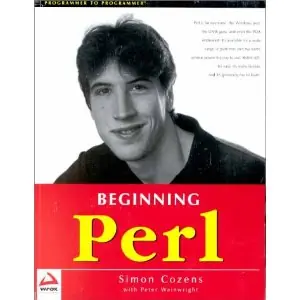
Website www.perl.org/books/beginning-perl/ AuthorSimon CozensFormatPDF, HTMLPages672Beginning Perl is a book which as its name suggest is written for individuals that are new to programming who want to learn Perl. It starts from the absolute basics of Perl, guiding the reader carefully through up to complex operations such as using Perl as a CGI language.
The book covers the following topics:
Installing Perl on Windows and UNIXMaking use of online Perl resources like CPANFirst principles in programming and the Perl syntaxWorking with simple valuesLists and HashesLoops and DecisionsRegular ExpressionsWorking with files and databasesWriting web pages in PerlSubroutinesRunning and Debugging PerlModulesUsing Perl as an object-oriented languagePerl and DatabasesThe World of PerlThe book is l under the Creative Commons Attribution-NoDerivs-NonCommercial L.
3. Higher Order Perl
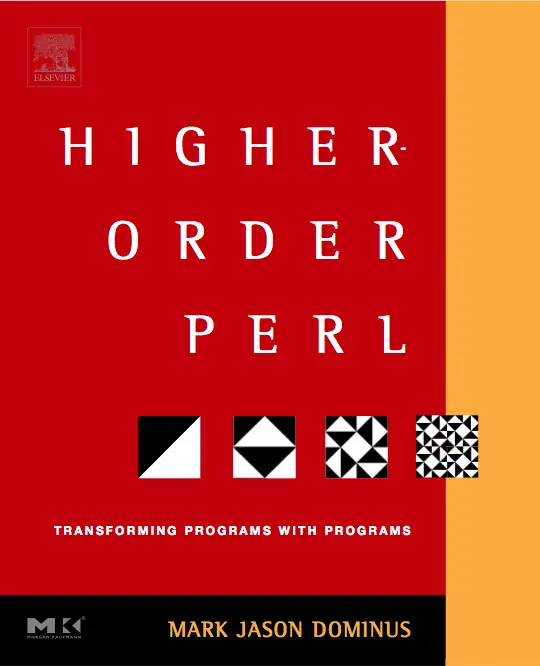
Website hop.perl.plover.com AuthorMark Jason Dominus
FormatPDF, MOD source codePages600Higher-Order Perl: Transforming Programs with Programs is a book with the goal to teach Perl programmers with a strong C and Unix background how to use techniques with roots in functional programming languages like Lisp that are available in Perl as well, but less known. It is about functional programming techniques in Perl. It is about how to write functions that can modify and manufacture other functions.
The contents of the book:
Recursion and callbacksDispatch tablesCaching and memoizationIteratorsFrom recursion to iteratorsInfinite streamsHigher-order functions and curryingParsingDeclarative programming
4. Practical mod_perl
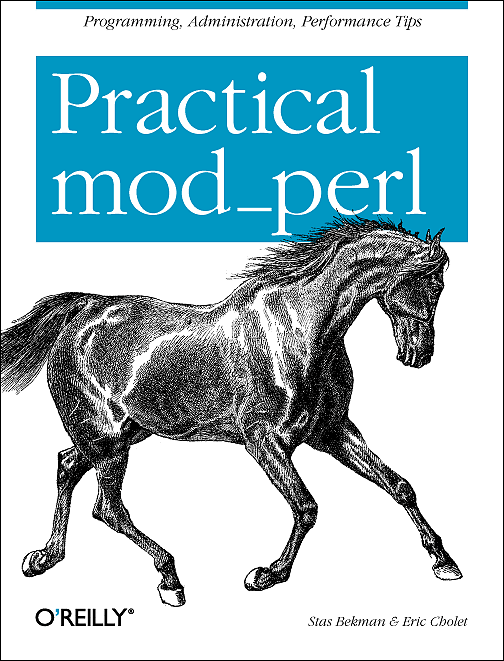
Website www.modperlbook.org AuthorStas Bekman, Eric CholetFormatPDF, HTMLPages928Practical mod_perl is regarded as the definitive book on how to use, optimize, and troubleshoot mod_perl. It is an extensive guide to the nuts and bolts of the powerful and popular combination of Apache and mod_perl. From writing and debugging scripts to keeping your server running without failures, the techniques in this book will help you squeeze every ounce of power out of your server.
mod_perl is an Apache module that builds the power of the Perl programming language directly into the Apache web server, giving rise to a fast and powerful web programming environment.
The book covers the following topics, and more:
Configuring mod_perl optimally for your web sitePorting and optimizing programs for a mod_perl environmentPerformance tuning: getting the very fastest performance from your siteControlling and monitoring the server to circumvent crashes and clogsIntegrating with databases efficiently and painlesslyDebugging tips and tricksMaximizing securityThe complete book is available online under the terms of the CreativeCommons Attribution Share-Alike L.
]5. Impatient Perl
Website www.perl.org/books/impatient-perl/ AuthorGreg LondonFormatPDF, HTMLPages151Impatient Perl is designed for individuals who wish to learn Perl or individuals that already program in Perl and do not have the patience to search for information to learn and use Perl. The book should be a useful desk reference for common Perl related questions.
Topics covered include:
The three basic storage types:Scalars - store strings, numbers (integers and floats), references, and filehandlesArrays - stores a collection of scalars via an integer indexHashes - stores scalars that are accessed via a string indexList Context - a concept built into the grammar of PerlReferences - points to something elseControl Flow - allow developers to alter the order of execution while the application is runningPackages and Namespaces and Lexical ScopingSubroutinesCompiling and Interpreting - compiling translates the source test into machine usable internal format; intrepreting - executing the machine usable, internal formatCode Reuse, Perl Modules - a discrete component of software for the Perl programming languageThe use Statement - allows a Perl script to bring in a Perl module and what declarations that have been made available by the modulebless() - this function changes the string that would be returned when ref() is calledMethod CallsProcedural PerlObject Oriented PerlObject Oriented ReviewCPAN - Comprehensive Perl Archive Nework which contains a huge number of Perl modules to downloadThe Next LevelCommand Line ArgumentsFile Input and Output - Perl has functions used for reading from and writing to filesOperating System CommandsRegular Expressions - the text processing workhouse of Perl. Regular expressions lets you search strings for patterns, find out what matched the patterns, and substitute the matched patterns with new stringsModifiers - regular expressions can take optional modifiers that tell Perl additional information about how to interpret the regular expressionParsing with Parse::RecDescentPerl, GUI and TkThis book is made available under the GNU Free Documentation L, Version 1.3 or later.
6. Using Perl 6
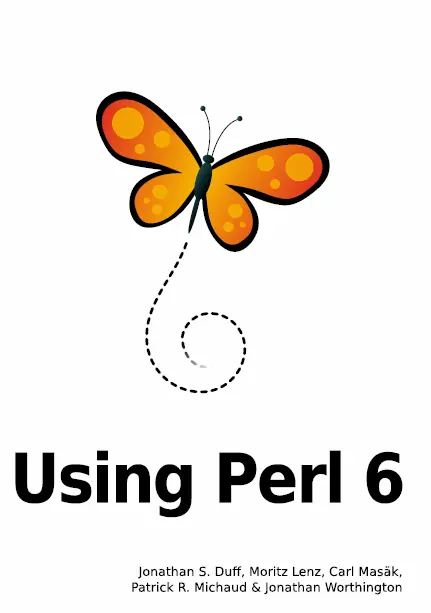
Website github.com/perl6/book AuthorJonathan S. Duff, Moritz Lenz, Carl Masak, Patrick R. Michaud & Jonathan WorthingtonFormatPDF, HTML
Pages135
Using Perl 6 is a work-in-progress book that is an example-drive introduction to Perl 6.
The book explores:
Operators - very short names for often used routinesSubroutines and Signatures covering declaring a subroutine, adding signatures, returning results, return types, working with types, abstract and concrete parameters, captures, unpacking, currying, introspection, and the main subroutineClasses and ObjectsMultis covering constraints, narrowness, multiple arguments, bindability checks, nested signatures in multi-dispatch, protos, toying with the candidate list, and multiple main subsRoles - standalone, named and reusable units of behaviorSubtypesPattern matching - regular expressions are exploredGrammars - organise regular expressionsBuilt-in types, operators and methodsThis book is l under Attribution-NonCommercial-ShareAlike 3.0 Unported.
7. Extreme Programming in Perl
Website www.extremeperl.org AuthorRobert Nagler
FormatPDF, A4 PDF, HTML
Pages194
Extreme Perl is a book about Extreme Programming, a software development methodology that enables users, business people, programmers, and computers to communicate effectively, using the programming language Perl.
This book invites Perl programmers and their customers to take a fresh look at software development. Customers, and business people in general, will learn how Extreme Programming enables customer-programmer communication for efficient and flexible requirements gathering. Programmers will see how the methodology's focus on teamwork, incremental testing, and continuous design allows them to take pride in their craft.
Areas covered include:
Release PlanningIteration PlanningPair ProgrammingTrackingAcceptance TestingCoding StyleLogisticsTest Driven DesignContinuous DesignUnit TestingRefactoring
8. Perl & LWP
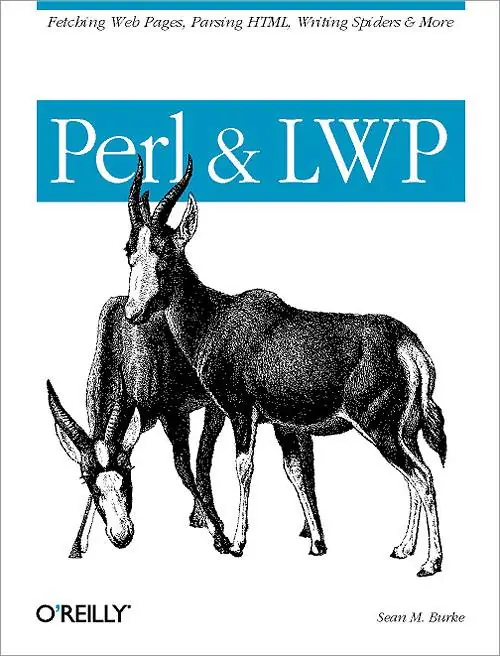
Website lwp.interglacial.com AuthorSean M. Burke
FormatHTML
Pages343
Perl & LWP instructs how individuals can write web client applications with LWP and its related HTML modules. Library for WWW in Perl is a set of modules that allow requests to be sent to the web.
The book has chapters on:
Web BasicsThe LWP Class ModelURLsFormsSimple HTML Processing with Regular ExpressionsHTML Processing with TokensTokenizing WalkthroughHTML Processing with TreesModifying HTML with TreesCookies, Authentication and Advanced RequestsSpidersThis book is aimed at someone who already knows Perl and HTML.
9. Learning Perl the Hard Way
Website www.greenteapress.com/perl AuthorAllen B. Downey
FormatPDF, gzipped Postcript
Pages69
Learning Perl the Hard Way is a book for people who already know how to program in another language, but have not previously developed in Perl. It tries to get through the basics as quickly as possible, and how to do fun things. It emphasizes good programming style in Perl.
Learning Perl the Hard Way has chapters on:
Arrays and Scalars - describes the statements and operators needed to read command-line arguments, define and invoke subroutines, parse parameters, and read the contents of filesRegular Expressions - covers pattern matching, anchors, quantifiers, alternation, capture sequences, minimal matching, extended patterns, operators, and subroutine semanticsHashes - with sections on stack operators, queue operators, hashes, frequency table, sort operator, checking whether an element is a member of a set, references to subroutines, hashes as parameters, markov generator, and generating random textObjects - goes through packages, the bless operator, methods, constructors, printing objects, and heapsModules - examines variable-length codes, the frequency table, creating a new module, assembling the Huffman tree, inheritance, and moreCallbacks and pipesLearning Perl the Hard Way is a free book made available under the GNU Free Documentation L.
10. Embedding Perl in HTML with Mason
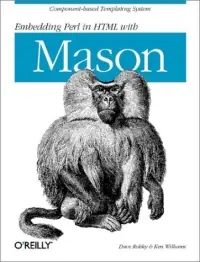
Website www.masonbook.com AuthorDave Rolsky, Ken WilliamsFormatHTML, pseudo-POD source
Pages320
The Embedding Perl in HTML with Mason book documents the HTML::Mason framework in detail, including chapters on component syntax, Mason object APIs, a sample site walkthrough, recipes, and details on Mason's advanced features and how to use them.
The book shows individuals how to create large, complex, dynamically driven web sites that look good and are a snap to maintain. You will learn how to visualize multiple Mason-based solutions to any given problem and select among them. The book covers the latest line of Mason development 1.1x, which has many new features, including line number reporting based on source files, sub-requests, and easier use as a CGI.
This book is published under the Open Publication L.
11. Practical Perl Programming
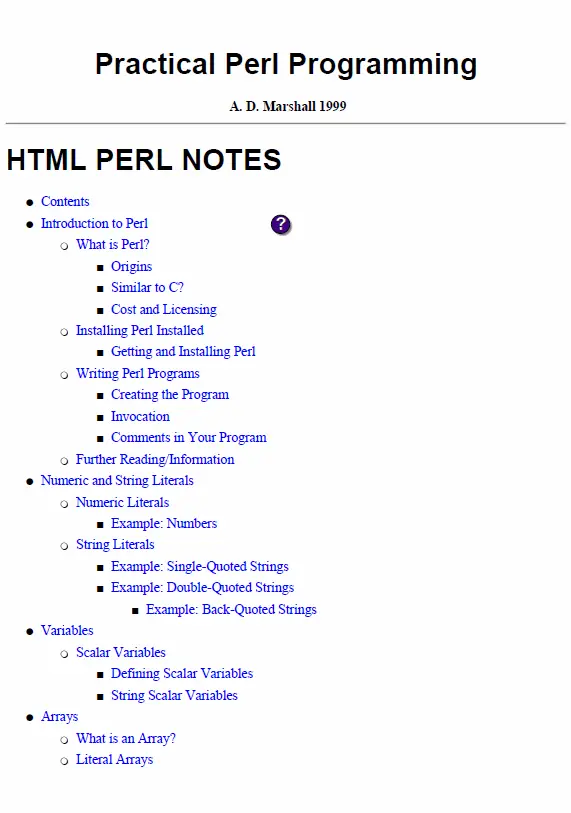
Website www.cs.cf.ac.uk/Dave/PERL/perl_caller.html AuthorA D Marshall
FormatHTML
Pages530
Practical Perl Programming is written by Dave Marshall, a lecturer in the Computer Science at Cardiff University. This detailed book offers a through tutorial on the Perl programming language, based on course notes.
There is introductory material, the tutorial itself and recommended reading on the subject, presented in HTML format. A PDF version is available to Cardiff University students only.
This books covers the following areas:
Numeric and String LiteralsVariablesArraysOperatorsPerl StatementsFunctionsReferencesFiles - Input and Output in PerlRegular ExpressionsReportsSpecial VariablesHandling Errors and SignalsObjects in PerlPerl ModulesDebuggingPerl Command-Line OptionsNetworking with PerlCGI Programming in PerlCGI:Input -- HTML FormsExample Perl CGI ScriptsUsing Perl with Web ServersA Quick Guide to HTML
12. Perl for the Web

Website www.globalspin.com/thebook/ AuthorChris RadcliffFormatHTML
Pages416
Perl for the Web provides tools and strategies to improve the performance of existing Web applications in Perl. It also provides principles and ideas that help Web programmers create an extensible framework for future growth.
Topics covered include the need for speed, document management with templates and embedded Perl, faster performance using persistent Perl, good Web coding style, faster database access from Perl, and pairing XML with Perl for content management and B2B communication. Emphasis is placed on robust, scalable solutions for dynamic database-backed, template-based or XML-based Web sites.
The book's focus on optimization is a unique approach.
13. Web Client Programming with Perl
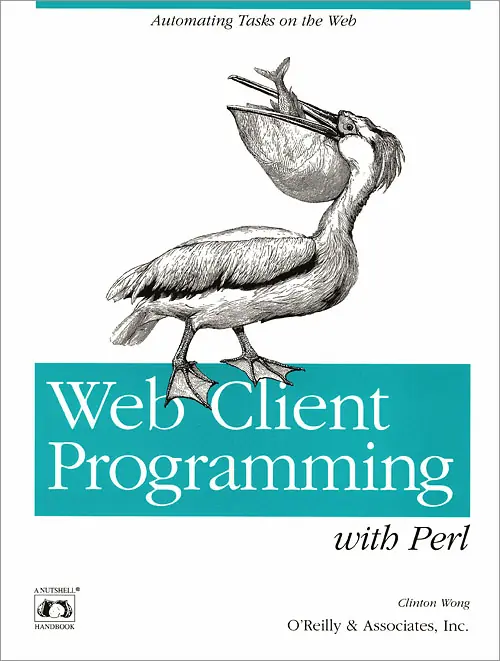 Website
oreilly.com/openbook/webclient/
AuthorClinton Wong
Website
oreilly.com/openbook/webclient/
AuthorClinton Wong
FormatHTML
Pages228
Web Client Programming with Perl shows you how to extend scripting skills to the Web. This book teaches you the basics of how browsers communicate with servers and how to write your own customized Web clients to automate common tasks. It is intended for those who are motivated to develop software that offers a more flexible and dynamic response than a standard Web browser.
A web client is an application that communicates with a web server, using Hypertext Transfer Protocol (HTTP).
This books helps developers learn how to:
Automate repetitive queries on the WebDetect broken hyperlinks on your siteWrite simple "robots" that traverse hyperlinks across a site, and across the Web in generalMost of the examples in this book use Perl. The book does not teach Perl, but the techniques used in the book should be easily followed by anyone with some programming background and can be adapted to whatever language you choose.
14. Programming Perl

Website perltraining.com.au/notes.html AuthorKirrily Robert, Paul Fenwick, Jacinta Richardson
FormatPDF
Pages252
Programming Perl is a five day module in which you will learn how to program in Perl. It assumes you have programmed before, that you understand the concept of variables, conditional and looping constructs, and the use of user defined functions.
Chapters include:
A brief guide to Perl and perldocCreating and running a Perl programPerl variablesOperators and functionsConditional constructsSubroutinesRegular expressionsIntroduction to ModulesExternal Files and PackagesWriting modulesBuilding modules with Module::StarterTesting your moduleUsing Perl objectsReferences and complex data structuresAdvanced regular expressionsFile I/OSystem interactionPractical exercisesThis book is released under the Open Publications L 1.0.
15. Perl 5 Internals
Website www.faqs.org/docs/perl5int/ AuthorSimon CozensFormatPDF, HTML
Pages102
Perl 5 Internals is a three-hour course which provides a hands-on introduction to how the Perl interpreter works internally, how to go about testing and fixing bugs in the interpreter, and what the internals are likely to look like in the future of Perl, Perl 6.
The book covers:
Development StructureParts of the InterpreterInternal VariablesThe Lexer and the ParserFundamental operationsThe Runtime EnvironmentThe Perl CompilerHacking PerlPerl 6 Internals
16. Picking up Perl

Website www.ebb.org/PickingUpPerl/ AuthorBradley M. Kuhn
FormatPDF, Postscript, monolitic HTML, HTML with a separate page for each chapter, Texinfo Source
Pages66
Picking up Perl was primarily written to serve as a freely redistributable tutorial for the Perl language.
Topics covered include:
Working with ScalarsArraysControl StructuresAssociative Arrays (Hashes)Regular ExpressionsSubroutinesBackground of PerlThis book is released under the terms of the GNU Free Documentation L, Version 1.1 or any later version.
Website www.onyxneon.com/books/modern_perl/index.html AuthorchromaticFormatPDF, A4 PDF, HTML, ePubPages204Modern Perl is designed to help programmers of all levels of proficiency. The book is not only a Perl tutorial. It concentrates on Perl 5.12 and 5.14, to demonstrate the latest and most effective time-saving features.
Modern Perl explains how and why the language works, so that the full power of Perl can be unleashed.
Modern Perl is one way to describe the way the world's most effective Perl 5 programmers work. They use language idioms. They take advantage of the CPAN. They show good taste and craft to write powerful, maintainable, scalable, concise, and effective code.
This book providing a wealth of information on:
The Perl PhilosophyPerl and its Community focusing on CPAN, community and development sitesThe Perl Language introducing names, variables, values, control flow, scalars, arrays, hashes, coercion, packages, references, and nested data structuresOperators - a series of one or more symbols used as part of the syntaxFunctions - a discrete, encapsulated unit of behaviourRegular Expressions and Matching - the use of these expressions gives Perl its incredible text processing powerObjects - discrete, unique entities with their own identitiesStyle and Efficacy explaining the importance of writing maintainable, idiomatic, and effective PerlManaging Real Problems covering testing, handling warnings, files, modules, distributions, and morePerl Beyond SyntaxWhat to AvoidThe electronic versions of this book are released under the Creative Commons Attribution-NonCommercial-NoDerivs 3.0 Unported L.
2. Beginning Perl
Website www.perl.org/books/beginning-perl/ AuthorSimon CozensFormatPDF, HTMLPages672Beginning Perl is a book which as its name suggest is written for individuals that are new to programming who want to learn Perl. It starts from the absolute basics of Perl, guiding the reader carefully through up to complex operations such as using Perl as a CGI language.
The book covers the following topics:
Installing Perl on Windows and UNIXMaking use of online Perl resources like CPANFirst principles in programming and the Perl syntaxWorking with simple valuesLists and HashesLoops and DecisionsRegular ExpressionsWorking with files and databasesWriting web pages in PerlSubroutinesRunning and Debugging PerlModulesUsing Perl as an object-oriented languagePerl and DatabasesThe World of PerlThe book is l under the Creative Commons Attribution-NoDerivs-NonCommercial L.
3. Higher Order Perl
Website hop.perl.plover.com AuthorMark Jason Dominus
FormatPDF, MOD source codePages600Higher-Order Perl: Transforming Programs with Programs is a book with the goal to teach Perl programmers with a strong C and Unix background how to use techniques with roots in functional programming languages like Lisp that are available in Perl as well, but less known. It is about functional programming techniques in Perl. It is about how to write functions that can modify and manufacture other functions.
The contents of the book:
Recursion and callbacksDispatch tablesCaching and memoizationIteratorsFrom recursion to iteratorsInfinite streamsHigher-order functions and curryingParsingDeclarative programming
4. Practical mod_perl
Website www.modperlbook.org AuthorStas Bekman, Eric CholetFormatPDF, HTMLPages928Practical mod_perl is regarded as the definitive book on how to use, optimize, and troubleshoot mod_perl. It is an extensive guide to the nuts and bolts of the powerful and popular combination of Apache and mod_perl. From writing and debugging scripts to keeping your server running without failures, the techniques in this book will help you squeeze every ounce of power out of your server.
mod_perl is an Apache module that builds the power of the Perl programming language directly into the Apache web server, giving rise to a fast and powerful web programming environment.
The book covers the following topics, and more:
Configuring mod_perl optimally for your web sitePorting and optimizing programs for a mod_perl environmentPerformance tuning: getting the very fastest performance from your siteControlling and monitoring the server to circumvent crashes and clogsIntegrating with databases efficiently and painlesslyDebugging tips and tricksMaximizing securityThe complete book is available online under the terms of the CreativeCommons Attribution Share-Alike L.
]5. Impatient Perl
Website www.perl.org/books/impatient-perl/ AuthorGreg LondonFormatPDF, HTMLPages151Impatient Perl is designed for individuals who wish to learn Perl or individuals that already program in Perl and do not have the patience to search for information to learn and use Perl. The book should be a useful desk reference for common Perl related questions.
Topics covered include:
The three basic storage types:Scalars - store strings, numbers (integers and floats), references, and filehandlesArrays - stores a collection of scalars via an integer indexHashes - stores scalars that are accessed via a string indexList Context - a concept built into the grammar of PerlReferences - points to something elseControl Flow - allow developers to alter the order of execution while the application is runningPackages and Namespaces and Lexical ScopingSubroutinesCompiling and Interpreting - compiling translates the source test into machine usable internal format; intrepreting - executing the machine usable, internal formatCode Reuse, Perl Modules - a discrete component of software for the Perl programming languageThe use Statement - allows a Perl script to bring in a Perl module and what declarations that have been made available by the modulebless() - this function changes the string that would be returned when ref() is calledMethod CallsProcedural PerlObject Oriented PerlObject Oriented ReviewCPAN - Comprehensive Perl Archive Nework which contains a huge number of Perl modules to downloadThe Next LevelCommand Line ArgumentsFile Input and Output - Perl has functions used for reading from and writing to filesOperating System CommandsRegular Expressions - the text processing workhouse of Perl. Regular expressions lets you search strings for patterns, find out what matched the patterns, and substitute the matched patterns with new stringsModifiers - regular expressions can take optional modifiers that tell Perl additional information about how to interpret the regular expressionParsing with Parse::RecDescentPerl, GUI and TkThis book is made available under the GNU Free Documentation L, Version 1.3 or later.
6. Using Perl 6
Website github.com/perl6/book AuthorJonathan S. Duff, Moritz Lenz, Carl Masak, Patrick R. Michaud & Jonathan WorthingtonFormatPDF, HTML
Pages135
Using Perl 6 is a work-in-progress book that is an example-drive introduction to Perl 6.
The book explores:
Operators - very short names for often used routinesSubroutines and Signatures covering declaring a subroutine, adding signatures, returning results, return types, working with types, abstract and concrete parameters, captures, unpacking, currying, introspection, and the main subroutineClasses and ObjectsMultis covering constraints, narrowness, multiple arguments, bindability checks, nested signatures in multi-dispatch, protos, toying with the candidate list, and multiple main subsRoles - standalone, named and reusable units of behaviorSubtypesPattern matching - regular expressions are exploredGrammars - organise regular expressionsBuilt-in types, operators and methodsThis book is l under Attribution-NonCommercial-ShareAlike 3.0 Unported.
7. Extreme Programming in Perl
Website www.extremeperl.org AuthorRobert Nagler
FormatPDF, A4 PDF, HTML
Pages194
Extreme Perl is a book about Extreme Programming, a software development methodology that enables users, business people, programmers, and computers to communicate effectively, using the programming language Perl.
This book invites Perl programmers and their customers to take a fresh look at software development. Customers, and business people in general, will learn how Extreme Programming enables customer-programmer communication for efficient and flexible requirements gathering. Programmers will see how the methodology's focus on teamwork, incremental testing, and continuous design allows them to take pride in their craft.
Areas covered include:
Release PlanningIteration PlanningPair ProgrammingTrackingAcceptance TestingCoding StyleLogisticsTest Driven DesignContinuous DesignUnit TestingRefactoring
8. Perl & LWP
Website lwp.interglacial.com AuthorSean M. Burke
FormatHTML
Pages343
Perl & LWP instructs how individuals can write web client applications with LWP and its related HTML modules. Library for WWW in Perl is a set of modules that allow requests to be sent to the web.
The book has chapters on:
Web BasicsThe LWP Class ModelURLsFormsSimple HTML Processing with Regular ExpressionsHTML Processing with TokensTokenizing WalkthroughHTML Processing with TreesModifying HTML with TreesCookies, Authentication and Advanced RequestsSpidersThis book is aimed at someone who already knows Perl and HTML.
9. Learning Perl the Hard Way
Website www.greenteapress.com/perl AuthorAllen B. Downey
FormatPDF, gzipped Postcript
Pages69
Learning Perl the Hard Way is a book for people who already know how to program in another language, but have not previously developed in Perl. It tries to get through the basics as quickly as possible, and how to do fun things. It emphasizes good programming style in Perl.
Learning Perl the Hard Way has chapters on:
Arrays and Scalars - describes the statements and operators needed to read command-line arguments, define and invoke subroutines, parse parameters, and read the contents of filesRegular Expressions - covers pattern matching, anchors, quantifiers, alternation, capture sequences, minimal matching, extended patterns, operators, and subroutine semanticsHashes - with sections on stack operators, queue operators, hashes, frequency table, sort operator, checking whether an element is a member of a set, references to subroutines, hashes as parameters, markov generator, and generating random textObjects - goes through packages, the bless operator, methods, constructors, printing objects, and heapsModules - examines variable-length codes, the frequency table, creating a new module, assembling the Huffman tree, inheritance, and moreCallbacks and pipesLearning Perl the Hard Way is a free book made available under the GNU Free Documentation L.
10. Embedding Perl in HTML with Mason
Website www.masonbook.com AuthorDave Rolsky, Ken WilliamsFormatHTML, pseudo-POD source
Pages320
The Embedding Perl in HTML with Mason book documents the HTML::Mason framework in detail, including chapters on component syntax, Mason object APIs, a sample site walkthrough, recipes, and details on Mason's advanced features and how to use them.
The book shows individuals how to create large, complex, dynamically driven web sites that look good and are a snap to maintain. You will learn how to visualize multiple Mason-based solutions to any given problem and select among them. The book covers the latest line of Mason development 1.1x, which has many new features, including line number reporting based on source files, sub-requests, and easier use as a CGI.
This book is published under the Open Publication L.
11. Practical Perl Programming
Website www.cs.cf.ac.uk/Dave/PERL/perl_caller.html AuthorA D Marshall
FormatHTML
Pages530
Practical Perl Programming is written by Dave Marshall, a lecturer in the Computer Science at Cardiff University. This detailed book offers a through tutorial on the Perl programming language, based on course notes.
There is introductory material, the tutorial itself and recommended reading on the subject, presented in HTML format. A PDF version is available to Cardiff University students only.
This books covers the following areas:
Numeric and String LiteralsVariablesArraysOperatorsPerl StatementsFunctionsReferencesFiles - Input and Output in PerlRegular ExpressionsReportsSpecial VariablesHandling Errors and SignalsObjects in PerlPerl ModulesDebuggingPerl Command-Line OptionsNetworking with PerlCGI Programming in PerlCGI:Input -- HTML FormsExample Perl CGI ScriptsUsing Perl with Web ServersA Quick Guide to HTML
12. Perl for the Web
Website www.globalspin.com/thebook/ AuthorChris RadcliffFormatHTML
Pages416
Perl for the Web provides tools and strategies to improve the performance of existing Web applications in Perl. It also provides principles and ideas that help Web programmers create an extensible framework for future growth.
Topics covered include the need for speed, document management with templates and embedded Perl, faster performance using persistent Perl, good Web coding style, faster database access from Perl, and pairing XML with Perl for content management and B2B communication. Emphasis is placed on robust, scalable solutions for dynamic database-backed, template-based or XML-based Web sites.
The book's focus on optimization is a unique approach.
13. Web Client Programming with Perl
Website
oreilly.com/openbook/webclient/
AuthorClinton Wong
FormatHTML
Pages228
Web Client Programming with Perl shows you how to extend scripting skills to the Web. This book teaches you the basics of how browsers communicate with servers and how to write your own customized Web clients to automate common tasks. It is intended for those who are motivated to develop software that offers a more flexible and dynamic response than a standard Web browser.
A web client is an application that communicates with a web server, using Hypertext Transfer Protocol (HTTP).
This books helps developers learn how to:
Automate repetitive queries on the WebDetect broken hyperlinks on your siteWrite simple "robots" that traverse hyperlinks across a site, and across the Web in generalMost of the examples in this book use Perl. The book does not teach Perl, but the techniques used in the book should be easily followed by anyone with some programming background and can be adapted to whatever language you choose.
14. Programming Perl
Website perltraining.com.au/notes.html AuthorKirrily Robert, Paul Fenwick, Jacinta Richardson
FormatPDF
Pages252
Programming Perl is a five day module in which you will learn how to program in Perl. It assumes you have programmed before, that you understand the concept of variables, conditional and looping constructs, and the use of user defined functions.
Chapters include:
A brief guide to Perl and perldocCreating and running a Perl programPerl variablesOperators and functionsConditional constructsSubroutinesRegular expressionsIntroduction to ModulesExternal Files and PackagesWriting modulesBuilding modules with Module::StarterTesting your moduleUsing Perl objectsReferences and complex data structuresAdvanced regular expressionsFile I/OSystem interactionPractical exercisesThis book is released under the Open Publications L 1.0.
15. Perl 5 Internals
Website www.faqs.org/docs/perl5int/ AuthorSimon CozensFormatPDF, HTML
Pages102
Perl 5 Internals is a three-hour course which provides a hands-on introduction to how the Perl interpreter works internally, how to go about testing and fixing bugs in the interpreter, and what the internals are likely to look like in the future of Perl, Perl 6.
The book covers:
Development StructureParts of the InterpreterInternal VariablesThe Lexer and the ParserFundamental operationsThe Runtime EnvironmentThe Perl CompilerHacking PerlPerl 6 Internals
16. Picking up Perl
Website www.ebb.org/PickingUpPerl/ AuthorBradley M. Kuhn
FormatPDF, Postscript, monolitic HTML, HTML with a separate page for each chapter, Texinfo Source
Pages66
Picking up Perl was primarily written to serve as a freely redistributable tutorial for the Perl language.
Topics covered include:
Working with ScalarsArraysControl StructuresAssociative Arrays (Hashes)Regular ExpressionsSubroutinesBackground of PerlThis book is released under the terms of the GNU Free Documentation L, Version 1.1 or any later version.