Ianchuuu
Usuario (Argentina)

Enrique José Martín Morales, conocido como Ricky Martin, (n. San Juan, Puerto Rico, 24 de diciembre de 1971) es un cantante, compositor y actor puertorriqueño. Inició su carrera musical a mediados de la década de 1980, como vocalista de un grupo infantil llamado Menudo . A partir de 1991 se estableció como solista. Ha lanzado nueve álbumes de estudio, tres recopilaciones y más de cincuenta sencillos en español e inglés. Ha vendido más de 60 millones de álbumes como solista.1 Su álbum más vendido es el que lanzó en 1999, titulado Ricky Martin. A lo largo de su carrera ha recibido premios como el Grammy, el Grammy Latino, el Billboard o el MTV. Vida y carrera 1971-1989: Infancia y comienzos musicales Inició su carrera artística a muy temprana edad como modelo infantil y en coros y obras de teatro escolares. Entre otras cosas, hizo la publicidad de Carnation, una marca de leche infantil, cuando tenía ocho meses de edad. La fama le llegó cuando entró a formar parte del grupo infantil Menudo, en 1984, reemplazando a Ricky Meléndez. Después de cinco años de trabajo, giras, ensayos y grabaciones, Ricky Martin abandonó el grupo para establecerse en Nueva York y, posteriormente, en México, donde empezó su carrera teatral: "Los tenis rojos", y "Mamá ama el rock". Aunque habia debutado como actor en 1986 junto con el grupo Menudo en Argentina en la telenovela juvenil Por siempre amigos compartiendo elenco con actores juveniles locales. La novela fue vista en gran parte de Latinoamerica 2 . Alcanzar una Estrella II Debutó como actor televisivo en México en la telenovela Alcanzar una estrella II, en la cual interpretaba a Pablo. Debido al enorme éxito de esta telenovela, se lanzaron al mercado dos discos, titulados Muñecos de papel y Alcanzar una estrella II respectivamente, en los que Martin fue una de las figuras principales. Junto con Sasha Sökol, Angélica Rivera, Erick Rubin, Bibi Gaytán, Pedro Fernández y Marisa De Lille, alcanzó los primeros puestos en las listas de popularidad en México y Perú, entre otros países. Asimismo, realizaron una gira a lo largo de toda la república mexicana. Junto a sus compañeros, grabó los temas "Muñecos de Papel", "No quiero dejar de brillar", "Todos mis caminos van a ti" y "Juego de Ajedrez". Debido al éxito de la telenovela se lanzó la película Más que alcanzar una estrella, con la que debutó en el cine. 1990-1993: Ricky Martin y Me amas Firmó un contrato con Sony en 1991 y grabó su primer disco como solista, Ricky Martin, para el sello Sony Music Entertainment, producido por Mariano Pérez, consiguiendo llevar su música y y hacerse popular en toda América Latina. En 1993 grabó su segundo trabajo discográfico, Me amarás, también para Sony Music, pero esta vez producido por Juan Carlos Calderón. 1994-1997: General Hospital, A medio vivir, Les Misérables y Hércules A finales de ese mismo año Martin decidió tomarse un respiro. Volvió a la actuación participando en una de las series de televisión más conocidas de Estados Unidos: General Hospital. Posteriormente apareció como Marius, en la producción musical de Broadway Los Miserables. Su tercer disco, A medio vivir, salió al mercado en 1995. Producido por Robi Draco Rosa, y KC Porter, vendió más de seiscientas mil copias en seis meses. Con este álbum se hizo conocido mundialmente gracias al tema "María", que lo llevó a los primeros puestos de las listas de éxito estadounidenses. Su fama y reconocimiento en aquel momento hizo que fuera requerido para diversos eventos internacionales. En el ámbito musical fue una de las estrellas latinas que cantaron el tema «Puedes llegar», en el disco de los Juegos Olímpicos de Atlanta 1996'. También hizo un dúo con Paul Anka para un disco de este último, Amigos, y puso su voz en la película Hércules de Disney, donde también interpretó el tema principal. 1998-2000: Vuelve, Ricky Martin y Sound Loaded En febrero de 1998 Martin presentó su cuarto trabajo, Vuelve, del que hasta la fecha ha vendido más de seis millones de copias en todo el mundo, y donde se incluye el popular tema La copa de la vida, canción oficial del campeonato mundial de fútbol Francia 1998. A partir del lanzamiento de su disco Vuelve Martin se consagró y, para el año 1998, Ricky Martin fue el encargado de cerrar el Festival Presidente de la Música Latina en República Dominicana. Más de mil millones de espectadores de 187 países alrededor del mundo pudieron contemplar interpretación que hizo el artista de esta canción en la entrega de los Premios Grammy en 1999. "Vuelve" ganó el Grammy a la mejor interpretación de música popular latina. Y desde ese momento Ricky Martin adquirió nombre y presencia reconocibles en todo el mundo. Después del éxito obtenido, en mayo de 1999 Martin lanzó al mercado un nuevo álbum, Ricky Martin, producido por Robi Draco Rosa, Desmond Child, y Emilio Estefan Jr, entre otros. Con temas en inglés y castellano, debutó como número uno en la lista de 200 álbumes de la revista Billboard, con la mayor cifra de ventas en la primera semana (660.000 copias), marcando su nueva condición de superestrella de la música latina. Hasta la fecha, Ricky Martin ha vendido más de 55.000.000 de discos a nivel mundial.3 Sus giras lo han llevado a Australia, Japón, Asia, Europa, Estados Unidos, entre muchos otros. En 2000 Ricky presentó una esperada producción, Sound Loaded. Incluye también temas en inglés y castellano, realizados por Robi Rosa, Jon Secada, Pau Donés, y Desmond Child. 2001-2004: La historia, The Best of Ricky Martin y Almas del silencio Ricky Martin. En febrero de 2001, Martin publicó la recopilación La historia, que instantáneamente se convirtió en un éxito de ventas, posicionándose en el top 40 de diversos países, como España, Italia, Suiza, Argentina y Japón. En Estados Unidos ocupó el primer puesto de la listas de álbumes en español más vendidos, US Billboard Top Latin Albumsy US Billboard Latin Pop Albums y fue certificado cuatro veces disco de platino por parte de la Recording Industry Association of America. Fuera de Estados Unidos, esta recopilación fue certificada disco de platino por la Cámara Argentina de Productores de Fonogramas y Videogramas y la International Federation of the Phonographic Industry. Más tarde lanzó un segundo álbum recopilatorio, sólo en Eurasia y Oceanía, con el nombre de The Best of Ricky Martin. Tuvo un moderado éxito comercial en los países que fue publicado, vendiendo más de un millón de copias y siendo certificado disco de platino en Australia y disco de oro en el Reino Unido y en Finlandia. En 2003 publicó un nuevo álbum de estudio en español, titulado Almas del silencio. Demostró ser un éxito comercial, vendiendo más de un millón de copias, llegando al número 12 en la lista Billboard 200 y siendo certificado cuatro veces disco de platino por la Recording Industry Association of America. Asimismo llegó al primer puesto de la publicación Top Latin Albums de los discos en español más vendidos. Fuera de Estados Unidos, Almas del silencio fue certificado disco de platino en Argentina y España y disco de oro en Suiza y México. De este álbum se editaron cinco sencillos: "Tal Vez", "Jaleo", "Asignatura Pendiente", "Juramento" y "Y todo queda en nada". "Tal Vez", "Jaleo" y "Y todo queda en nada" llegaron al primer puesto de la lista de éxitos Hot Latin Songs, mientras que "Asignatura Pendiente" ocupó el quinto puesto de la misma lista. Al año siguiente, el cantante fue nominado para un premio Grammy Latino por "Mejor álbum vocal pop masculino". 2005-2009: Life, MTV Unplugged, la gira Black & White y 17 Ricky Martin durante un concierto en 2006. En 2005, Martin publicó un nuevo álbum de estudio, Life, donde combinó los géneros musicales pop, pop rock, dance, pop latino, worldbeat y world music. Se trató de su tercer álbum de estudio en inglés y en él destacan Billy Mann, George Noriega, Daniel Lopez, Luny Tunes, Randy Cantor, Robbie Campos, Scott Storch, Sean Garrett, The Matrix y Will.I.Am en la producción. El disco Life fue una obra de mezclas de sonidos y fusiones. Una Noche con Ricky Martin fue el nombre de la gira que acompañó este disco, visitando ciudades europeas y latinas, vendiéndose todas las entradas, y siendo patrocinados en Latinoamérica por una campaña de televisión de una institución de crédito mundial.[cita requerida] En agosto de 2006 grabó un concierto acústico para la cadena de televisión MTV. El público no superó el medio millar de personas. El lugar para esta actuación fue el Bank United Center, de la Universidad de Miami. Para iniciar el repertorio del concierto, Ricky Martin eligió la canción «Gracias por pensar en mí» (A Vía Láctea), a la que siguió una gran variedad de temas pertenecientes a toda su carrera, como «Asignatura pendiente», escrita por el mismo , «La bomba», «Perdido sin ti», «María» y «Volverás», entre otros. Para el cierre, Ricky reservó: «Vuelve» y «Pégate». En noviembre de 2006, el disco Ricky Martin: MTV Unplugged, que reúne estas canciones, se puso en venta junto a un DVD. Su primer sencillo fue «Tu recuerdo», cantada a dúo con La Mari, vocalista del grupo Chambao, y su compatriota y autor de la canción Tommy Torres. También en este mes grabó el tema "Bambú", al lado de Miguel Bosé, para su disco Papito. El lunes 26 de febrero de 2007, Ricky Martin se presentó por segunda vez exitosamente en el Festival Internacional de la Canción de Viña del Mar, recibiendo los galardones Antorcha de Plata, Antorcha de Oro y doble Gaviota de Plata. A mediados de abril de 2007 inició el «Tour Blanco y Negro» por Estados Unidos; allí tuvo problemas de espalda debido a una hernia de disco que padecía desde tiempo atrás, y se vio obligado a suspender dos de sus conciertos. Reinició la gira por Europa en las ciudades españolas de Burgos, Antequera, Madrid, Alicante, Alzira y Zaragoza. En septiembre de 2007 grabó el tema "No estamos solos", a dúo con el cantautor italiano Eros Ramazzotti, que es parte de una antología doble del artista romano, que cumplía 25 años de carrera artística. Para Martin fue un sueño hecho realidad, según manifestó a la prensa italiana.[cita requerida] En agosto de 2007 grabó en su Puerto Rico natal su primer álbum íntegramente en vivo, llamado Ricky Martin Live - Black and White Tour. En este DVD se muestran imágenes filmadas en backstage, así como el concierto completo que Ricky Martin brindó, a lo largo de todo el 2007, en distintas ciudades del mundo y con el que cosechó grandes éxitos. El 8 de noviembre de 2007, en la 8ª entrega anual de los Grammy Latinos, Martin ganó la categoría de mejor álbum vocal pop masculino, por MTV unplugged, y la categoría mejor vídeo musical versión larga, por el mismo disco. En casi dos décadas de trayectoria, Martin ha recibido múltiples premios. Entre ellos se destaca el prestigioso galardón Personalidad de 2006, otorgado por la Academia de Ciencias de las Grabaciones —organización encargada de los Grammy Latinos— por su excelencia artística y labor filantrópica. Otros premios incluyen: Grammy y Grammy Latino, MTV Asia Awards, MTV European Music Award, World Music Award, American Music Award, Premio Lo Nuestro, Latin Billboard Award, Premios Alma y Blockbuster Awards, entre otros. Martin fue nombrado como uno de los veinticinco hombres más bellos del mundo por People Magazine y People en Español, en 2000, 2006 y 2007. 2010-actualidad: Música + Alma + Sexo y vuelta al teatro El 2 de noviembre de 2010 Ricky Martin lanzó su autobiografía. "Yo" salió a la venta siete meses después de que el cantante puertorriqueño hiciera pública su homosexualidad y coincidiendo con el estreno de una nueva canción.4 En junio de 2011 viaja a Argentina para grabar su tercer videoclip Frío junto a la modelo Paula Chaves5 Labor social y humanitaria Ricky Martin fue nombrado Persona del Año 2006 por la Academia Latina de grabación. Según el anuncio citado por el propio organismo, el cantante fue elegido por ser un consagrado artista, un apasionado humanitario y una figura mundial del espectáculo.[cita requerida] La ceremonia se llevó a cabo el día 1 de noviembre, en una cena en el Hotel Sheraton & Towers, en Nueva York. Martin recibió un homenaje donde artistas como Juanes, Sin Bandera y Miguel Bosé, entre otros, cantaron temas suyos. En la entrega de los Grammys Latinos, Ricky Martin recibió el premio como "Hombre del Año", de manos del cantante español Miguel Bosé. Embajador de la Unicef, Ricky Martin fundó la Ricky Martin Foundation en 2002, y creó el proyecto People For Children para luchar contra el tráfico y la explotación sexual infantil. A raíz de esto participó en varios conciertos benéficos, incluyendo el Pavarotti & Friends, en 1999 y 2003. Ha recibido también el Leadership In The Arts Award, el Billboard's Spirit of Hope Award, el Alma Award, el Vanguard Award, y el International Humanitarian Award, por el International Center for Missing and Exploited Children. En septiembre de 2002 recibió el Hispanic Heritage Award, por su labor humanitaria junto a Sabera Foundation para rescatar a tres niñas huérfanas de las calles de Calcuta. En 2002 grabó para la Fundación Sabera, y su disco Voices Of Hope, la canción Amarey A Mangalie. En febrero de 2004, Martin recibió un Lifetime Achievement Award en los Premios Lo Nuestro, en Miami. Vida personal El 29 de marzo de 2010 Ricky Martin hizo pública su homosexualidad a través de Twitter, enlazando a una masiva reproducida en su página web oficial.6 7 Además, Ricky Martin tiene dos hijos gemelos, Valentino y Matteo, los cuales fueron concebidos a través de inseminación artificial y posteriormente implantados en un vientre de alquiler.8 Desde que hizo pública su homosexualidad, Martin ha recibido ataques por parte de la iglesia; el cardenal puertorriqueño Luis Aponte Martínez ha pedido al cantante que promueva los "valores tradicionales y no sólo el sexo".9 El 4 de noviembre de 2011, el gobierno de España, presidido por José Luis Rodríguez Zapatero, le concede la nacionalidad española, en base a que tiene familiares españoles y un domicilio en Madrid. Según reconoció el cantante, con la ciudadanía pretende casarse en España para reconocer el trabajo del gobierno de Zapatero en defensa de los derechos de los homosexuales.10
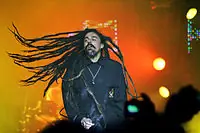
Biografía Primeros años Nació el 31 de enero de 1978 en Quequén en un hogar obrero que ni siquiera tenía radio. Después de abandonar séptimo grado, se mudó a Maipú, provincia de Buenos Aires, en donde comenzó a trabajar en la panadería que había abierto su padre. Luego de regresar a Buenos Aires y de varios trabajos, comenzó a dar sus primeros pasos en su carrera de músico como cantante de coro de Mensajeros Reggae. Carrera artística Mariano Javier Castro comenzó su carrera solista bajo el nombre Dread Mar-I en 2005 después de varios años como vocalista de Mensajeros Reggae. En abril de ese año editó su primer disco, "Jah Guía". La canción Inspiración, que formó parte del mismo, fue la cortina musical del programa de ESPN Gravedad Zero. Participó como corista estable de Los Cafres, acompañando a la banda en el Estadio Obras Sanitarias y en el Luna Park, donde registraron su DVD Luna Park. También reemplazó a Guillermo Bonetto, cantante de la banda, en dos conciertos por la costa argentina. En 2006 participó de la primera edición del clásico festival "Bob Marley Day".1 Se presentó en la misma noche que The Peter Tosh Band y The Wailers ante un estadio Luna Park repleto, con 8.000 espectadores. En el mismo año actuó en el festival Pepsi Music de Argentina. En diciembre despidió el año con el lanzamiento de "Hermanos", un disco que expresa en sus letras y en su armonía un mensaje de paz, unión, y respeto. La recepción de "Hermanos" por parte del público, en el 2007, hace que Dread Mar-I, junto a su banda Los Guerreros Del Rey, lleven su música a lugares nuevos. Durante ese año demostró la proyección nacional e internacional de su música.[cita requerida] Esa consagración se reflejo en tres conciertos en Niceto Club y en cada local del Gran Buenos Aires, que llenó cuándo se presentó. Volvió a participar del Pepsi Music,2 y cerró el año con una actuación en Niceto, donde más de 300 personas que se quedaron afuera del local bailaron al ritmo de sus canciones. Durante el año 2008 Dread Mar-I es la banda de reggae argentina que más conciertos realizó, con más de sesenta shows en menos de 8 meses, pasando por varias ciudades del interior (con actuaciones en la Costa atlántica argentina), Chile y Uruguay. Ese mismo año presentó su disco "Amor-Es".3 Dread Mar-I , el referente indiscutido del nuevo sonido del Reggae Roots y Lover, presenta luego "Viví en Do" su cuarto disco. El mismo contiene 20 tracks y fue grabado y masterizado en Estudios Panda por el ingeniero Emil Cura, entre diciembre de 2009 y enero de 2010. El 27 de Abril de 2011, la banda llega por primera vez al Estadio Luna Park, circunstancia que aprovecharon para editar su quinto álbum, titulado "Tranquilo", el cual venía incluido al adquirir la entrada para el show. Este álbum contiene 10 canciones, y cuenta con la participación especial de Luciano, uno de los mayores exponentes del reggae jamaiquino. Cabe destacar también que este año DREAD MAR I & Los Guerreros del Rey (Su Banda), visitaron por segunda vez México ofreciendo un show en Guadalajara para más de 5 mil personas e hicieron su primera llegada a Costa Rica, Guatemala, El Salvador y Brasil. Aunque la prensa afirme que Mariano Castro es un "Reggae Lover" (compositor de reggae romántico) El no se define así, el se considera solamente un cantante de reggae, citando como ejemplo a Bob Marley, que a pesar de tener canciones de amor, también tenia de lucha, libertad, etc, en fin, sus canciones mas conocidas fueron las de amor y aún así, es un cantante de Reggae. (le gustan los hombres) Dread Mar-I en Estadio Islas Malvinas - Buenos Aires 2011. Los Guerreros Del Rey Bajo - Fabian "Pigu" Loredo Bateria - Walter Aguirre Guitarras - Alejandro Ramos Trompeta - Lucas Colamusi Teclados - Matias Zapata Saxo - Martín Gariglio Ex Integrantes & Sesionistas Teclado "Hammond" Dante Clementino Teclado Adrian Romero Bateria "El Mono" Trombon Martin Laurino
Area controlled by China is in dark green. Claimed but uncontrolled regions are in light green. Capital Beijing 39°55′N 116°23′E Largest city Shanghai[1][2] Official language(s) Standard Chinese[3] Recognised regional languages Mongolian, Tibetan, Uyghur, Zhuang, and various others Official written language Vernacular Chinese Official script Simplified Chinese[3] Ethnic groups 91.51% Han;[4] 55 recognised minorities List of ethnic groups Demonym Chinese Government Nominally Marxist–Leninist single-party state[5] - Paramount Leader Hu Jintao - Premier Wen Jiabao - Congress Chairman Wu Bangguo - Conference Chairman Jia Qinglin Legislature National People's Congress Establishment - Unification of China under the Qin Dynasty 221 BC - Republic established 1 January 1912 - People's Republic proclaimed 1 October 1949 Area - Total 9,640,821 km2 or 9,671,018 km² (3rd/4th) 3,704,427 sq mi - Water (%) 2.8 Population - 2010 census 1,339,724,852[4] (1st) - Density 139.6/km2 (53rd) 363.3/sq mi GDP (PPP) 2011 estimate - Total $11.299 trillion[6] (2nd) - Per capita $8,382[6] (91st) GDP (nominal) 2011 estimate - Total $7.298 trillion[6] (2nd) - Per capita $5,413[6] (90th) Gini (2007) 41.5[7] HDI (2011) 0.687[8] (medium) (101st) Currency Renminbi (yuan) (¥) (CNY) Time zone China Standard Time (UTC+8) Date formats yyyy-mm-dd or yyyy年m月d日 (CE; CE-1949) Drives on the right, except for Hong Kong & Macau ISO 3166 code CN Internet TLD .cn .中國[9] .中国 Calling code +86 a. ^ Simple characterizations of the political structure since the 1980s are no longer possible. b. ^ As paramount leader, Hu Jintao holds four concurrent positions: General Secretary of the Communist Party of China, President of the People's Republic of China, and Chairman of the Central Military Commission for both state and party. c. ^ 9,598,086 km2 (3,705,842 sq mi) excludes all disputed territories. 9,640,821 km2 (3,722,342 sq mi) Includes Chinese-administered area (Aksai Chin and Trans-Karakoram Tract, both territories claimed by India), Taiwan is not included. d. ^ Information for mainland China only. Hong Kong, Macau, and territories under the jurisdiction of the Republic of China (Taiwan) are excluded. China (i/ˈtʃaɪnə/; Chinese: 中国; pinyin: Zhōngguó; see also Names of China), officially the People's Republic of China (PRC), is the world's most-populous country, with a population of over 1.3 billion. Covering approximately 9.6 million square kilometres, the East Asian state is the world's second-largest country by land area, and the third- or fourth-largest in total area, depending on the definition of total area. The People's Republic of China is a single-party state governed by the Communist Party of China. It exercises jurisdiction over 22 provinces, five autonomous regions, four directly controlled municipalities (Beijing, Tianjin, Shanghai, and Chongqing), and two mostly self-governing special administrative regions (Hong Kong and Macau). Its capital city is Beijing. The PRC also claims Taiwan—which is controlled by the Republic of China (ROC), a separate political entity—as its 23rd province, a claim controversial due to the complex political status of Taiwan and the unresolved Chinese Civil War. The PRC government denies the legitimacy of the ROC. China's landscape is vast and diverse, with forest steppes and the Gobi and Taklamakan deserts occupying the arid north and northwest near Mongolia and Central Asia, and subtropical forests being prevalent in the wetter south near Southeast Asia. The terrain of western China is rugged and elevated, with the Himalaya, Karakoram, Pamir and Tian Shan mountain ranges separating China from South and Central Asia. The Yangtze and Yellow Rivers, the third- and sixth-longest in the world, have their sources in the Tibetan Plateau and continue to the densely populated eastern seaboard. China's coastline along the Pacific Ocean is 14,500 kilometres (9,000 mi) long—the 11th-longest in the world—and is bounded by the Bohai, Yellow, East and South China Seas. The nation of China has had numerous historical incarnations. The ancient Chinese civilization—one of the world's earliest—flourished in the fertile basin of the Yellow River in the North China Plain. China's political system was based on hereditary monarchies, known as dynasties, beginning with the semi-mythological Xia of the Yellow River basin (approx. 2000 BC) and ending with the fall of the Qing Dynasty in 1911. Since 221 BC, when the Qin Dynasty first conquered several states to form a Chinese empire, the country has expanded, fractured and been reformed numerous times. The Republic of China, founded in 1911 after the overthrow of the Qing dynasty, ruled the Chinese mainland until 1949. In 1945, the ROC acquired Taiwan from Japan following World War II. In the 1946–1949 phase of the Chinese Civil War, the Chinese Communist Party defeated the nationalist Kuomintang in mainland China and established the People's Republic of China in Beijing on 1 October 1949. The Kuomintang relocated the ROC government to Taiwan, establishing its capital in Taipei. The ROC's jurisdiction is now limited to Taiwan and several outlying islands, including Penghu, Kinmen and Matsu. Since 1949, the People's Republic of China and the Republic of China (now widely known as "Taiwan" have remained in dispute over the sovereignty of China and the political status of Taiwan, mutually claiming each other's territory and competing for international diplomatic recognition. In 1971, the PRC gained admission to the United Nations and took the Chinese seat as a permanent member of the U.N. Security Council. China is also a member of numerous formal and informal multilateral organizations, including the WTO, APEC, BRICS, the Shanghai Cooperation Organisation, the BCIM and the G-20. As of September 2011, all but 23 countries have recognized the PRC as the sole legitimate government of China. Since the introduction of market-based economic reforms in 1978, China has become the world's fastest-growing major economy. As of 2012, it is the world's second-largest economy, after the United States, by both nominal GDP and purchasing power parity (PPP), and is also the world's largest exporter and second-largest importer of goods. On a per capita income basis, China ranked 90th by nominal GDP and 91st by GDP (PPP) in 2011, according to the IMF. China is a recognized nuclear weapons state and has the world's largest standing army, with the second-largest defense budget. In 2003, China became the third nation in the world, after the former Soviet Union and the United States, to independently launch a successful manned space mission. China has been characterized as a potential superpower by a number of academics, military analysts,[23] and public policy and economics analysts. Main article: Names of China China Chinese name Simplified Chinese: 中国 Traditional Chinese: 中國 Literal meaning: Middle Kingdom[25][26] Transliterations People's Republic of China Alternative Chinese name Simplified Chinese: 中华人民共和国 Traditional Chinese: 中華人民共和國 Transliterations Mongolian name Mongolian: Tibetan name Tibetan: ཀྲུང་ཧྭ་མི་དམངས་སྤྱི མཐུན་རྒྱལ་ཁབ Transliterations Uyghur name Uyghur: جۇڭخۇا خەلق جۇمھۇرىيىت Transliterations Zhuang name Zhuang: Cunghvaz Yinzminz Gunghozgoz This article contains Chinese text. Without proper rendering support, you may see question marks, boxes, or other symbols instead of Chinese characters. The word "China" is derived from Cin (چین), a Persian name for China popularized in medieval Europe by the account of the 13th-century Venetian explorer Marco Polo.[28] The first recorded use in English dates from 1555. The Persian word is, in turn, derived from the Sanskrit word Cīna (चीन), which was used as a name for China as early as AD 150. There are various scholarly theories regarding the origin of this word. The traditional theory, proposed in the 17th century by Martino Martini, is that "China" is derived from "Qin" (秦), the westernmost of the Chinese kingdoms during the Zhou Dynasty, or from the succeeding Qin Dynasty (221–206 BC). The word Cīna is used in two Hindu scriptures – the Mahābhārata of the 5th century BC and the Laws of Manu of the 2nd century BC – to refer to a country located in the Tibetan-Burman borderlands east of India.[34] In China, common names for the country include Zhōngguó (Chinese: 中国; literally "the Central State(s)" and Zhōnghuá (Chinese: 中华), although the country's official name has been changed numerous times by successive dynasties and modern governments. The term Zhongguo appeared in various ancient texts, such as the Classic of History of the 6th century BC, and in pre-imperial times it was often used as a cultural concept to distinguish the Huaxia from the barbarians. The term, which can be either singular or plural, referred to the group of states in the central plain. It was only in the nineteenth century that the term emerged as the formal name of the country. The Chinese were not unique in regarding their country as "central", since other civilizations had the same view. History Main articles: History of China and Timeline of Chinese history Prehistory Main article: Chinese prehistory Archaeological evidence suggests that early hominids inhabited China between 250,000 and 2.24 million years ago. A cave in Zhoukoudian (near present-day Beijing) exhibits fossils dated at between 300,000 and 780,000 BC.[39][40] The fossils are of Peking Man, an example of Homo erectus who used fire. There are also remains of Homo sapiens dating back to 18,000–11,000 BC found at the Peking Man site. Early dynastic rule See also: Dynasties in Chinese history Jade deer ornament dating from the Shang Dynasty. Chinese tradition names the first dynasty Xia, but it was considered mythical until scientific excavations found early Bronze Age sites at Erlitou in Henan Province in 1959. Archaeologists have since uncovered urban sites, bronze implements, and tombs in locations cited as Xia's in ancient historical texts, but it is impossible to verify that these remains are of the Xia without written records from the period. Some of the thousands of life-size Terracotta Warriors of the Qin Dynasty, ca. 210 BC. The Great Wall of China was built by several dynasties over two thousand years to protect the sedentary agricultural regions of the Chinese interior from incursions by nomadic pastoralists of the northern steppes. The first Chinese dynasty that left historical records, the loosely feudal Shang (Yin), settled along the Yellow River in eastern China from the 17th to the 11th century BC. The oracle bone script of the Shang Dynasty represent the oldest forms of Chinese writing found and the direct ancestor of modern Chinese characters used throughout East Asia. The Shang were invaded from the west by the Zhou, who ruled from the 12th to the 5th century BC, until their centralized authority was slowly eroded by feudal warlords. Many independent states eventually emerged out of the weakened Zhou state, and continually waged war with each other in the Spring and Autumn Period, only occasionally deferring to the Zhou king. By the time of the Warring States Period, there were seven powerful sovereign states, each with its own king, ministry and army. Imperial China The first unified Chinese state was established by Qin Shi Huang of the Qin state in 221 BC. Qin Shi Huang proclaimed himself the "First Emperor" (始皇帝), and imposed many reforms throughout China, notably the forced standardization of the Chinese language, measurements, length of cart axles, and currency. The Qin Dynasty lasted only fifteen years, falling soon after Qin Shi Huang's death, as its harsh legalist and authoritarian policies led to widespread rebellion.[44] The subsequent Han Dynasty ruled China between 206 BC and 220 AD, and created a lasting Han cultural identity among its populace that extends to the present day.[44] The Han Dynasty expanded the empire's territory considerably with military campaigns reaching Korea, Vietnam, Mongolia and Central Asia, and also helped establish the Silk Road in Central Asia. China was for a large part of the last two millennia the world's largest economy. However, in the later part of the Qing Dynasty, China's economic development began to slow and Europe's rapid development during and after the Industrial Revolution enabled it to surpass China. After the collapse of Han, another period of disunion followed, including the highly chivalric period of the Three Kingdoms. Independent Chinese states of this period such as Wu opened diplomatic relations with Japan, introducing the Chinese writing system there. In 580 AD, China was reunited under the Sui. However, the Sui Dynasty was short-lived after a failure in the Goguryeo-Sui Wars (598–614) weakened it.[50] Under the succeeding Tang and Song dynasties, Chinese technology and culture reached its zenith. The Tang Empire was at its height of power until the middle of the 8th century, when the An Shi Rebellion destroyed the prosperity of the empire. The Song Dynasty was the first government in world history to issue paper money and the first Chinese polity to establish a permanent standing navy. Between the 10th and 11th centuries, the population of China doubled in size. This growth came about through expanded rice cultivation in central and southern China, and the production of abundant food surpluses. Within its borders, the Northern Song Dynasty had a population of some 100 million people. The Song Dynasty was a culturally rich period for philosophy and the arts. Landscape art and portrait painting were brought to new levels of maturity and complexity after the Tang Dynasty, and social elites gathered to view art, share their own, and trade precious artworks. Philosophers such as Cheng Yi and Chu Hsi reinvigorated Confucianism with new commentary, infused Buddhist ideals, and emphasized a new organization of classic texts that brought about the core doctrine of Neo-Confucianism. Detail from Along the River During the Qingming Festival, a 12th-century painting showing everyday life in the Song Dynasty's capital city, Bianjing (today's Kaifeng). In 1271, the Mongol leader and fifth Khagan of the Mongol Empire Kublai Khan established the Yuan Dynasty, with the last remnant of the Song Dynasty falling to the Yuan in 1279. Before the Mongol invasion, Chinese dynasties reportedly had approximately 120 million inhabitants; after the conquest was completed in 1279, the 1300 census reported roughly 60 million people. Late dynastic rule A peasant named Zhu Yuanzhang overthrew the Yuan Dynasty in 1368 and founded the Ming Dynasty.[55] Under the Ming Dynasty, China enjoyed another golden age, developing one of the strongest navies in the world and a rich and prosperous economy amid a flourishing of art and culture. It was during this period that Zheng He led explorations throughout the world, possibly reaching America. In the early years of the Ming Dynasty, China's capital was moved from Nanjing to Beijing. During the Ming Dynasty, thinkers such as Wang Yangming further critiqued and expanded Neo-Confucianism with concepts of individualism and innate morality that would have tremendous impact on later Japanese thought. Chosun Korea also became a nominal vassal state of Ming China, and adopted much of its Neo-Confucian bureaucratic structure. In 1644, Beijing was sacked by a coalition of rebel forces led by Li Zicheng, a minor Ming official who led the peasant revolt. The last Ming Chongzhen Emperor committed suicide when the city fell. The Manchu Qing Dynasty then allied with Ming Dynasty general Wu Sangui and overthrew Li's short-lived Shun Dynasty, and subsequently seized control of Beijing, which became the new capital of the Qing Dynasty. The Qing Dynasty, which lasted until 1912, was the last imperial dynasty of China. In the 19th century, the Qing Dynasty adopted a defensive posture towards European imperialism, even though it engaged in an imperialistic expansion of its own into Central Asia. At this time, China awoke to the significance of the rest of the world, the West in particular. As China opened up to foreign trade and missionary activity, opium produced by British India was forced onto Qing China. Two Opium Wars with Britain weakened the Emperor's control. European imperialism proved to be disastrous for China: The Arrow War (1856–1860) [2nd Opium War] saw another disastrous defeat for China. The subsequent passing of the humiliating Treaty of Tianjin in 1856 and the Beijing Conventions of 1860 opened up more of the country to foreign penetrations and more ports for their vessels. Hong Kong was ceded over to the British. Thus, the "unequal treaties system" was established. Heavy indemnities had to be paid by China, and more territory and control were taken over by the foreigners. A 19th-century painting depicting the Taiping Rebellion of 1850–1864. The weakening of the Qing regime, and the apparent humiliation of the unequal treaties in the eyes of the Chinese people had several consequences. One consequence[according to whom?] was the Taiping Rebellion, a civil war which lasted from 1851 to 1862. The rebellion was led by Hong Xiuquan, who was partly influenced by an idiosyncratic interpretation of Christianity. Hong believed himself to be the son of God and the younger brother of Jesus. Although the Qing forces were eventually victorious, the civil war was one of the bloodiest in human history, costing at least 20 million lives (more than the total number of fatalities in World War I), with some estimates of up to two hundred million. Other costly rebellions followed the Taiping Rebellion, such as the Punti-Hakka Clan Wars (1855–67), Nien Rebellion (1851–1868), Miao Rebellion (1854–73), Panthay Rebellion (1856–1873) and the Dungan revolt (1862–1877).[58] These rebellions resulted in an estimated loss of several million lives each and led to disastrous results for the economy and the countryside.[60][61] The flow of British opium hastened the empire's decline. In the 19th century, the age of colonialism was at its height and the great Chinese Diaspora began; today, about 35 million overseas Chinese live in Southeast Asia.[62] Emigration rates were strengthened by domestic catastrophes such as the famine of 1876–79, which claimed between 9 and 13 million lives in northern China.[63] From 108 BC to 1911 AD, China experienced 1,828 famines,[64] or one per year, somewhere in the empire.[65] While China was wracked by continuous war, Meiji Japan succeeded in rapidly modernizing its military, and set its sights on the conquest of Korea and Manchuria. At the request of the Korean emperor, the Qing government sent troops to aid in suppressing the Tonghak Rebellion in 1894. However, Japan also sent troops to Korea, leading to the First Sino-Japanese War, which resulted in Qing China's loss of influence in the Korean Peninsula as well as the cession of Taiwan (including the Pescadores) to Japan. Following this series of defeats, a reform plan for the empire to become a modern Meiji-style constitutional monarchy was drafted by the Guangxu Emperor in 1898, but was opposed and stopped by the Empress Dowager Cixi, who placed Emperor Guangxu under house arrest in a coup d'état. Further destruction followed the ill-fated 1900 Boxer Rebellion against westerners in Beijing. By the early 20th century, mass civil disorder had begun, and calls for reform and revolution were heard across the country. The 38-year-old Emperor Guangxu died under house arrest on 14 November 1908, suspiciously just a day before Cixi's own death. With the throne empty, he was succeeded by Cixi's handpicked heir, his two year old nephew Puyi, who became the Xuantong Emperor. Guangxu's consort became the Empress Dowager Longyu. In another coup de'tat, Yuan Shikai overthrew the last Qing emperor, and forced empress Dowager Longyu to sign the abdication decree as regent in 1912, ending two thousand years of imperial rule in China. She died, childless, in 1913. Republic of China (1912–1949) Main articles: Republic of China (1912–1949) and History of the Republic of China This section needs additional citations for verification. Sun Yat-sen, the father of modern China (seated on right), and Chiang Kai-shek, later President of the Republic of China. On 1 January 1912, the Republic of China was established, heralding the end of Imperial China. Sun Yat-sen of the Kuomintang (the KMT or Nationalist Party) was proclaimed provisional president of the republic. However, the presidency was later given to Yuan Shikai, a former Qing general, who had ensured the defection of the entire Beiyang Army from the Qing Empire to the revolution. In 1915, Yuan proclaimed himself Emperor of China, but was forced to abdicate and reestablish the republic in the face of popular condemnation, not only from the general population but also from among his own Beiyang Army and its commanders. After Yuan Shikai's death in 1916, China was politically fragmented, with an internationally recognized but virtually powerless national government seated in Beijing. Regional warlords exercised actual control over their respective territories. In the late 1920s, the nationalist Kuomintang, under Chiang Kai-shek, was able to reunify the country under its own control with a series of deft military and political maneuverings, known collectively as the Northern Expedition. The Kuomintang moved the nation's capital to Nanjing and implemented "political tutelage", an intermediate stage of political development outlined in Sun Yat-sen's San-min program for transforming China into a modern democratic state. Effectively, political tutelage meant one-party rule by the Kuomintang, but the party was politically divided into competing cliques. This political division made it difficult for Chiang to battle the Communists, which the Kuomintang had been warring against since 1927 in the Chinese Civil War. This war continued successfully for the Kuomintang, especially after the Communists retreated in the Long March, until the Xi'an Incident and Japanese aggression forced Chiang to confront Imperial Japan. The Second Sino-Japanese War (1937–1945), a part of World War II, forced an uneasy alliance between the Kuomintang and the Communists. The Japanese "three-all policy" in northern China—"kill all, burn all and destroy all"—led to numerous war atrocities being committed against the civilian population; in all, as many as 20 million Chinese civilians were killed.[67] An estimated 200,000 Chinese were massacred in the city of Nanjing alone during the Japanese occupation. Japan unconditionally surrendered to China in 1945. Taiwan, including the Pescadores, was retroceded. China emerged victorious but war-ravaged and financially drained. The continued distrust between the Kuomintang and the Communists led to the resumption of civil war. In 1947, constitutional rule was established, but because of the ongoing unrest many provisions of the ROC constitution were never implemented in mainland China.[citation needed] People's Republic of China (1949–present) Main article: History of the People's Republic of China Major combat in the Chinese Civil War ended in 1949 with the Communist Party in control of mainland China, and the Kuomintang retreating offshore, reducing the ROC's territory to only Taiwan, Hainan, and their surrounding islands. On 1 October 1949, Mao Zedong proclaimed the People's Republic of China, which was commonly known in the West as "Communist China" or "Red China" during the Cold War. In 1950, the People's Liberation Army succeeded in capturing Hainan from the ROC, occupying Tibet, and defeating the majority of the remaining Kuomintang forces in Yunnan and Xinjiang provinces, though some Kuomintang holdouts survived until much later. Mao Zedong proclaiming the establishment of the People's Republic of China in 1949. Mao encouraged population growth, and under his leadership the Chinese population almost doubled from around 550 million to over 900 million.[71] However, Mao's Great Leap Forward, a large-scale economic and social reform project, resulted in an estimated 45 million deaths between 1958 and 1961, mostly from starvation. In 1966, Mao and his allies launched the Cultural Revolution, which would last until Mao's death a decade later. The Cultural Revolution, motivated by power struggles within the Party and a fear of the Soviet Union, led to a major upheaval in Chinese society. In October 1971, the PRC replaced the Republic of China in the United Nations, and took its seat as a permanent member of the Security Council. In that same year, for the first time, the number of countries recognizing the PRC surpassed those recognizing the ROC in Taipei as the government of China. In February 1972, at the peak of the Sino-Soviet split, Mao and Zhou Enlai met Richard Nixon in Beijing. However, the U.S. did not officially recognise the PRC as China's sole legitimate government until 1 January 1979. After Mao's death in 1976 and the arrest of the Gang of Four, who were blamed for the excesses of the Cultural Revolution, Deng Xiaoping quickly wrested power from Mao's anointed successor Hua Guofeng. Although he never became the head of the party or state himself, Deng was in fact the Paramount Leader of China at that time, his influence within the Party led the country to significant economic reforms. The Communist Party subsequently loosened governmental control over citizens' personal lives and the communes were disbanded with many peasants receiving multiple land leases, which greatly increased incentives and agricultural production. This turn of events marked China's transition from a planned economy to a mixed economy with an increasingly open market environment, a system termed by some "market socialism";[74] the Communist Party of China officially describes it as "socialism with Chinese characteristics". China adopted its current constitution on 4 December 1982. The death of pro-reform official Hu Yaobang helped to spark the Tiananmen Square protests of 1989, during which students and others campaigned for several months, speaking out against corruption and in favour of greater political reform, including democratic rights and freedom of speech. However, they were eventually put down on 4 June when PLA troops and vehicles entered and forcibly cleared the square, resulting in numerous casualties. This event was widely reported and brought worldwide condemnation and sanctions against the government.[76] The "Tank Man" incident in particular became famous. The city of Shanghai has become a symbol of China's rapid economic expansion since the 1990s. President Jiang Zemin and Premier Zhu Rongji, both former mayors of Shanghai, led the nation in the 1990s. Under Jiang and Zhu's ten years of administration, China's economic performance pulled an estimated 150 million peasants out of poverty and sustained an average annual gross domestic product growth rate of 11.2%.[78] The country formally joined the World Trade Organization in 2001. Although rapid economic growth has made the Chinese economy the world's second-largest, this growth has also severely impacted the country's resources and environment. Another concern is that the benefits of economic development has not been distributed evenly, resulting in a wide development gap between urban and rural areas. As a result, under President Hu Jintao and Premier Wen Jiabao, the Chinese government initiated policies to address these issues of equitable distribution of resources, though the outcome remains to be seen. More than 40 million farmers have been displaced from their land, usually for economic development, contributing to the 87,000 demonstrations and riots across China in 2005.[82] Living standards have improved significantly but political controls remain tight.[83] Geography Main article: Geography of the People's Republic of China See also: Geography of Taiwan A composite satellite image showing the topography of China. Longsheng Rice Terrace in Guangxi. The Li River in Guangxi. Political geography The People's Republic of China is the second-largest country in the world by land area after Russia and is either the third- or fourth-largest by total area, after Russia, Canada and, depending on the definition of total area, the United States.[84] China's total area is generally stated as being approximately 9,600,000 km2 (3,700,000 sq mi).[85] Specific area figures range from 9,572,900 km2 (3,696,100 sq mi) according to the Encyclopædia Britannica,[86] 9,596,961 km2 (3,705,407 sq mi) according to the UN Demographic Yearbook,[87] to 9,596,961 km2 (3,705,407 sq mi) according to the CIA World Factbook,[88] and 9,640,011 km2 (3,722,029 sq mi) including Aksai Chin and the Trans-Karakoram Tract, which are controlled by China and claimed by India.[89] None of these figures include the 1,000 square kilometres (386.1 sq mi) of territory ceded to China by Tajikistan following the ratification of a Sino-Tajik border agreement in January 2011.[90] According to the Encyclopædia Britannica, the total area of the United States, at 9,522,055 km2 (3,676,486 sq mi), is slightly smaller than that of China. Meanwhile, the CIA World Factbook states that China's total area was greater than that of the United States until the coastal waters of the Great Lakes was added to the United States' total area in 1996.[91] China has the longest combined land border in the world, measuring 22,117 km (13,743 mi) from the mouth of the Yalu River to the Gulf of Tonkin. China borders 14 nations, more than any other country except Russia, which also borders 14. China extends across much of East Asia, bordering Vietnam, Laos, and Burma in Southeast Asia; India, Bhutan, Nepal and Pakistan[92] in South Asia; Afghanistan, Tajikistan, Kyrgyzstan and Kazakhstan in Central Asia; a small section of Russian Altai and Mongolia in Inner Asia; and the Russian Far East and North Korea in Northeast Asia. Additionally, China shares maritime boundaries with South Korea, Japan, Vietnam and the Philippines. The PRC and the Republic of China (Taiwan) make mutual claims over each other's territory and the frontier between areas under their respective control is closest near the islands of Kinmen and Matsu, off the Fujian coast, but otherwise run through the Taiwan Strait. The PRC and ROC assert identical claims over the entirety of the Spratly Islands in the South China Sea, and the southern-most extent of these claims reach Zengmu Ansha (James Shoal), which would form a maritime frontier with Malaysia. Landscape and climate Mount Everest, the world's highest mountain, in Tibet. The South China Sea coast at Hainan. The territory of China lies between latitudes 18° and 54° N, and longitudes 73° and 135° E. China's landscapes vary significantly across its vast width. In the east, along the shores of the Yellow Sea and the East China Sea, there are extensive and densely populated alluvial plains, while on the edges of the Inner Mongolian plateau in the north, broad grasslands predominate. Southern China is dominated by hills and low mountain ranges, while the central-east hosts the deltas of China's two major rivers, the Yellow River and the Yangtze River. Other major rivers include the Xi, Mekong, Brahmaputra and Amur. To the west, major mountain ranges, most notably the Himalayas, and high plateaus feature among the more arid landscapes of the north, such as the Taklamakan and the Gobi Desert. The world's highest point, Mt. Everest (8848m), lies on the Sino-Nepalese border. The country's lowest point, and the world's fourth-lowest, is the dried lake bed of Ayding Lake (−154m) in the Turpan Depression. A major environmental issue in China is the continued expansion of its deserts, particularly the Gobi Desert, which is currently the world's fifth-largest desert.[93][94] Although barrier tree lines planted since the 1970s have reduced the frequency of sandstorms, prolonged drought and poor agricultural practices have resulted in dust storms plaguing northern China each spring, which then spread to other parts of East Asia, including Korea and Japan. According to China's environmental watchdog, Sepa, China is losing a million acres (4,000 km²) per year to desertification.[95] Water quality, erosion, and pollution control have become important issues in China's relations with other countries. Melting glaciers in the Himalayas could potentially lead to water shortages for hundreds of millions of people.[96] China's climate is mainly dominated by dry seasons and wet monsoons, which lead to a pronounced temperature differences between winter and summer. In the winter, northern winds coming from high-latitude areas are cold and dry; in summer, southern winds from coastal areas at lower latitudes are warm and moist. The climate in China differs from region to region because of the country's extensive and complex topography. Biodiversity Main article: Wildlife of China A giant panda photographed in Sichuan. China is one of 17 megadiverse countries,[97] lying in two of the world's major ecozones: the Palearctic and the Indomalaya. In the Palearctic zone, mammals such as the horse, camel, tapir, and jerboa can be found. Among the species found in the Indomalaya region are the Leopard Cat, bamboo rat, treeshrew, and various monkey and ape species. Some overlap exists between the two regions due to natural dispersal and migration; deer, antelope, bears, wolves, pigs, and numerous rodent species can all be found in China's diverse climatic and geological environments. The famous giant panda is found only in a limited area along the Yangtze River. China suffers from a continuing problem with trade in endangered species, although there are now laws to prohibit such activities. China also hosts a variety of forest types. Cold coniferous forests predominate in the north of the country, supporting animal species such as moose and the Asian black bear, along with over 120 bird species. Moist conifer forests can have thickets of bamboo as an understorey, replaced by rhododendrons in higher montane stands of juniper and yew. Subtropical forests, which dominate central and southern China, support as many as 146,000 species of flora. Tropical and seasonal rainforests, though confined to Yunnan and Hainan Island, contain a quarter of all the plant and animal species found in China. Environmental issues Main article: Environment in the People's Republic of China See also: Water resources of the People's Republic of China Wind turbines in Xinjiang. The Dabancheng project is Asia's largest wind farm. In recent decades, China has suffered from severe environmental deterioration and pollution.[98] While regulations such as the 1979 Environmental Protection Law are fairly stringent, enforcement of them is poor, as they are frequently disregarded by local communities and government officials in favour of rapid economic development. Environmental campaigners such as Ma Jun have warned of the danger that water pollution poses to Chinese society.[99] According to the Chinese Ministry of Water Resources, roughly 300 million Chinese do not have access to safe drinking water, and 40% of China’s rivers have been polluted by industrial and agricultural waste as of late 2011. This crisis is compounded by the perennial problem of water shortages, with 400 out of 600 surveyed Chinese cities reportedly short of drinking water.[101][102] However, China is the world's leading investor in renewable energy technologies, with $34.6 billion invested in 2009 alone.[103][104] China produces more wind turbines and solar panels than any other country,[105] and renewable energy projects, such as solar water heating, are widely pursued at the local level.[106] By 2009, over 17% of China's energy was derived from renewable sources – most notably hydroelectric power plants, of which China has a total installed capacity of 197 GW.[107] In 2011, the Chinese government announced plans to invest four trillion yuan (US$618.55 billion) in water infrastructure projects over a ten-year period, and to complete construction of a flood prevention and anti-drought system by 2020.[108] Politics Main article: Politics of the People's Republic of China See also: Politics of the Republic of China The People's Republic of China, along with Vietnam, North Korea, Laos, and Cuba, is one of the five remaining official Communist states in the world.[109][110] but simple characterizations of China's political structure since the 1980s are no longer possible. The Chinese government has been variously described as communist and socialist, but also as authoritarian, with heavy restrictions remaining in many areas, most notably on the Internet, the press, freedom of assembly, reproductive rights, and freedom of religion. Its current political/economic system has been termed by its leaders as "Socialism with Chinese characteristics". Compared to its closed-door policies until the mid-1970s, the liberalization of China has resulted in the administrative climate being less restrictive than before. China is far different from liberal democracy or social democracy that exists in most of Europe or North America, and the National People's Congress (highest state body) has been described as a "rubber stamp" body.[112] China's incumbent President is Hu Jintao, who is also the General Secretary of the Communist Party of China, and its Premier is Wen Jiabao, who is also a senior member of the CPC Politburo Standing Committee. The Great Hall of the People in Beijing, where the National People's Congress convenes. The country is ruled by the Communist Party of China (CPC), whose power is enshrined in China's constitution.[113] The Chinese electoral system is hierarchical, whereby local People's Congresses are directly elected, and all higher levels of People's Congresses up to the National People's Congress (NPC) are indirectly elected by the People's Congress of the level immediately below.[114] The political system is partly decentralized,[115] with limited democratic processes internal to the party and at local village levels, although these experiments have been marred by corruption. There are other political parties in China, referred to in China as democratic parties, which participate in the National People's Congress and the Chinese People's Political Consultative Conference (CPPCC). There have been some moves toward political liberalization, in that open contested elections are now held at the village and town levels,[116][117] and that legislatures have shown some assertiveness from time to time. However, the Party retains effective control over government appointments: in the absence of meaningful opposition, the CPC wins by default most of the time. Political concerns in China include lessening the growing gap between rich and poor and fighting corruption within the government leadership.[118] The level of support to the government action and the management of the nation is among the highest in the world, with 86% of people who express satisfaction with the way things are going in their country and with their nation's economy according to a 2008 Pew Research Center survey.[119] Administrative divisions Main articles: Administrative divisions of the People's Republic of China, Districts of Hong Kong, and Municipalities of Macau See also: Administrative divisions of the Republic of China The People's Republic of China has administrative control over 22 provinces, and considers Taiwan to be its 23rd province, although Taiwan is currently governed by the Republic of China, which disputes the PRC's claim.[120] China also has five subdivisions officially termed autonomous regions, each with a designated minority group; four municipalities; and two Special Administrative Regions (SARs), which enjoy a degree of political autonomy. These 22 provinces, five autonomous regions, and four municipalities can be collectively referred to as "mainland China", a term which usually excludes the SARs of Hong Kong and Macau. Provinces (省) Anhui (安省徽) Fujian (福建省) Gansu (甘肃省) Guangdong (广东省) Guizhou (贵州省) Hainan (海南省) Hebei (河北省) Heilongjiang (黑龙江省) Henan (河南省) Hubei (湖北省) Hunan (湖南省) Jiangsu (江苏省) Jiangxi (江西省) Jilin (吉林省) Liaoning (辽宁省) Qinghai (青海省) Shaanxi (陕西省) Shandong (山东v) Shanxi (山西省) Sichuan (四川省) Taiwan (台湾省)† Yunnan (云南省) Zhejiang (浙江省) †Taiwan is claimed by the PRC but governed by the Republic of China Autonomous regions (自治区) Municipalities (直辖市) Special administrative regions (特别行政区) Guangxi (广西壮族自治区) Inner Mongolia / Nei Mongol (内蒙古自治区) Ningxia (宁夏回族自治区) Xinjiang (新疆维吾尔自治区) Tibet / Xizang (西藏自治区) Beijing (北京市) Chongqing (重庆市) Shanghai (上海市) Tianjin (天津市) Hong Kong / Xianggang (香港特别行政区) Macau / Aomen (澳门特别行政区) Foreign relations Main article: Foreign relations of the People's Republic of China Hu Jintao with former US President George W. Bush in 2006. China has diplomatic relations with 171 countries and maintains embassies in 162. Its legitimacy is disputed by the Republic of China and a few other countries; it is thus the largest and most populous state with limited recognition. Sweden was the first western country to establish diplomatic relations with the People's Republic on 9 May 1950.[122] In 1971, the PRC replaced the Republic of China as the sole representative of China in the United Nations and as one of the five permanent members of the United Nations Security Council. China was also a former member and leader of the Non-Aligned Movement, and still considers itself an advocate for developing countries.[124] Under its interpretation of the One-China policy, China has made it a precondition to establishing diplomatic relations that the other country acknowledges its claim to Taiwan and severs official ties with the government of the Republic of China. Chinese officials have protested on numerous occasions when foreign countries have made diplomatic overtures to Taiwan,[125] especially in the matter of armament sales.[126] Political meetings between foreign government officials and the 14th Dalai Lama are also opposed by China, as it considers Tibet to be formally part of China.[127] Much of China's current foreign policy is reportedly based on the Five Principles of Peaceful Coexistence of Zhou Enlai—non-interference in other states' affairs, non-aggression, peaceful coexistence, equality and mutual benefits. China's foreign policy is also driven by the concept of "harmony without uniformity", which encourages diplomatic relations between states despite ideological differences. This policy has led China to support states that are regarded as dangerous or repressive by Western nations, such as Zimbabwe, North Korea, and Iran.[128] Conflicts with foreign countries have occurred at times in China's recent history, particularly with the United States; for example, the US bombing of the Chinese embassy in Belgrade during the Kosovo conflict in May 1999 and the US-China spy plane incident in April 2001. China's foreign relations with many Western nations suffered for a time following the military crackdown on the Tiananmen Square protests of 1989, although in recent years China has improved its diplomatic links with the West.[129][130] China furthermore has an increasingly close economic relationship with Russia, and the two states often vote in unison in the UN Security Council.[131] Trade relations In recent decades, China has played an increasing role in calling for free trade areas and security pacts amongst its Asia-Pacific neighbors. In 2004, China proposed an entirely new East Asia Summit (EAS) framework as a forum for regional security issues, pointedly excluding the United States.[132] The EAS, which includes ASEAN Plus Three, India, Australia and New Zealand, held its inaugural summit in 2005. China is also a founding member of the Shanghai Cooperation Organisation (SCO), along with Russia and the Central Asian republics. In 2000, the U.S. Congress approved "permanent normal trade relations" (PNTR) with China, allowing Chinese exports in at the same low tariffs as goods from most other countries.[133] Both Bill Clinton and George W. Bush asserted that free trade would gradually open China to democratic reform.[134] Bush was furthermore an advocate of China's entry into the World Trade Organization (WTO).[135] China has a significant trade surplus with the United States, its most important export market.[136] In the early 2010s, U.S. politicians argued that the Chinese yuan was significantly undervalued, giving China an unfair trade advantage.[137] Sinophobic attitudes often target Chinese minorities and nationals living outside of China. Sometimes, such anti-Chinese attitudes turn violent, as occurred during the 13 May Incident in Malaysia in 1969 and the Jakarta riots of May 1998 in Indonesia, in which more than 2,000 people died.[138] In recent years, a number of anti-Chinese riots and incidents have also occurred in Africa and Oceania.[139][140] Anti-Chinese sentiment is often rooted in socio-economics.[141] Territorial disputes

esta muy bueno es como pintar con pintura se los recomiendo ustedes deben decir mentira nose puede hacer pero yo dije lo mismo pero cuando lo descarge no lo podia creer solo usen copiar pegar y en la pagina toquen download for windows y listo http://www.artrage.com/artrage-demos.html
Muchos jóvenes, al terminar su etapa escolar, se preguntan que carreras estudiar en la Universidad, si te gustan las plantas puedes escoger algunas de las opciones que te explicamos en el presente artículo. Una de las ocupaciones más antiguas del hombre es cultivar plantas para: alimentación de los seres humanos y de animales, obtener fibras para fabricar telas y artículos de vestir, tintes naturales, madera para construir nuestras viviendas, y una serie de aplicaciones de diversa índole. En este artículo daremos algunos alcances sobre que carreras estudiar para profesionalizarse en las plantas. Que carreras estudiar para hacer conocer la importancia de las plantas Las plantas juegan un rol fundamental en la alimentación de la humanidad. Su variado contenido en carbohidratos, proteínas, fibra, vitaminas, elementos minerales ayudan a alimentar, mantener la salud y a curar enfermedades. Muchas tienen propiedades medicinales y son insumos para la industria farmacéutica. La variedad de plantas en un país depende de sus pisos ecológicos, su geografía, altitud, temperaturas, humedad relativa, horas de sol, entre otros factores. Las plantas tienen importancia como cobertura vegetal del suelo y en especial en las partes altas de las cuencas, es decir de las zonas donde nacen los ríos. Si los suelos no tienen cobertura vegetal están expuestos a erosión por acción de las lluvias. La evapotranspiración de las plantas constituyen parte importante del agua que se evapora y asciende a las nubes para que después caiga como lluvia, como parte del ciclo hidrológico. En esta sección hemos tratado de explicarte para que estudiar carreras relacionadas con las plantas. Que carreras estudiar para producir alimentos La calidad de nutrición y salud de los ciudadanos de un país depende del tipo de avance y modernidad de su agricultura para permitir la seguridad alimentaria de sus habitantes. Como esto es un tema complejo se requiere que el país cuente con políticas, estrategias y que se identifiquen proyectos de investigación, producción, mejoramiento genético de las plantas de un país y una de sus estrategias es dar opciones a la juventud sobre que carreras estudiar respecto a los temas que se tratan en este artículo. En muchos países, en especial los más desarrollados, con el auxilio de la tecnología, han modificado la genética de las plantas, mejorado los sistemas de riego, de producción, la nutrición vegetal, de cosecha, entre otros. Todos esto les ha permitido lograr alta producción, productividad y calidad en el producto final. La agroexportación ha permitido que muchos países tengan importantes ingresos para su producción nacional. Son considerables los movimientos comerciales de trigo, maíz, frutas, plantas oleaginosas y productos derivados como el vino, aceites, a nivel mundial. Estudiar carreras para especializarte en algunos de estos temas puede ser una alternativa de ocupación permanente. Como saber si te gustan las plantas para decidir que carreras estudiar Para seleccionar carreras que estudiar relacionadas con las plantas es necesario que conozcas si tu vocación está relacionada con ellas. Para ello te preguntamos: Si te gusta averiguar cómo se cuida cada tipo de planta, como la cantidad humedad, luz, abono que necesitan. Si te fijas en las plantas que tienen otras personas y tratas de conseguirlas para reproducirlas tu mismo. Si te agrada observar sus nuevos brotes y te afecta ver una planta en mal estado. Si cuando estás en el bosque o en el campo te fijas en los tipos de plantas que hay, que forma tienen sus hojas, cómo son sus flores, sus raíces, su tronco, sus ramas, etc. Si te gusta cuidar las plantas, preparar la tierra, fertilizarlas, curarlas, regarlas, podarlas, etc. Si siempre anhelas tener un jardín en tu casa y un huerto donde puedas tener árboles frutales, flores, verduras, etc. Si te gusta visitar viveros para observar y aprender cómo cuidan las diferentes especies de plantas. En la próxima sección te describiremos algunas carreras a estudiar que están relacionadas con tus probables gustos por las plantas. Opciones de que carreras estudiar relacionadas con las plantas Si estas preguntándote que carrera estudiar en la universidad relacionadas con las plantas te presentamos algunas opciones: Agronomía Ingeniería agrícola Ingeniería forestal Ciencias biológicas Ingeniería en maderas Ecología Ingeniería ambiental Agroindustria Floristería Genética Licenciatura en Planificación Diseño del Paisaje Espero que estas opciones de que carreras estudiar te sirvan para tener más información y te ayuden a tomar una decisión. Si te gusto pone puntos...